
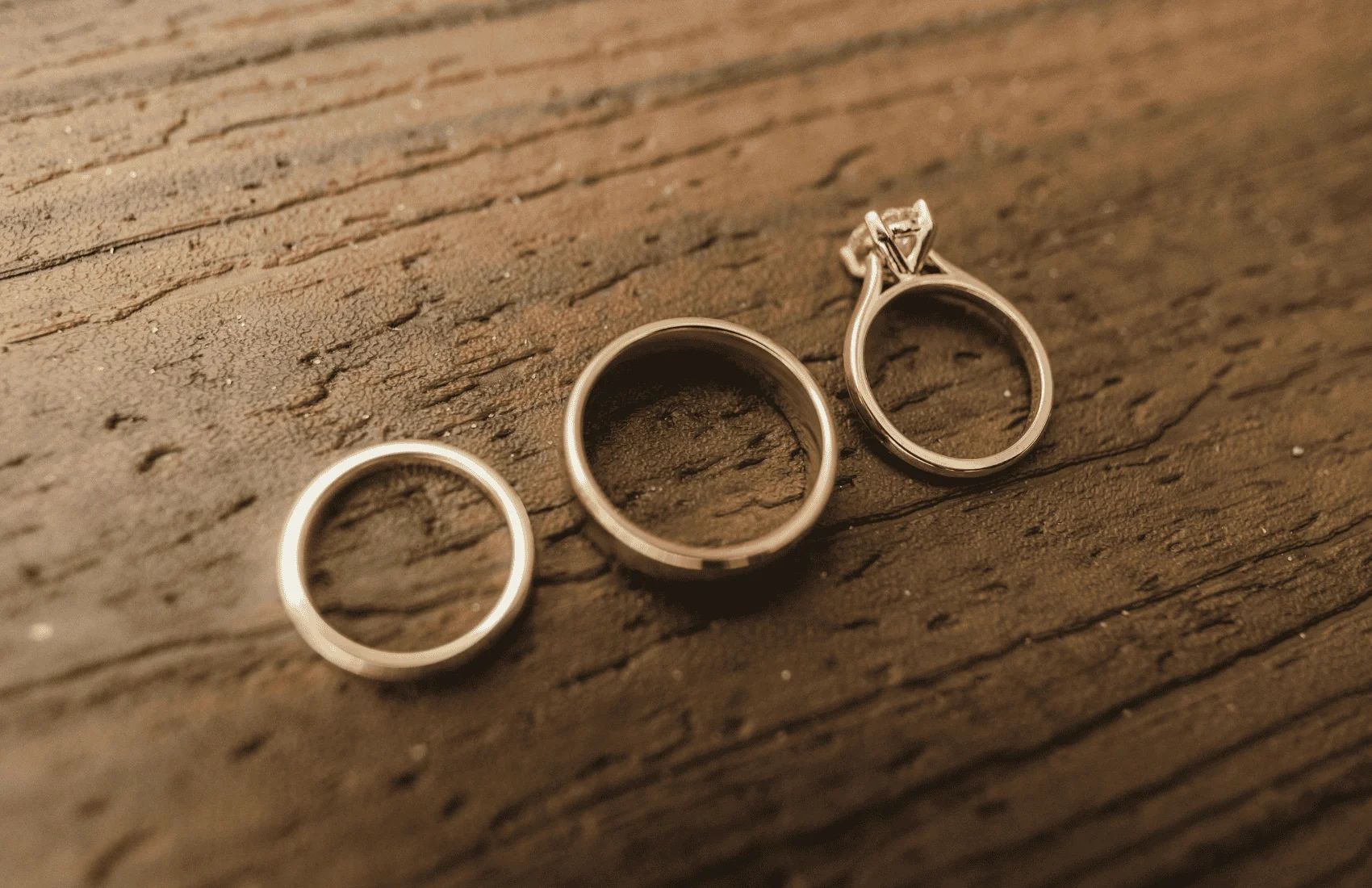
How Many Grams of Gold Are in a Ring?


A gold ring’s weight in grams is one of the most important numbers to know before buying or selling. So how many grams of gold are in a ring? Most rings land between two and 10 grams, though size, band thickness, and karat purity shape that range. This guide unpacks what those differences mean in practice.
In a nutshell
With gold rings, looks can be deceiving. A thin, simple band can carry more value than a chunky statement piece because gram weight, not appearance, determines a ring’s actual worth.
Average Gold Ring Weight: What to Expect

The average weight of a gold ring in grams is two to ten, with three to five grams considered the sweet spot for everyday wear. It’s enough metal to feel solid and hold up over time without becoming uncomfortable.
How many grams of gold are in a wedding ring?
Of all ring styles, wedding bands tend to be the easiest to estimate by weight. They follow a simple, consistent construction (a solid loop of metal with no added complexity), so width and thickness are the primary variables that drive weight.
How many grams of gold are in a men’s ring?
Men’s rings span a wider weight range than most other styles, as the category includes everything from slim wedding bands to chunky statement pieces.
Here’s what to expect by style:
- Signet rings: 11 to 18 grams
- Class rings: 15 to 25 grams
- Nugget rings: 8 to 15 grams or more
- Wedding bands: 5 to 8 grams
Gold weight in engagement rings
Engagement ring settings typically weigh three to seven grams. Despite what the size of a stone might suggest, gemstones add carat weight but very little gram weight. A one-carat diamond weighs 0.2 grams, meaning the heft of an engagement ring almost always comes from the gold setting, not the gem.
Factors That Change How Much a Ring Weighs
Three factors determine how much a gold ring weighs, and understanding them helps explain why two rings can look similar but differ in value:
- Band dimensions: Width and thickness are the biggest drivers of weight. Even a few millimeters of added width can double the amount of gold in a band.
- Ring size: The bigger the ring size, the more gold it takes to complete the circle. A size 13 ring requires much more metal than a size 5, even in the same design.
- Construction: Some rings are solid all the way through, while others use a thin outer shell of gold over an empty core. A ring with a hollow construction can look as bold and chunky as a solid piece but weigh a fraction of the amount.
Purity and Density: How Much Does a Ring Weigh?
Gold is a dense metal, so karat purity directly affects weight. A higher karat means more pure gold in the mix, and more pure gold means more weight. That’s why an 18K gold ring will outweigh a 10K gold ring of the same style and size.
14K gold is the most common standard in the U.S., with most women’s bands weighing three to five grams and men’s bands five to seven grams. Width shifts those numbers; a narrow 2-millimeter band can weigh as little as 1.4 grams, while a wide 8-millimeter band can exceed 10 grams.
How to Calculate the “Actual” Gold Value
Most gold rings aren’t pure gold. Jewelers mix gold with other metals like copper or silver to make it more durable, which means the total weight of a ring includes more than just gold. Buyers pay primarily for the pure gold content, so that’s the number worth calculating.
To find it, multiply the ring’s total weight by the purity factor for its karat:
- 10K: Total grams x 0.417
- 14K: Total grams x 0.583
- 18K: Total grams x 0.750
A 10-gram 14K ring, for example, contains 5.83 grams of pure gold. From there, convert that figure to troy ounces, the unit gold trades in, by dividing by 31.1. That gives 0.187 troy ounces. At a spot price of around $4,700 per troy ounce,* the melt value of that ring would be roughly $880.
*Since the gold price today is different from yesterday, this figure is approximate.
Estimate your ring’s value now
Use the calculator below to apply the purity math above and get a quick estimate of a ring’s gold value:
Gold Calculator
Selling Your Ring: Why Precision Matters
Gold sells by the tenth of a gram, meaning even a small error on a scale can shift the value by several dollars. For a quick estimate, any scale that measures in grams is a good starting point. For anything more than a ballpark, professional equipment makes a real difference.
Certified scales measure to at least two decimal places, and professional buyers also use XRF (X-ray fluorescence) technology or acid testing to confirm purity. A home scale can weigh a ring, but it can’t tell the difference between solid gold and gold-plated brass.
One more thing to keep in mind when selling jewelry: buyers rarely pay the full melt value. They factor in the cost of refining the metal back to its purest form, plus their operating costs. That’s standard across the industry, not specific to one buyer.
Sell Your Gold Ring with The Alloy Market

Don’t guess the value of a gold ring based on size alone. As this guide explains, two rings can look identical but be worth very different amounts depending on their weight, purity, and construction.
For anyone ready to sell a gold ring, The Alloy Market makes the process straightforward:
- Request a kit: Order a free Alloy Evaluation Kit online, and it arrives within five business days with prepaid, insured shipping starting at $25,000.
- Ship the ring: Place the ring in the included prepaid parcel and drop it off at any FedEx location, or schedule a free pickup from home.
- Get an offer: Alloy’s team weighs and tests every piece using X-ray fluorescence and acid testing, then sends over a detailed, itemized, no-obligation offer.
- Get paid: Accept the offer by 5 PM EST, and payment goes out the same business day via PayPal, wire, or check. Not ready to sell? Alloy returns the item at no cost.
On average, clients receive payouts of around $1,500 by combining items to send. Alloy buys jewelry in any condition, and bases offers solely on the precious metal content. Join the thousands of happy customers who have made Alloy their go-to precious metal buyer.


