
How Is the Value of Gold Determined?


Gold has outlasted currencies, empires, and entire financial systems, but its market price still moves in the short run as traders and financial institutions react to new information. Those shifts can influence what someone gets paid for a ring, chain, or bar.
Understanding how gold’s value is determined matters a lot, especially if someone is considering selling or timing the market. So, how is the value of gold determined? Read further as we walk through the key factors that shape gold’s price.
In a nutshell
Global supply and demand, inflation, interest rates, currency strength, and investor sentiment shape gold’s value. While benchmark markets help set reference prices, gold’s real-time value reflects how investors respond to economic conditions, uncertainty, and scarcity over time.
Who Sets the Gold Price?
Gold prices are not a fixed figure handed down by a central authority. No single person, company, or government sets it.
Instead, gold’s value reflects a market influenced by multiple factors, such as global supply and demand, central bank activity, and inflation rates, all of which act together (more on these factors later).
That’s not to say there isn’t structure. In fact, global markets still rely on recognized benchmark prices, with the two most widely followed being the LBMA and COMEX.
The role of the London Bullion Market Association (LBMA)

Each day, the London Bullion Market Association (LBMA) oversees the world’s largest physical gold marketplace, the London OTC market. This trade body is where major banks, refiners, and institutions trade physical gold. It’s this activity that shapes the real-time spot price anyone can see quoted across financial sites.
Alongside continuous OTC trading, the LBMA also publishes a globally recognized benchmark, the LBMA Gold Price. This value is determined twice a day through auctions facilitated by the ICE Benchmark Administration (IBA), which operates under strict governance, public auction records, and independent oversight.
These auctions create an official reference point used for large institutional transactions, central bank reporting, and long-term supply contracts.
It’s important to note that the LBMA Gold Price is a benchmark, not the live spot price itself. The spot price reflects ongoing OTC trading throughout the day, influenced by supply, demand, and futures market activity.
Instead, the twice-daily LBMA auction provides a transparent, standardized price that financial institutions can use for settlement and accounting.
The role of COMEX

In contrast to the LBMA’s physical auction system, the Commodity Exchange Inc. (COMEX) is a US-based commodities exchange that drives the gold futures market, where traders speculate on what gold will be worth weeks or months from now.
These futures contracts trade electronically and in high volume, exerting a strong influence on the global spot price, especially in the short term.
Because spot prices often move in tandem with traders’ expectations, COMEX activity becomes a key driver of daily gold pricing even though no physical gold moves hands at the point of contract.
Together, LBMA and COMEX create a foundation for global pricing. But their figures still reflect broader market dynamics: supply, demand, monetary policy, investor sentiment, and more.
Core Factors Affecting the Price of Gold
Several factors influence gold prices. Understanding these forces will help one decide whether to buy, hold, or sell gold.
Supply and demand
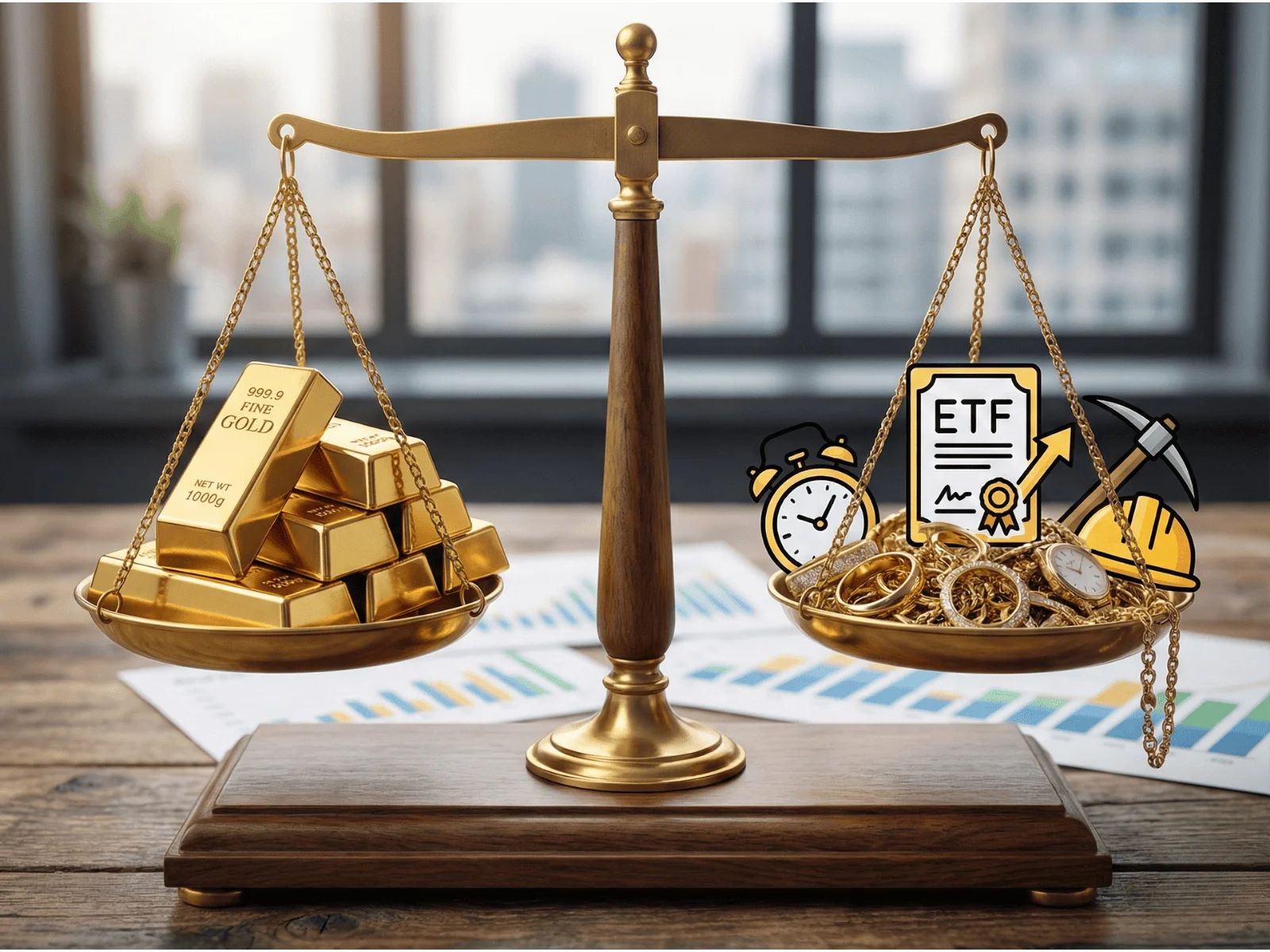
Gold follows the same economic principle that governs everything from apples to apartments: supply and demand.
When more people want gold than there is available, global gold prices rise. When there are more buyers than there is gold, the price of gold softens.
The demand for gold spans across these major sectors:
- Jewelry: Roughly half of the world’s gold demand comes from jewelry. For example, in major markets like India and China, cultural festivals and wedding seasons create periods of heavy gold buying, which pushes demand higher and tightens supply. This pattern often leads to price increases.
- Gold ETFs and Investment Products: Exchange-traded funds (ETFs) backed by physical gold let investors buy shares that represent stored bullion. A surge in ETF inflows signals increased investor appetite. The more shares institutions issue, the more physical gold they must purchase to back those shares, which pushes demand higher and supports stronger prices.
- Central Bank Gold Buying: Central banks influence gold demand by increasing their gold reserves, often to reduce reliance on volatile fiat currencies. When central banks buy aggressively, especially during periods of geopolitical uncertainty and high inflation, demand rises, and gold prices follow suit.
- Industrial and Technological Uses: Gold is used in electronics, medical devices, and even aerospace due to its conductivity and corrosion resistance. As technology advances, this demand may grow steadily, adding to overall pressure on supply.
On the other hand, supply is the amount of gold available on the market, which is inherently limited. It comes from two primary sources:
- Recycled gold: This refers to gold recovered from old jewelry, electronics, dental scrap, and other previously used sources. When prices rise, more people tend to sell their unused gold, which increases supply and can temporarily ease demand pressure.
- Freshly mined gold: This is newly extracted gold from the earth, sourced through industrial mining operations. It’s the primary way new gold enters the global market.
Gold production and mining costs

As mentioned earlier, freshly mined gold is one of the two significant sources of supply. However, gold mining production isn’t flexible enough to respond instantly to rising demand. Below are three reasons why:
- Mining is slow: Gold extraction involves exploration, permitting, drilling, ore processing, and refining. Each step can take years, sometimes decades, before new gold reaches the market.
- Mining is expensive: Opening and operating a mine requires billions of dollars in investment, including equipment, labor, energy, and environmental compliance costs. When costs rise, production often declines or stalls.
- Mining is resource-heavy: Gold deposits are limited and harder to access over time. Mines must process larger volumes of rock for smaller yields, stretching both the workforce and machinery.
All this explains why suppliers cannot simply dial up mining output on command. When global demand climbs faster than mines can keep pace, supply tightens, creating a bottleneck that pushes gold prices higher.
Inflation and interest rates
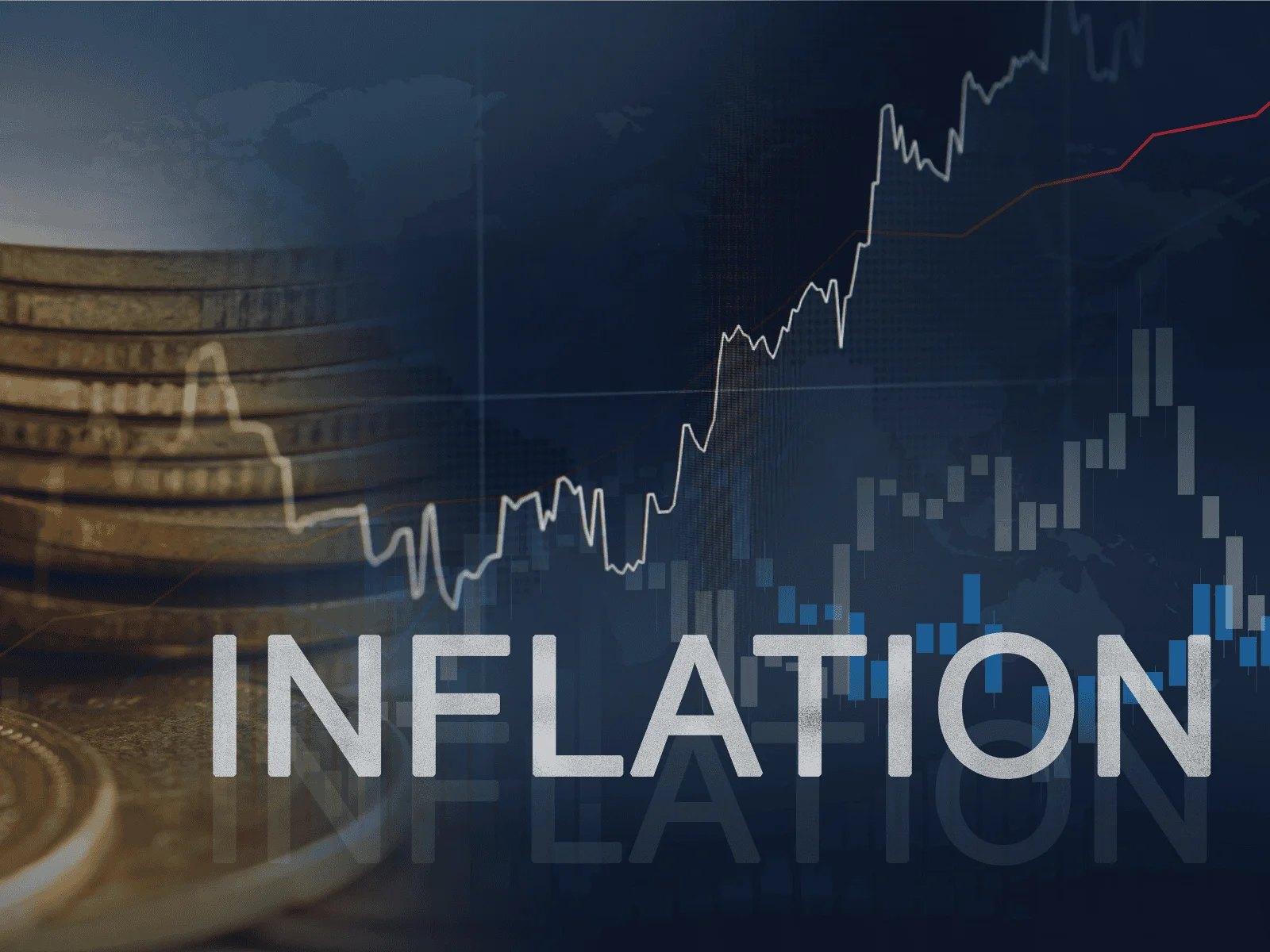
Gold prices react strongly to inflation and interest rates because both influence how attractive gold is as a store of value:
- When interest rates are high and inflation is low, investors prefer income-generating assets like bonds or savings accounts. Gold loses appeal.
- When real interest rates are negative, meaning inflation outpaces yields, gold becomes a safer option. It protects purchasing power.
Let’s unpack the 2nd scenario further.
When inflation rises:
- The purchasing power of cash weakens. Dollars in a savings account don’t stretch as far as they used to.
- Gold, on the other hand, doesn’t rely on any central bank to maintain its value. Its value doesn’t correlate with interest rates, monetary policy, or currency decisions. Because of its inherent value, it holds purchasing power even when cash loses ground.
- As a result, many investors move into gold during inflationary periods, demand rises, and the price of gold moves higher.
This trend of flocking toward gold becomes even more pronounced when one factors in rising interest rates, especially real interest rates, which subtract inflation from nominal yields.
If inflation is at 6% and a treasury bond pays only 3%, the real return is negative. In that scenario, gold looks far more appealing to investors. It doesn’t pay interest, yes, but it also doesn’t lose value the way negative-yielding cash does.
USD currency strength
Gold and the US dollar have an inverse relationship: when one rises, the other tends to fall.
That’s because gold is priced in dollars globally. When the dollar strengthens, it takes fewer dollars to buy the same ounce of gold, which can drive gold prices down.
When the dollar weakens, the opposite happens. More dollars are needed to buy the same ounce, and gold prices tend to rise.
Exchange rates also come into play. When the US dollar drops relative to other major currencies, overseas investors, whether in euros, yen, or rupees, get more gold for their money.
That increased buying power often drives a rise in international gold demand, further pressuring its value upward.
Geopolitical and economic uncertainty
In times of crisis, whether political, economic, or military, investors tend to move toward safe-haven assets. Gold has historically topped that list.
One of the major geopolitical events in the past couple of years that illustrates this was Russia’s invasion of Ukraine. Gold prices surged to just under $2,000 an ounce as fears of a prolonged conflict and energy instability spread through global markets.
It was the highest level since 2020, when gold also climbed to similar highs during the COVID-19 pandemic.
These moments of upheaval made gold more attractive because it offered stability amid uncertainty.
When people fear losing wealth, distrust governments, or anticipate unfavorable market conditions, they sell risky assets such as stocks and real estate investment trusts (REITs).
Instead, they look for something timeless, tangible, and independent of political systems. These factors cement gold’s status as crisis money.
Why Do Gold Prices Go Up?

Gold prices go up in response to several market triggers, such as:
- High inflation: Inflation erodes the purchasing power of paper currency, prompting investors to shift toward hard assets like gold, which better preserve long-term value.
- Falling interest rates: When interest rates decline, yield-bearing assets like bonds become less attractive. Gold doesn’t pay interest, but it becomes relatively more appealing when competing assets offer lower returns.
- Weakening USD: Since gold is priced in US dollars, a weaker dollar means it takes more dollars to buy the same ounce of gold. This connection lifts gold’s price and boosts global demand.
- Geopolitical and economic instability: Wars, pandemics, sanctions, or political uncertainty tend to push investors away from risky markets and toward safe-haven assets like gold, which drives prices upward.
- Increased demand from central banks and retail investors: When central banks accumulate gold to diversify their reserves – or when retail investors make large purchases through ETFs – demand rises, pushing prices higher.
These same factors also shape what many consider the best time to sell gold, although others prefer holding gold to benefit from long-term trends.
What Makes Gold Prices Go Down?
The factors below tend to pull gold prices down, making it less attractive compared to other investments:
- Strong dollar: A stronger US dollar means fewer dollars are needed to buy the same ounce of gold, reducing its price. It also makes gold more expensive for foreign buyers, which weakens global demand.
- Rising interest rates: When interest rates increase, cash and bonds offer better returns. Investors move away from non-yielding assets like gold, lowering demand and pushing prices down.
- Reduced investor confidence in gold: When people feel confident about the economy or expect higher gains from stocks, real estate, or other assets, they may liquidate gold positions. That selling pressure softens demand and weighs on price.
- Increased gold supply or liquidation by central banks: When large amounts of gold hit the market, whether from mining output or central banks liquidating reserves, supply jumps. If demand doesn’t rise at the same pace, the oversupply can drag prices lower.
How Is Gold Valued by the Gram or Ounce?
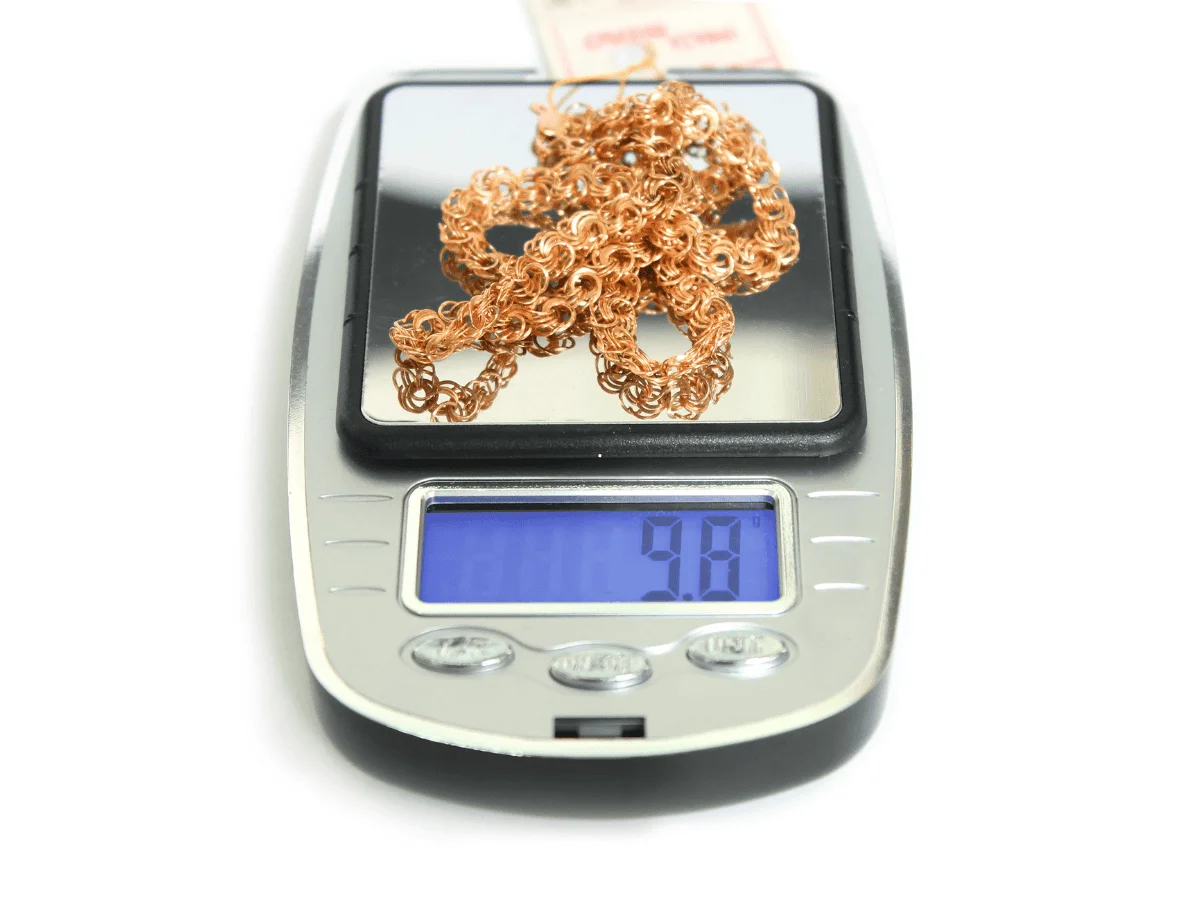
Whether measured in grams or troy ounces, the value of gold depends on the amount of pure gold present and the current market price.
Therefore, to calculate its value, someone needs three things:
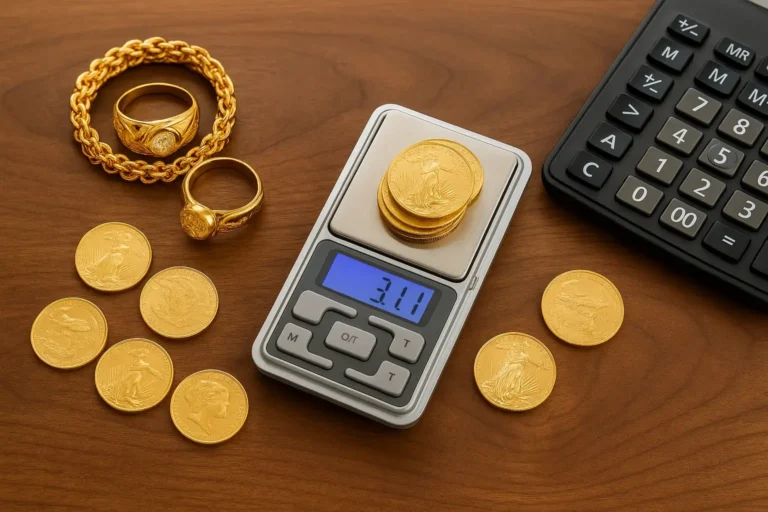
- Weight: usually in grams (g) or troy ounces (oz). One troy ounce equals 31.1035 grams.
- Purity: measured in karats. 24K is pure gold, while 18K is 75% pure, 14K is 58.3%, and so on.
- Spot price: gold’s live market price, which, as of writing, sits at roughly $4,200 per troy ounce or $135 per gram.
To illustrate, a 10-gram piece of 18K gold contains 7.5 grams of pure gold. Multiply 7.5 grams by the gold spot price of $135 per gram, and one can see a melt value of $1,012.50.
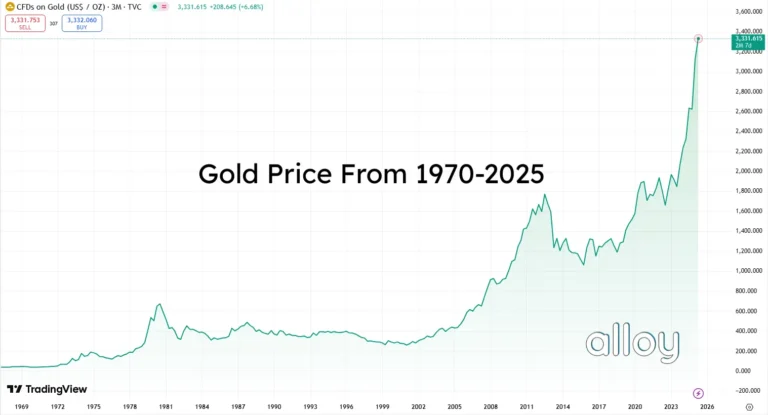
Gold’s long-term performance has followed a clear upward trajectory, something you’ll see more clearly when looking at historical gold prices.
Over the last five decades, gold has moved from a fixed price of $35 per ounce (pre-1970s) to record highs in the thousands. In fact, on October 17, 2025, gold reached an all-time high of $4,379 per troy ounce.
Long-Term vs. Short-Term Valuation Factors

Looking at gold’s long- and short-term performance can shed light on why it swings in price from week to week while still rising steadily over the years.
In the short run, its price can change quickly as traders respond to headlines, interest-rate updates, or sudden moves in the dollar. These movements typically arise from speculative activity and financial instruments tied to gold rather than the metal itself. Key short-term factors include:
- ETF inflows or outflows, which can create immediate demand shifts and temporary distortions.
- Futures market repositioning on COMEX, where traders bet on near-term price direction and trigger rapid volatility.
- Algorithmic or high-frequency trading, which reacts to economic releases or market data within seconds.
- Headline risk, such as unexpected Federal Reserve statements or geopolitical news that jolts investor sentiment.
Long-term performance, however, comes from deeper fundamentals that outlast any single news cycle. These forces build slowly but shape gold’s overall trajectory far more than a brief speculative surge. Key long-term drivers include:
- Central bank reserve policies, such as accumulating gold to diversify away from fiat exposure.
- Inflation trends, which erode currency strength and make hard assets more appealing.
- Global interest-rate cycles, especially periods of prolonged low or negative real rates.
- Limited annual mine output, which caps how quickly the gold supply can expand even if demand surges.
All that said, short-term pricing reflects sentiment and speculation, while long-term value reflects scarcity, global demand, and gold’s role as a financial hedge. One explains the bumps. The other describes the climb.
Final Thoughts

A single factor never determines gold’s value. It’s the sum of many moving parts. From inflation and interest rates to mining output and investor behavior, each element influences the price you see on the screen.
If you’re planning to sell your gold for the best price possible, timing matters, yes, but so does understanding what drives the market in the first place. That’s why it helps to follow real-time updates, historical charts, and clear valuation guides.
Check out The Alloy Market’s free tools and resources to help you stay informed and make confident decisions about when and how to sell your gold piece.