Understanding Gold Stamps and Markings: How to Read Your Jewelry’s Hallmarks


Much like a signature proves authorship or a serial number verifies a luxury watch, gold stamps and markings help identify the value, composition, and authenticity of gold jewelry.
In other words, they help protect buyers against fraud and help sellers estimate how much their piece may be worth. Ahead, this gold jewelry markings guide walks readers through how to read gold stamps with confidence and use them to their advantage.
In a nutshell
Gold stamps and hallmarks are small markings that reveal a piece’s purity, origin, and sometimes its maker. Common stamping like 10K, 14K, 585, or 750 indicates the amount of real gold the item contains, while assay marks and maker’s marks can add credibility and resale appeal. Although stamps don’t guarantee authenticity on their own, they are the first and most important clue when estimating value. Understanding how to read gold markings helps buyers avoid fraud and helps sellers gauge the value of their jewelry before getting a professional evaluation.
What Are Gold Stamps and Markings?
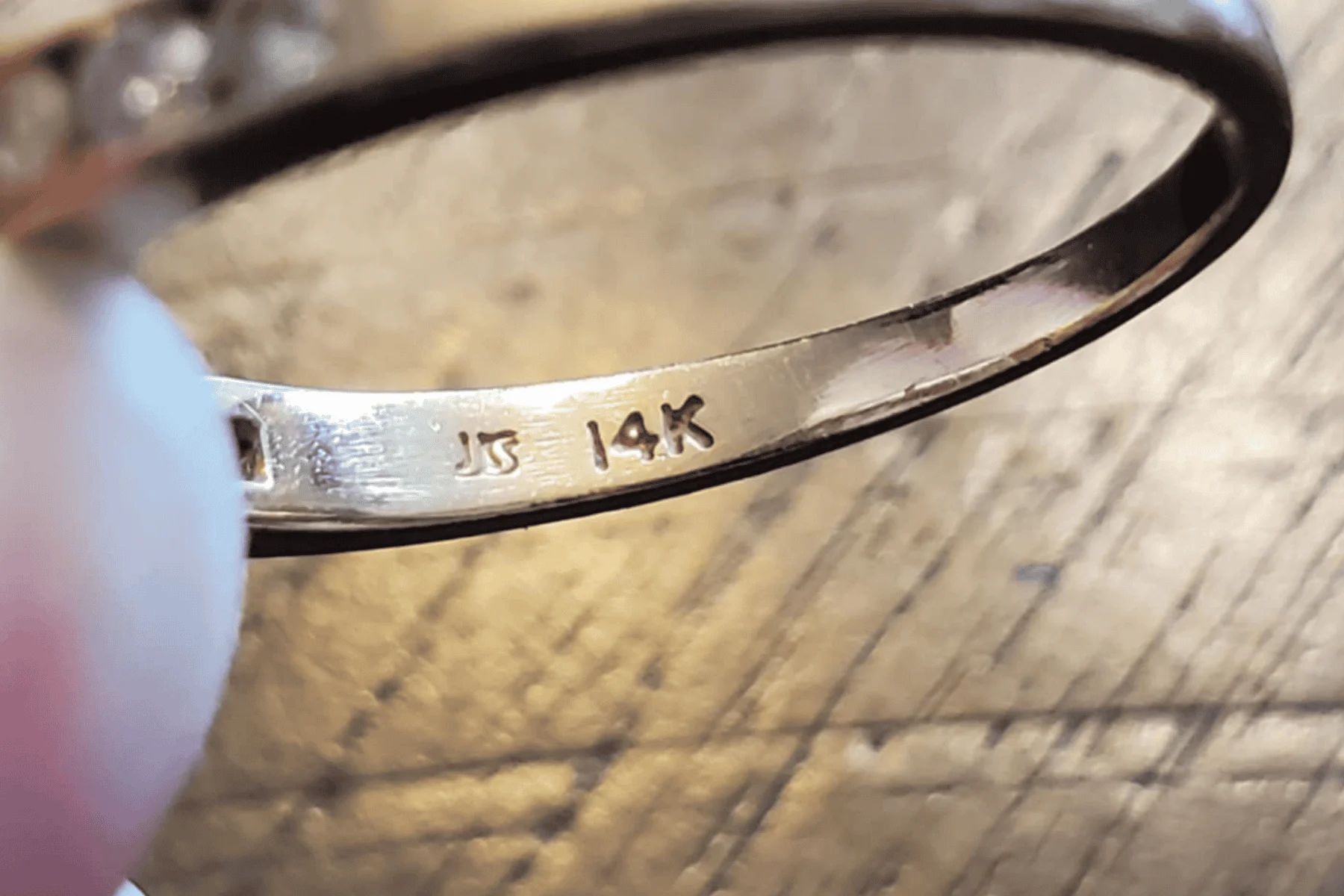
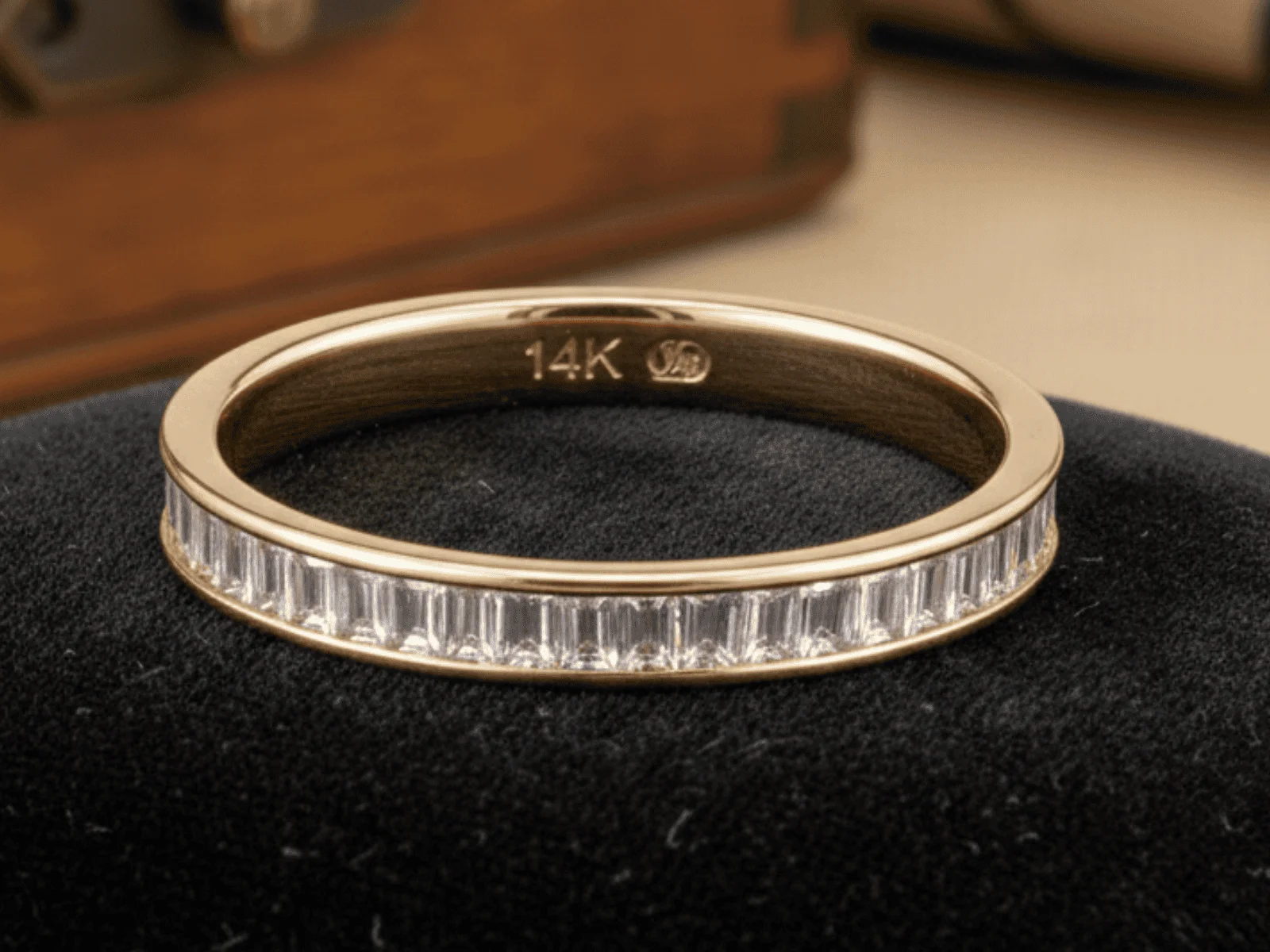
Gold stamps and markings are small imprints of numbers, letters, symbols, or a combination pressed discreetly into jewelry. It’s often found on the inside of ring bands, near the clasp on necklaces and bracelets, or on the back of pendants and earrings.
These markings indicate the metal’s purity, origin, and sometimes the manufacturer or country of assay. Buyers use these gold stamps to verify whether the item is real gold, its karat, and whether it has been officially tested or hallmarked.
In other words, they help answer the two questions every buyer and seller cares about: “How pure is the gold?” and “Can I trust this piece?”
While they don’t guarantee authenticity on their own, they’re often the first sign that something is worth a closer look. Beyond gold, stamps and hallmarks also apply to silver jewelry and other precious metals like platinum and palladium.
Definition and purpose
So what do gold hallmarks mean? Gold stamps, also known as gold purity stamps or marks, are official or manufacturer-applied symbols indicating the composition, origin, and authenticity of a gold item.
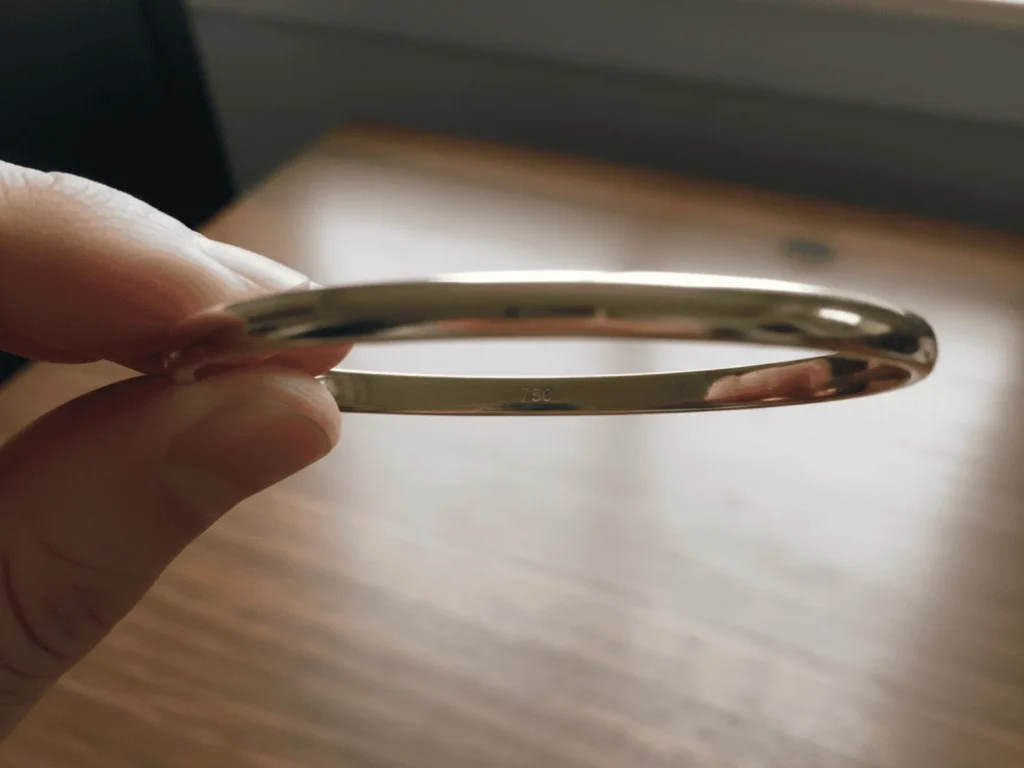
They usually appear in the form of karat numbers (like 10K or 14K), decimal purity (like 0.750 or 0.585), or symbols denoting origin or certification. That’s to say, a hallmark typically falls into one of these three categories:
- Purity markings refer specifically to the karat or fineness of the gold
- Assay marks are official stamps from a government or third-party testing body that confirm the gold’s purity after lab testing (common and often required in European countries like the UK or Switzerland)
- Manufacturer stamps are usually placed by the brand or factory that made the item. These can include trademarks, purity claims, and logos.
Common Gold Purity Stamps and What They Mean
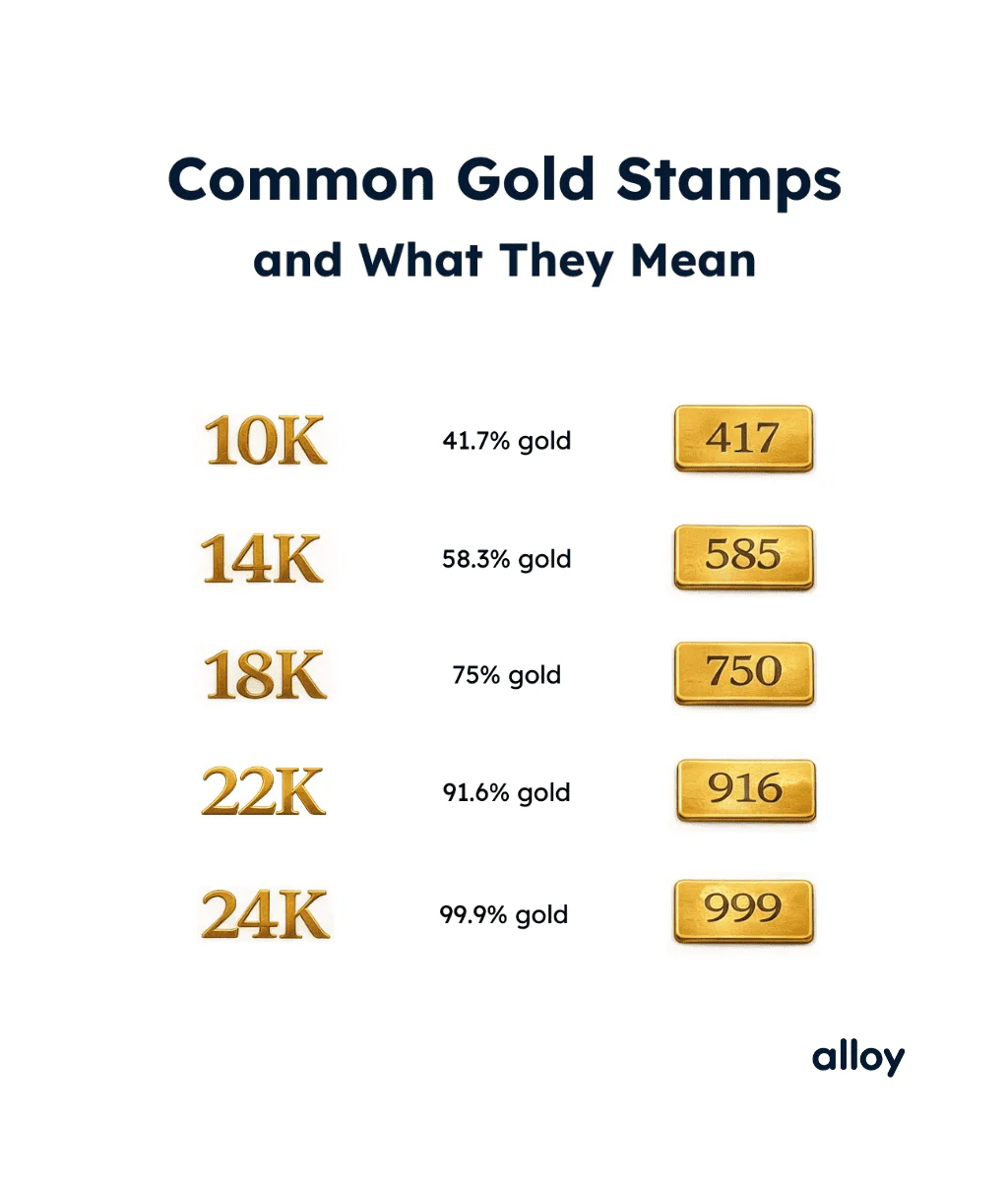
Modern purity marks in gold jewelry
Most modern gold jewelry is stamped with either a karat mark or a three-digit purity code. Both serve the same purpose, that is, to help determine gold purity; essentially, the gold content and the proportion of other metals present.
Karat marks (expressed in “K”, “k”, or “kt”) break gold into 24 parts. So:
- 10K = 41.7% gold (10/24)
- 14K = 58.3% gold
- 18K = 75% gold
- 22K = 91.6% gold
- 24K = 99.9% gold (pure gold)
Some countries (especially in Europe and Asia) use numeric stamps or millesimal fineness, which measures gold purity in parts per thousand:
- 375 = 9K = 37.5% gold
- 417 = 10K = 41.7% gold
- 585 = 14K = 58.5% gold
- 750 = 18K = 75% gold
- 916 = 22K = 91.6% gold
- 999 = 24K = 99.9% gold (pure gold)
If someone is wondering why the decimals sometimes look slightly off, it’s rounding. 14 karat gold technically comes out to 58.333%, but it’s commonly marked as 585.
In the United States, under the Federal Trade Commission (FTC) guidelines, any gold item that bears a karat stamp must also be accompanied by a manufacturer’s registered trademark or name.
This requirement exists to hold someone accountable if the stamp is found to be misleading. It’s not mandatory for U.S. manufacturers to stamp gold jewelry at all, but if they do, it must meet that condition.
Regional and maker marks
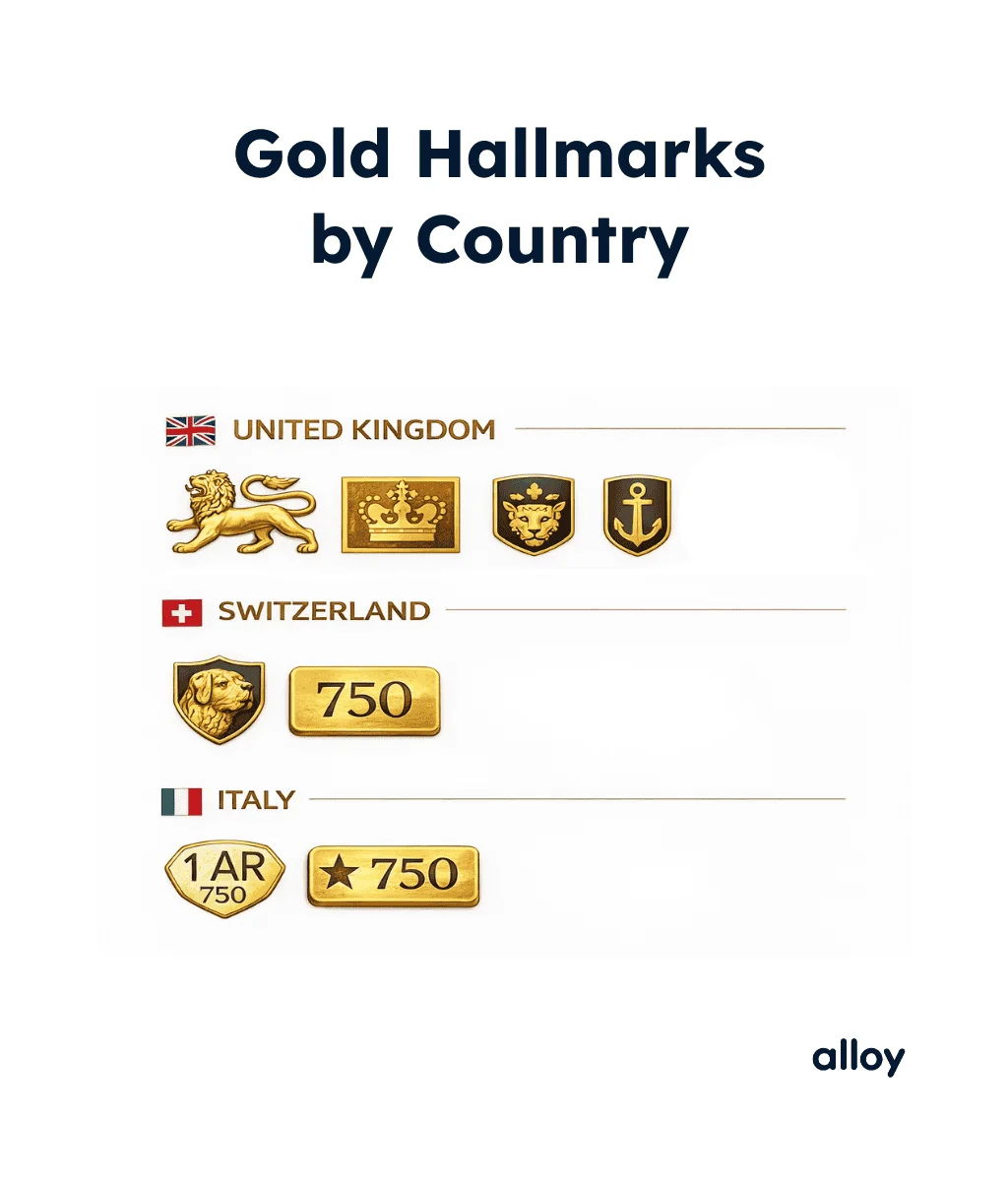
While the U.S. relies heavily on karat numbers and trademarks, many countries use full hallmarking systems that include purity, assay office, and origin.
For example:
- United Kingdom: One might see a lion passant (symbol for sterling silver), a crown (traditional gold mark), or a numeric purity value with a letter indicating the date of the piece. Assay office marks include a leopard head (London) or anchor (Birmingham).
- Switzerland: Uses official hallmarks like the St. Bernard dog’s head, along with fineness numbers to indicate purity.
- Italy: Commonly stamps gold with numeric fineness (like 750), a small lozenge with a number plus province code (e.g., “1 AR” for Arezzo), and a five-pointed star symbol.
If someone is dealing with gold jewelry from outside the U.S., it’s worth knowing that many countries are members of the Convention on the Control and Marking of Articles of Precious Metals (also known as the Hallmarking Convention). This agreement ensures a standardized approach to hallmarking across member countries.
For other countries not part of this convention, hallmarking rules vary. In India, for instance, the Bureau of Indian Standards (BIS) oversees gold markings under a mandatory hallmarking scheme. In mainland China, the standard is defined by GB/T 4134-2021.
On the other hand, maker’s marks or trademarks identify the brand or manufacturer that produced the item. These can be full names, initials, or pictorial symbols, which can increase buyer confidence and resale price.
Vintage and Old Gold Markings
Antique & obsolete stamps
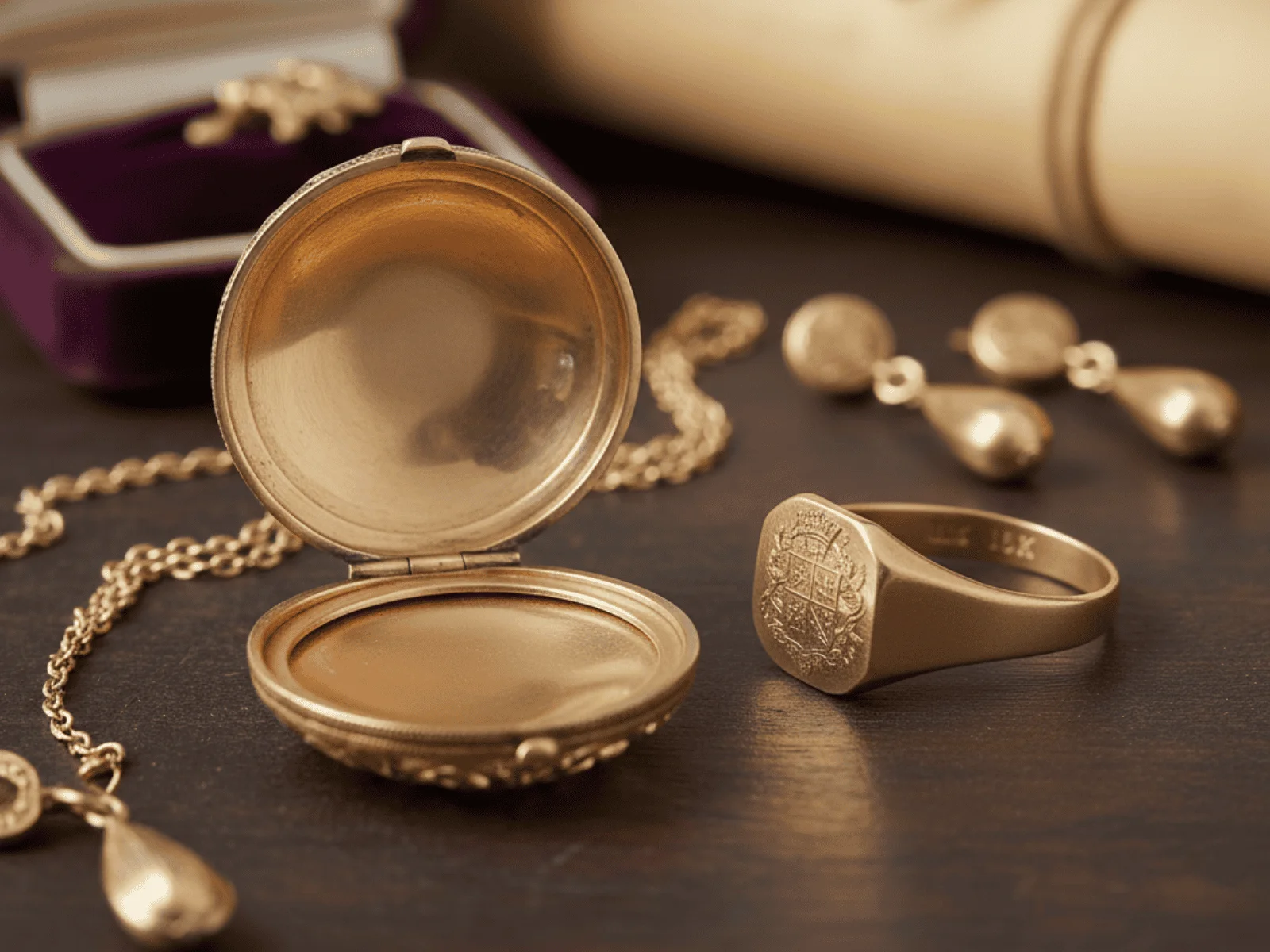
Not all gold markings follow today’s familiar 10K, 14K, or 18K system. In fact, many older pieces carry stamps that are no longer in use.
For example, in the UK, 15 karat and 12 karat gold standards were legally recognized until 1932, when they were discontinued and replaced with 14K as the minimum intermediate standard. This change was made to simplify and standardize gold purity levels, aligning British gold markings more closely with internationally recognized karat systems. As a result, pieces stamped 15ct or 12ct typically indicate that the jewelry was made before 1932, making the stamp itself a helpful clue to the item’s age.
One may also encounter abbreviations such as “ct” or simply “c” in place of “K,” as “carat” was traditionally abbreviated differently in Britain. So instead of seeing 15K or 18K, older British pieces might be stamped 15ct, 18ct, or even just 18c, all of which indicate the same gold purity but reflect historical labeling conventions.
If someone encounters an outdated stamp, that doesn’t automatically mean the piece is fake. However, some pieces from that era might be underkarated. It’s wise to seek professional testing, such as an XRF scan, to ensure the gold’s true value.
Estate and antique jewelry stamps

While obsolete stamps indicate the gold content, estate and antique hallmarks can reveal much more. They often indicate who made the piece (maker’s mark), where it was tested (assay office mark), and when it was created (date letters).
In many traditional hallmarking systems, these symbols appear together in a small row of stamps. For example, a British gold ring might display a purity mark (such as 750), an assay office symbol (like the Birmingham anchor), a maker’s initials, and a date letter, each serving a distinct purpose. Together, they create a traceable record of the piece’s origin and authenticity.
As discussed earlier, many of these hallmarking systems are still legally required today. However, the exact symbols, letter styles, and formats used decades ago differ from those used today, which is why understanding historical variations can help narrow down a piece’s age.
A good example is British date letters. For instance, the Birmingham Assay Office used an uppercase “F” alongside the anchor symbol for pieces assayed in 1930, while pieces assayed in 2005 used a lowercase “f.” The font style, case, and shield shape surrounding the letter correspond to specific years listed in official assay office charts, allowing collectors and appraisers to pinpoint when the piece was formally tested.
Another example is the Chester assay mark. If a gold piece features a shield with three wheatsheaves (garbs), a sword, and a date letter, it likely originated from the Chester Assay Office, which operated until its closure in 1962. Because each assay office had its own unique symbol, identifying the mark can confirm the piece’s geographic origin, which may increase its historical interest to collectors.
Again, professional testing is advisable, as some older pieces were occasionally underkarated. If someone believes the piece may carry antique appeal beyond its gold value, consulting a reputable antique dealer or collector may be worthwhile, though a higher resale price isn’t always guaranteed.
How to Read and Verify Gold Stamps
Tools for inspection

To read them clearly, you’ll want tools that help magnify and highlight fine details:
- Jeweler’s loupe (10x is standard) or a head-worn magnifier
- Good lighting to make small stamps and symbols easier to see
- A microfiber cloth to wipe away grime without scratching the metal
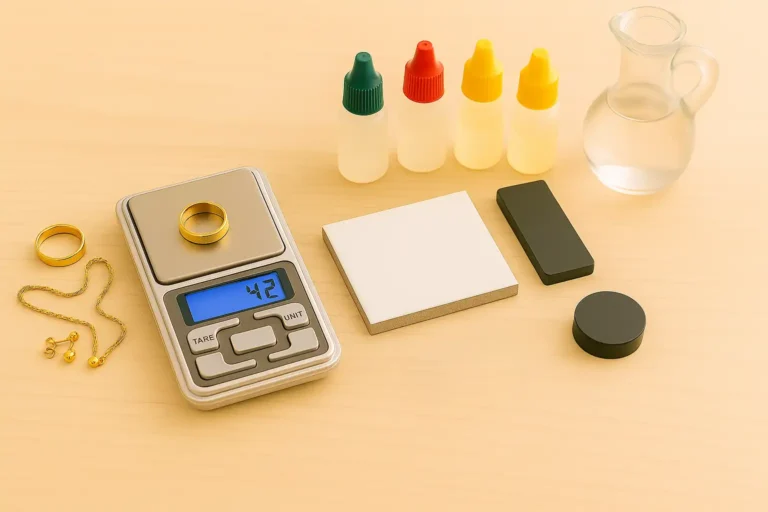
For anyone looking to verify the actual purity of their gold piece rather than just inspect markings, check out our article on gold-testing methods anyone can do at home.
How to identify gold marks (step-by-step)
To accurately identify gold marks, follow these practical steps.
- Find the stamp or hallmark: Check the inside of rings, near the clasp of necklaces and bracelets, or on the post or backing of earrings. On pendants, look near the bail or back plate.
- Clean the area gently: If the markings are faint or obscured by dirt, use a soft cloth or a little warm water and mild soap. Avoid anything abrasive that could further wear down the mark.
- Take a close look: Use a jeweler’s loupe or magnifier to zoom in. You’re looking for karat (e.g., “14k”, “15c”, “15ct”) or millesimal (e.g., 750) numbers, symbols (like a crown, animal head, or shield), and letters (which correspond to assay dates). Occasionally, you may also find a maker’s stamp (e.g., Cartier, Tiffany & Co)
- Cross-check with a chart: Compare what is stamped with a reliable hallmark reference chart, which anyone can pull up with a quick Google search or with help from an antique jewelry expert or collector. This step matters most for anyone hoping for antique or collectible value.
- Ask for professional help if unsure: If the stamp is too worn or ambiguous, or if the piece has no stamp at all, the best way to determine the gold item’s purity and value is to have it professionally tested.
Why Gold Markings Matter for Value
Purity and market value
When it comes to selling gold, purity is a major factor in determining value. A 10-karat gold ring contains 41.7% gold, while a 14-karat gold ring contains 58.3%. That difference alone can change an offer by around 40%, even if both pieces look identical.
Most gold buyers, especially scrap gold buyers or refiners, pay based on the melt value of gold, which depends on two things: weight and purity. The higher the gold content, the more the item is worth per gram.
To get a ballpark figure, one can check the current spot price of gold and multiply it by the purity percentage.
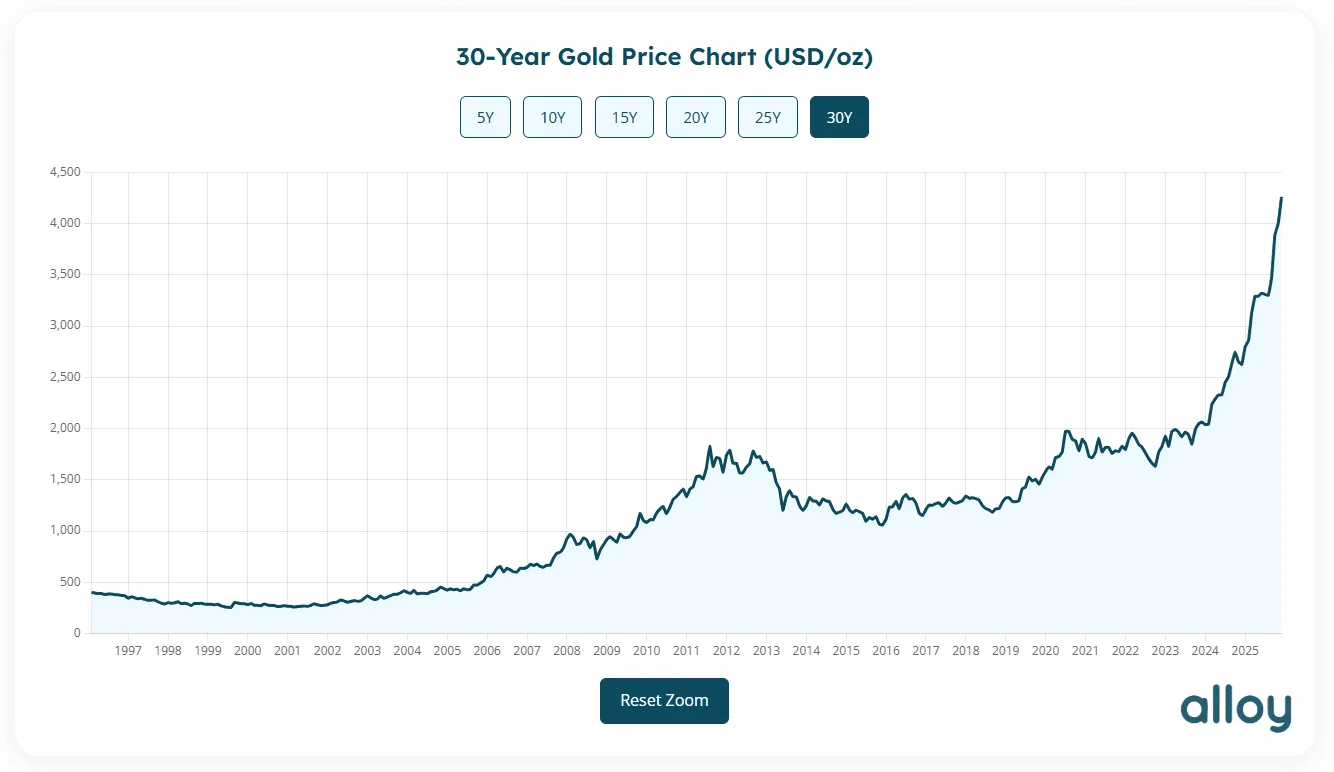
For example, if gold is priced at $4,000 per ounce, 18 karat gold (75% pure) would contain about $3,000 worth of gold per ounce, while a 10 karat gold (41.7% pure) would contain about $1,668 per ounce.
Tip:
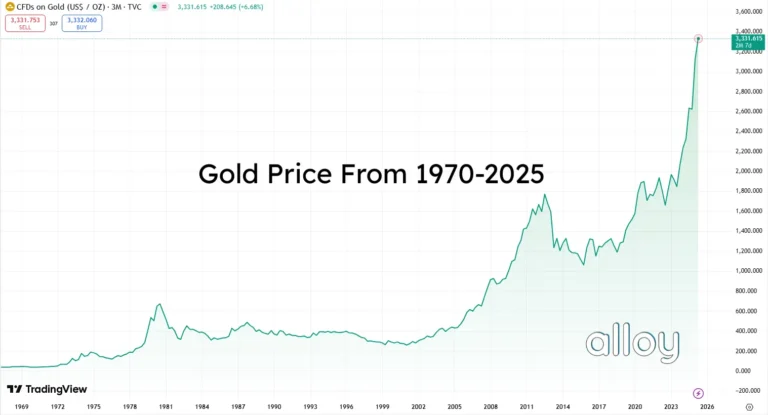
Curious about how gold prices have trended and how timing could affect your sale? Check out Alloy Market’s Historical Gold Prices guide.
Hallmarks and buyer confidence

In a resale transaction, trust matters. That’s where hallmarks come in.
Clear, verifiable gold stamps make it easier for buyers, refiners, and even pawn shops to move forward confidently, and, in some cases, offer a better price.
Why? Because it reduces their risk. They don’t have to speculate about the alloy composition or purity percentage, or spend additional time and money on testing.
Stamps from well-known brands (such as Tiffany, Cartier, or reputable Italian makers) can attract stronger offers. Likewise, assay marks from countries with strict hallmarking laws, such as the UK or Switzerland, tend to carry more credibility in the eyes of buyers.
All that’s to say, without hallmarks, many buyers would likely assume a lower karat or the need for formal testing before making an offer. So even if an item is genuine gold, a missing or unclear stamp can affect the payout.
Ready to Sell? Let Alloy Evaluate It for You
Understanding gold stamps is a powerful first step in preparing your pieces for sale. Once you know your piece is 10K, 14K, 18K, or stamped 750 or 916, you already have a clearer idea of its potential value. But stamps alone can’t determine what you’ll actually receive when it comes time to sell. The final offer depends on verified purity, precise weight, and the current live market price of gold.
That’s where Alloy comes in. At The Alloy Market, each item is evaluated using professional testing methods, such as XRF and acid testing. We assess your piece by its true purity and weight and provide you with a detailed, itemized offer.
If you’re ready to sell, you can request a free, insured evaluation kit to have your pieces professionally evaluated for sale. There’s no obligation to accept the offer, and if you decline, your items are returned at no cost.
Join the thousands of happy customers and get started today.