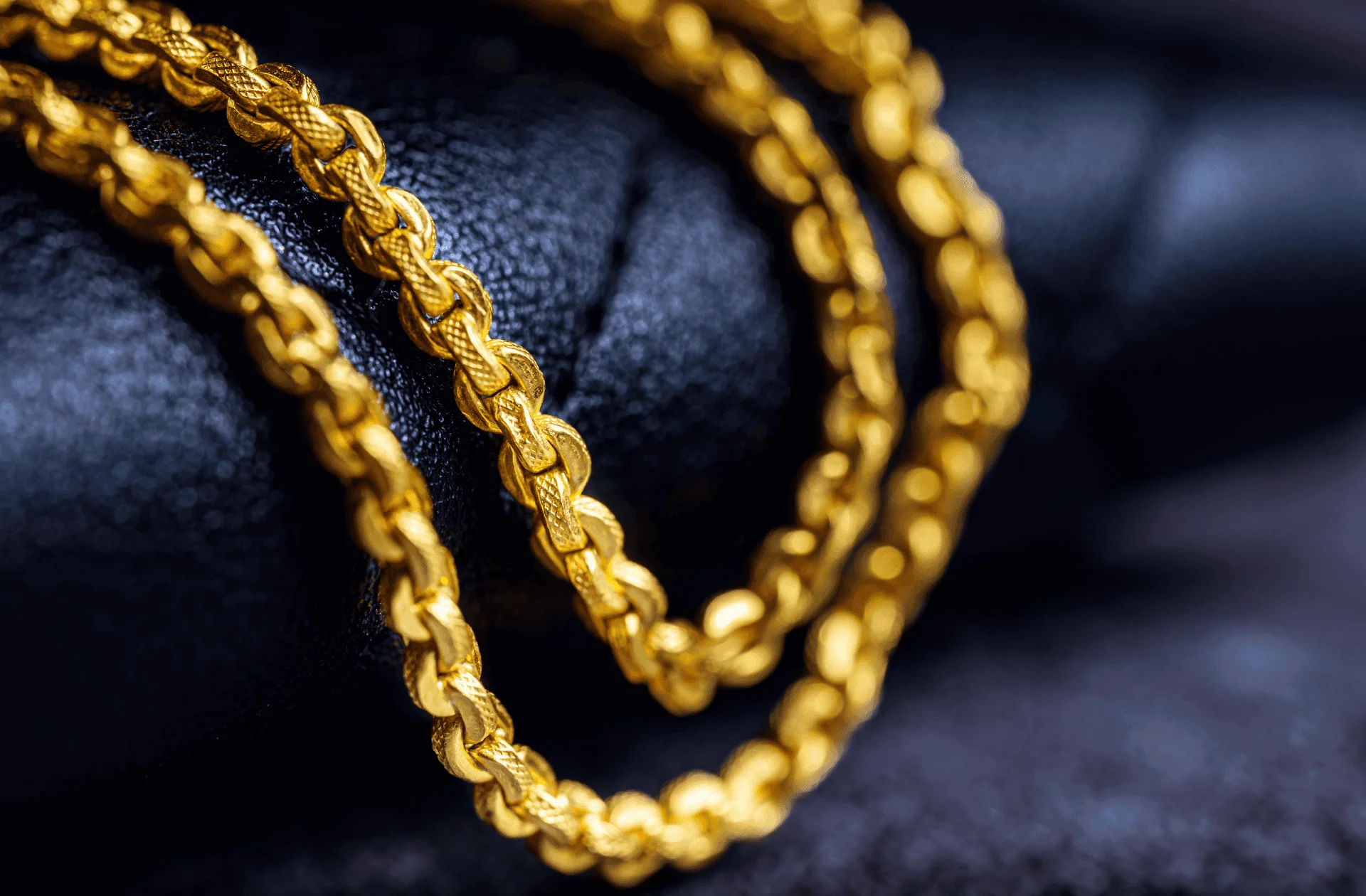
how much is a 14K gold chain worth

How Much Is a 14K Gold Chain Worth? A Guide for Sellers

Written by Brandon Aversano ℹ️
Brandon Aversano
CEO and Founder
Expertise: Fintech innovation, product strategy and growth, business leadership

Brandon Aversano is the founder and CEO of The Alloy Market, where he combines his background in financial services and digital product strategy with a mission to modernize the gold exchange industry.
CEO and Founder
Autumn Hernandez
Edited by Autumn Hernandez ℹ️
Autumn Hernandez
Editor & Author
Expertise: SEO, Content Creation

Autumn is a digital marketing analyst with a background in real estate, more than 15 years of online writing experience, and a history of publishing and entrepreneurship.
Editor & Author

Gold jewelry comes in many forms, but necklaces and 14K gold chains are among the most common pieces that everyday people own, which also makes them among the most commonly sold.

Whatever the reason, many sellers still walk into the process without a clear idea of what their chain should realistically be worth, let alone how to get the best possible payout for it.

In this guide, we’ll show how much a 14K gold chain is worth, how to calculate its melt value, what affects the final payout, and where sellers often get the most money for their gold jewelry.

In a nutshell

How much a gold chain is worth depends on its weight, purity, and the current spot price of gold. Together, those numbers provide the melt value, which acts as the baseline valuation for any piece of gold jewelry. On rare occasions, special, high-demand chains can command more than their melt value when sold privately; however, most sellers will receive only a portion of the melt value due to premiums charged to cover business overhead.

How Much Is a 14K Gold Chain Worth?

Based on melt value alone, a 14K gold chain can be worth anywhere from around $150 to well over $5,000. Here’s a rough idea of how its worth can vary based on chain size and weight:

Chain Type Typical Weight Approximate Melt Value Range*
Lightweight chains or chains with small charms 2–6 grams ~$170–$510
Standard everyday chains 5–15 grams ~$425–$1,275
Heavy or statement chains (e.g. Cuban links, thick gold rope chains, etc.) 15–70+ grams ~$1,275–$5,950+
Lightweight chains or chains with small charms
Typical Weight:
2–6 grams
Approximate Melt Value Range*:
~$170–$510
Standard everyday chains
Typical Weight:
5–15 grams
Approximate Melt Value Range*:
~$425–$1,275
Heavy or statement chains (e.g. Cuban links, thick gold rope chains, etc.)
Typical Weight:
15–70+ grams
Approximate Melt Value Range*:
~$1,275–$5,950+
*Approximate melt value ranges are estimates for 14K gold jewelry based on live gold pricing and assumed 58.3% gold purity. Current live gold spot price: $ per gram for pure gold before 14K purity adjustment.

**Actual payouts can vary depending on karat accuracy, overall weight, attached stones or non-gold components, refining considerations, and real-time market conditions.

Note that these values are only ballpark estimates. Later, this article will discuss the factors that influence a gold chain’s value and the exact steps to calculate it more accurately.

In the meantime, one thing should already stand out from the table above: melt value, or a chain’s worth based on pure gold content alone, generally increases as weight increases. One can safely infer that weight is the primary factor driving the value of a gold chain.

To simplify, where two chains are both stamped “14K,” but one weighs 10 grams while the other weighs 5 grams, the heavier chain would be worth about twice as much.

How much is a 14k gold chain worth per gram?

gold chains
A 14K gold chain is worth roughly $calculating… per gram based on a spot price of $ per gram.

Remember that the spot price is the global market price of pure 24K gold. 14K gold, which is only 58.5% pure, is worth only 58.5% of the full spot price. Here’s how the calculation works:

14K Gold Value Per Gram = Current Gold Spot Price x 58.5%

$ x 0.585 = ~$calculating… per gram

What Is 14K Gold?

chunky gold chain

To better understand how much a 14K gold chain is worth, it helps to first look into what “14K gold” means.

14K gold is a gold alloy made up of 58.5% pure gold and 41.5% other metals such as silver, copper, zinc, or nickel. Those additional metals are added to improve the jewelry’s strength and durability, since pure 24K gold is naturally very soft and scratches or bends easily.

Among the common karats used in jewelry, 14K is arguably the most popular today, spanning everything from wedding bands and bracelets to watches and necklaces.

And speaking of necklaces, gold chains are among the most common and widely worn styles. Some people wear thick Cuban links as statement pieces, others prefer Franco or rope chains with pendants, although many still stick with minimalist everyday chains.

But why is 14K gold jewelry so popular in the first place? Simply because it offers the perfect “balance”; it contains a substantial amount of real gold while being durable enough that one is not constantly worried about wearing it daily.

How much is 1 oz of 14 karat gold?

Based on the current spot price of roughly $ per ounce, 1 oz of 14K gold is worth around ~$calculating… based on melt value alone.

Here’s the calculation:

1 oz × 58.5% × $ = ~$calculating…

Factors That Determine the Value of a 14K Gold Chain

big gold chain

Beyond karat rating or purity, several other factors can dramatically affect the value of a 14K gold chain. Some directly influence the amount of gold your piece contains, while others affect how buyers evaluate or price the piece.

Current gold spot price

keep an eye on the market

One of the biggest factors affecting the value of a 14K gold chain is the current spot price of gold.

The gold spot price is the live market price of pure 24K gold traded globally. This number can fluctuate daily based on factors such as inflation, interest rates, and geopolitical tensions, among others.

So, if gold prices rise from $4,000 per ounce today to $4,500 per ounce tomorrow, the melt value of a chain also rises. For the most part, this explains why two people selling identical 14K chains at different times of the year may receive very different offers.

Weight

two chains

Outside of the gold spot price, weight is the single biggest driver of a 14K gold chain’s worth. The principle is simple: the more grams, the more gold content, and therefore the more value.

If two chains are both 14K gold, but one weighs 40 grams, and the other weighs 10 grams, the heavier chain will generally be worth about 4 times as much on a melt-value basis.

The same principle applies to solid versus hollow chains. Solid gold chains are constructed entirely of gold, whereas hollow chains have an empty interior, reducing overall weight and cost. So even though some hollow chains may still look thick or expensive from the outside, they often contain much less actual gold.

Chain style and thickness

heart chain

Chain style and thickness both contribute heavily to a chain’s overall weight, which ultimately affects its value.

Thicker chains contain more gold and therefore carry higher melt values. A thin 2mm box chain may weigh only a few grams, while a thick 10mm Cuban link chain of the same length can weigh several dozen grams.

That same logic also explains why men’s gold chains, which are often made thicker and wider, tend to be worth more than women’s chains.

Whether it’s a thick Cuban link, a Franco chain, or a rope chain that someone possesses, the final value still comes down to one thing: how much gold is sitting on the scale.

Length of the chain

chains purple background

Just as thickness contributes to weight, chain length also affects how much gold the chain contains. One can think of gold chains as a kind of gold “rope.” The longer the rope becomes, the more material (gold) is needed to produce it.

By instinct alone, a longer chain usually requires more gold than a shorter chain made in the same style and thickness. So generally speaking, a 20-inch chain would be worth more than an 18-inch chain, in the same way that a 24-inch chain would usually be worth more than a 22-inch chain.

However, keep in mind that length alone does not determine value. A shorter but extremely thick chain can easily outweigh and outvalue a much longer, thinner chain. Again, it all comes down to which number registers on the weighing scale.

Condition and wear

three gold chains

Scratches, dents, tangles, broken clasps, and other imperfections can reduce the resale value of a 14K gold chain, but only if selling to someone who intends to either resell it as jewelry or wear it again. In most cases, that matters more to jewelers or private buyers, who may factor those imperfections into their offer.

However, for most gold buyers, condition matters far less, as they primarily evaluate the chain based on its melt value. And that melt value remains the same regardless of whether a 14K gold chain is damaged or in perfect condition.

Brand and craftsmanship

figaro

Pieces from luxury brands or highly regarded jewelers may at times command higher resale prices because buyers are paying not only for the gold itself but also for the branding, craftsmanship, and prestige associated with the piece.

But, like condition and wear, this matters only when selling to buyers who intend to use the piece as jewelry or resell it as jewelry, such as jewelers, collectors, or private buyers.

In most situations, gold buyers are primarily focused on melt value. Brand and craftsmanship have very little impact and often don’t matter much at all.

Gemstones or pendants

diamond gold chain

Chains with gemstones or pendants can sell for more overall because sellers are effectively selling two separate items at once: the gold chain and the attached gemstone or pendant.

That said, it’s often better to separate and sell the pendant or gemstones independently rather than lump everything together as scrap jewelry. Some buyers focus only on the gold content and may assign little to no value to the jewelry attachment itself.

14K Gold Chain Worth by Length

Below is a general breakdown of what different 14K gold chain lengths are typically worth based on common weight ranges:

14K Gold Chain Length Typical Weight Range* Estimated 14K Gold Value**
18-inch ~5–15 grams Calculating…
20-inch ~7–20 grams Calculating…
22-inch ~10–30 grams Calculating…
24-inch ~12–40 grams Calculating…
18-inch
Typical Weight Range*:
~5–15 grams
Estimated 14K Gold Value**:
Calculating…
20-inch
Typical Weight Range*:
~7–20 grams
Estimated 14K Gold Value**:
Calculating…
22-inch
Typical Weight Range*:
~10–30 grams
Estimated 14K Gold Value**:
Calculating…
24-inch
Typical Weight Range*:
~12–40 grams
Estimated 14K Gold Value**:
Calculating…
*Typical weight ranges can vary depending on chain style, thickness, and construction.

**Estimated values are based on 14K gold jewelry with assumed 58.5% gold purity and live market pricing. Current live gold spot price: $ per gram for pure gold before 14K purity adjustment.

One piece of info from the table shows that chain lengths can overlap heavily in value. For instance, an 18-inch chain can be worth more than a 24-inch chain, which goes against the common assumption that longer automatically means more valuable.

The reason comes down to weight. A thick, solid 18-inch Cuban link chain may contain significantly more gold than a thin or hollow 24-inch box chain.

The bottom line? While length gives you a rough reference point, it’s ultimately the amount of actual gold inside the chain that determines what it’s worth.

How Much Should I Sell My 14K Gold Chain For?

get paid

There’s no single fixed price anyone should charge for their 14K gold chain, because the answer depends on several factors. That said, there are two numbers one needs to understand before selling their chain:

  1. The melt value of the chain
  2. The percentage of the melt value that buyers pay.

Without those two reference points, it becomes very easy to get lowballed.

How to Calculate the Value of a 14K Gold Chain

calculate your gold's value

The melt value provides a baseline estimate of the intrinsic gold value in the chain. To calculate the melt value of a 14K gold chain, three things are needed:

  • The chain’s weight.
  • Its gold purity.
  • The current gold spot price.

Here’s the step-by-step process.

  1. Inspect the chain for a karat stamp to verify that it is 14K gold. Common markings include “14K”, “14KT,” or “585.”
  2. Weigh the chain: Use a digital jewelry scale, preferably in grams. Make sure to remove any pendants, charms, and any non-gold attachments that come with the chain.
  3. Check the current gold spot price: Anyone can find it online.
  4. Calculate melt value: Once one has their weight and spot price, they can apply the formula: weight x 58.5% x spot price per gram.

For anyone looking for a faster way to estimate their gold chain’s value without the manual calculations, use the Alloy Market’s free online gold calculator. Users only need to enter their gold chain’s karat and weight, and click “Calculate Value” to estimate the melt value based on live gold prices.

Typical payouts

get paid

One important thing many sellers misunderstand is that melt value is not necessarily the same as payout value.

The melt value calculated earlier simply represents the intrinsic value of the gold contained inside the chain. The actual amount sellers receive when selling will almost always be lower, somewhere between 25% to 90% of melt value.

Yes, that’s a huge difference, and the reason is how different buyers operate.

Some buyers specialize in fast-cash offers and short-term resale margins, while others process large volumes of gold directly through refiners and can therefore afford to pay much closer to the actual gold value. Business overhead, resale strategy, and profit margins all heavily influence what a buyer is willing to offer.

This is why understanding payout ranges matters. Two sellers with identical chains could walk into two different businesses and receive offers hundreds of dollars apart.

Unfortunately, it’s difficult to provide an accurate average payout, as it varies by location. Understand that sellers typically receive only a portion of the melt value, and that gathering multiple quotes is ideal for comparing offers.

Should I Sell My 14K Gold Chain as Jewelry or Scrap?

scrap gold chains

The better choice is whichever option meets the seller’s needs. Selling a 14K gold chain as scrap is usually more predictable because sellers already have a rough idea of its value based on melt value calculations and the understanding that only a percentage will be paid.

Selling it as jewelry, meanwhile, can go either way since buyers may place additional value on factors such as brand, craftsmanship, style, or resale demand.

Fortunately, when you sell with The Alloy Market, sellers don’t have to stress about which option to go for. If a gold chain still has retail potential, it may qualify for Alloy’s Double Pay Program, where, if the piece is successfully resold through the marketplace or another buyer, sellers receive an additional 25% of the profit automatically. No extra work required on the seller’s end!

Sell Your 14K Gold Chain With the Alloy Market

branding kit

The Alloy Market is a BBB-accredited online gold buyer that lets you sell your 14K gold chain conveniently and privately from home.

Simply request a free evaluation kit, which we will ship directly to your door. The kit also includes prepaid shipping, tracking, and insurance, so you can send your items with peace of mind.

Those in the Newton, PA area may request an in-person appointment. Have questions before you send your items in? Reach out to our Alloy Advisors for your valuation or any customer service needs.

Once your gold chain arrives, our team evaluates the item and provides you with a detailed purchase offer. If you accept the offer, you can receive a same-day payout. If you decline, your items are shipped back to you at no cost, with no obligation to sell.

Frequently Asked
Questions

You don’t need to repair your broken gold chain before selling. You can still get paid for its scrap value and receive up to 95% of spot price, especially when working with online gold buyers.

A 14K white gold chain is generally worth about the same as a regular 14K yellow gold chain if the weight is identical. Both contain 58.5% pure gold, with the main difference being the alloy metals used to achieve the white appearance.

Yes, Alloy buys gold chains. All offers are based solely on their precious metal content. Items eligible for resale on the marketplace qualify for the Alloy Double Pay program. When they sell, sellers automatically receive a bonus of 25% of the profit.

To get started, simply request a free evaluation kit. We ship your kit directly to you and provide a postage-paid parcel to pack your items. Ship your items to us with insurance and tracking paid for by us, so they stay safe in transit.

Our team of professionals will evaluate your items upon arrival and send you a detailed, itemized offer. Offers are based solely on the metal content of the piece; we do not account for gemstones. When you accept, we initiate payment on the same business day.

Our Alloy Marketplace features pre-loved fine jewelry at below-retail prices. Find unique jewelry from across all eras and styles.

Our reputation speaks for itself. Just read the reviews from our happy customers! We hope you choose Alloy when buying or selling your fine jewelry.

Similar Posts