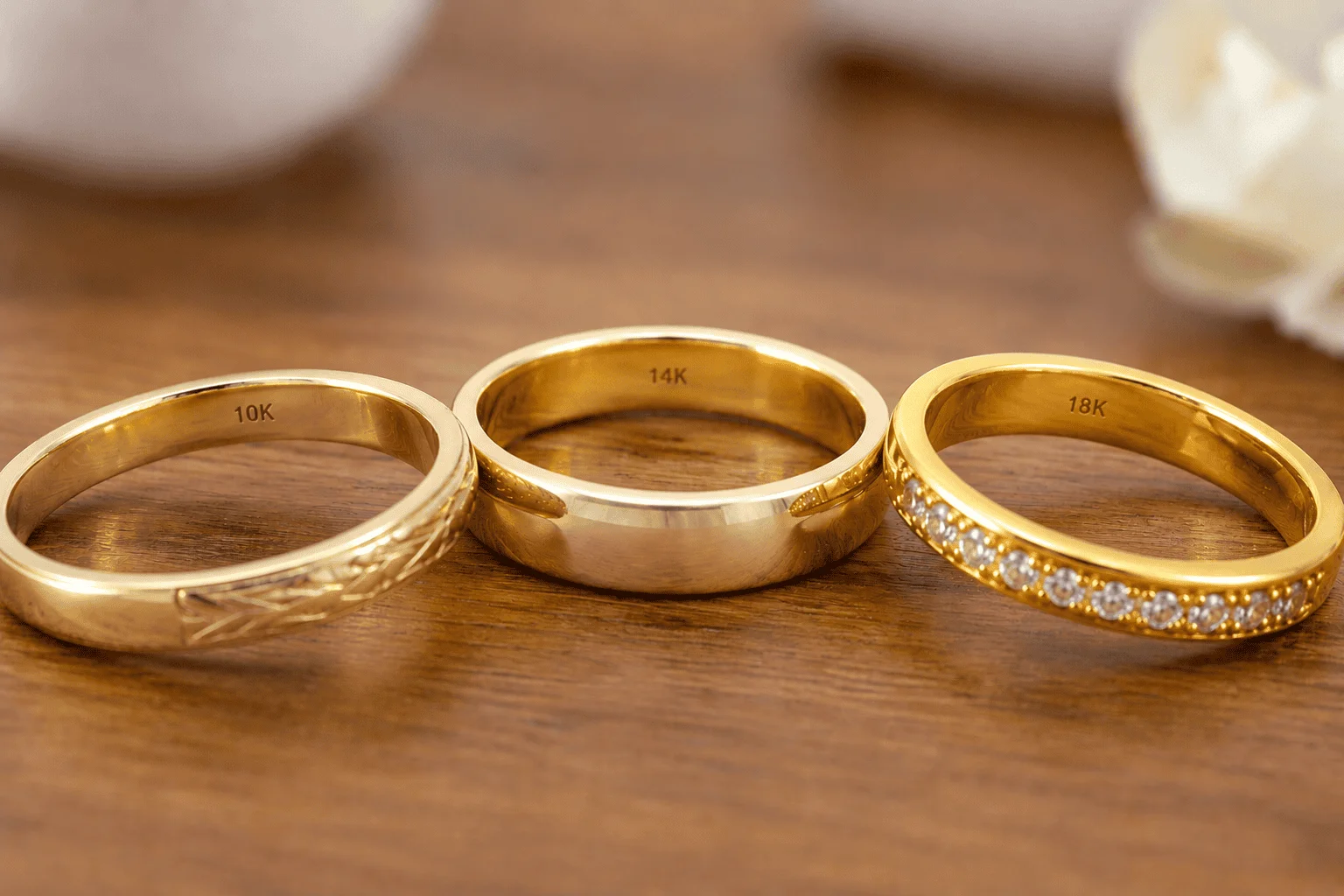
10k vs 14k vs 18k

10K vs. 14K vs. 18K Gold: The Ultimate Buyer’s Comparison Guide

Written by Sean Bryant ℹ️
Sean Bryant
Contributing Author
Expertise: SEO, Content Creation, Marketing

Sean Bryant is a Denver-based freelance writer with more than 15 years of experience covering personal finance, credit cards, and real estate. His work has been featured in publications such as Time and Investopedia. Along with writing, Sean runs the website One Smart Dollar.
Contributing Author
Autumn Hernandez
Edited by Autumn Hernandez ℹ️
Autumn Hernandez
Editor & Author
Expertise: SEO, Content Creation

Autumn is a digital marketing analyst with a background in real estate, more than 15 years of online writing experience, and a history of publishing and entrepreneurship.
Editor & Author

One of the most important decisions made when choosing the perfect piece of gold jewelry is the karat level. Gold comes in a range of purities, with the most common in fine jewelry being 10K, 14K, and 18K. ​

But which is better?​

The short answer is that there’s no best gold karat. The right choice depends on how someone plans to wear it and their budget.

In a nutshell

10K vs 14K vs 18K: Each offers a different balance of durability, appearance, and value. While 10K gold is the hardest and most affordable option, 18K gold contains the purest gold, giving it a richer color, better resistance to tarnishing, and greater long-term value retention. For most buyers, 14K gold provides the best mix of durability, beauty, and cost, which is why it remains the most popular choice for everyday fine jewelry. The best karat ultimately depends on one’s lifestyle, budget, and whether someone prioritizes strength, appearance, or gold content.

The Gold Math: What Does “Karat” Actually Mean?

24K gold is pure gold, and many believe it is too soft to maintain its shape. It will bend and scratch under the kind of daily pressure that something like a ring on a finger creates.

​To remedy this, jewelers add alloying metals such as copper, silver, zinc, and nickel to provide structure. The karat number indicates how many of those 24 parts are gold.​

  • 10K is 41.7% pure gold (10/24 parts)
  • 14K is 58.3% pure gold (14/24 parts)
  • 18K is 75% pure gold (18/24 parts)

The rest of the alloy is filler metal, and the amount of filler affects the piece’s color, longevity, cost, and skin-friendliness.​

One can also verify any piece by checking for a hallmark stamp.

Gold Karat Pure Gold % Alloy Metal % Hallmarks
10K 41.7% 58.3% 10K, 10kt, .417
14K 58.3% 41.7% 14K, 14kt, .585
18K 75.0% 25.0% 18K, 18kt, .750
10K Gold
Pure Gold:
41.7%
Alloy Metal:
58.3%
Hallmarks:
10K, 10kt, .417
14K Gold
Pure Gold:
58.3%
Alloy Metal:
41.7%
Hallmarks:
14K, 14kt, .585
18K Gold
Pure Gold:
75.0%
Alloy Metal:
25.0%
Hallmarks:
18K, 18kt, .750

The Head-to-Head Comparison: Color, Durability, and Price

Color and tone: Rich gold vs. muted warmth

18K gold jewelry

The color of the piece is directly impacted by the purity of gold, with 18K gold having a strong, rich, buttery yellow glow that most people associate with luxury fine jewelry. It is the high concentration of gold that gives it that depth of tone.​

14K is a beautifully balanced middle ground. It gives off a classic warm yellow that dominates the American market for good reason.

​10K is more muted and paler because it is composed mostly of base metals.

​The color difference between 10K and 14K gold is subtle but very visible side by side; however, the difference between 14K and 18K gold is immediately much more noticeable.

​This alloy mixture also makes white gold and rose gold. The copper in the alloy creates the warmth of the rose gold. So a piece of 10K rose gold will look more intensely pink, whereas an 18K rose gold piece has a softer, warmer look because more of the metal is gold.

Whatever the karat, white gold is rhodium-plated to enhance its brilliance, but that plating wears off over time and must be reapplied.

Durability and scratch resistance

durable gold jewelry

Higher karat = better jewelry, right?​

Well, not so much. The truth is, lower karat gold is actually harder and more scratch-resistant than higher karat gold. Pure gold is soft, so the stiffer the metal gets, the more alloying metals are added.​

That physical advantage is great for buyers who want jewelry they can wear at work, during workouts, and in everyday life without worrying about damaging it.

​18K gold is softer than 14K gold and more susceptible to scratches and wear over time due to its lower content of hardening alloy metals.

​That being said, the trade-off is two-way. 10K has a higher alloy content, meaning the wearer is more exposed to reactive metals such as nickel and copper. 10K and 9K are most likely to tarnish over time, especially when exposed to moisture (like sweat) and chemicals. 18K is very tarnish-resistant and, for the same reason, is much gentler on skin.

Price point and long-term value retention

shop gold jewelry

Stepping from 10K to 14K typically costs 43-65% more per gram, and going from 14K to 18K tacks on another 29%.

​Let’s use a 5-gram ring as an example. The 10K version has about 2.1 g of real gold, the 14K version bumps that to 2.9 grams, and the 18K version contains 3.75 grams.

​What would be the most expensive ring? The 18K ring is correct!  Why? Because someone is literally buying more gold. Sure, it’s the same ring design and the same size, but there’s a different amount of gold inside it.

​Gold also rose 348% from 2016 to 2026. 18K scales a higher proportion than 14K or 10K because more of its weight is the actual commodity that went up. With 10K, more than half of what someone pays for is copper, zinc, or nickel, and those don’t appreciate much (not even close to the amount that gold does).

​So while 10K is the better choice for a tight budget today, buyers are essentially paying for a watered-down version of the asset. And if long-term value retention is important, or they might want to resell in the future, then higher karats are what they’d want.

Which Karat is Right for You? (How to Choose)

Here are the main differences between the gold karats:​

Feature 10K Gold 14K Gold 18K Gold
Pure Gold Content 41.7% 58.3% 75.0%
Color & Appearance Pale, muted yellow Classic, balanced yellow Rich, intense, warm yellow
Scratch Resistance Highest (Very hard) High (Excellent balance) Lower (Softer, prone to scuffs)
Tarnish Resistance Lower (May dull over time) High Highest (Will not tarnish)
Hypoallergenic Rating Poor (High nickel/alloy mix) Good Excellent (Best for sensitive skin)
Price Point Budget-Friendly Moderate / Standard Premium
Best Used For… Active lifestyles, sports jewelry, tight budgets Engagement rings, wedding bands, everyday wear Fine jewelry, luxury heirlooms, special occasions
10K Gold
Pure Gold Content:
41.7%
Color & Appearance:
Pale, muted yellow
Scratch Resistance:
Highest (Very hard)
Tarnish Resistance:
Lower (May dull over time)
Hypoallergenic Rating:
Poor (High nickel/alloy mix)
Price Point:
Budget-Friendly
Best Used For:
Active lifestyles, sports jewelry, tight budgets
14K Gold
Pure Gold Content:
58.3%
Color & Appearance:
Classic, balanced yellow
Scratch Resistance:
High (Excellent balance)
Tarnish Resistance:
High
Hypoallergenic Rating:
Good
Price Point:
Moderate / Standard
Best Used For:
Engagement rings, wedding bands, everyday wear
18K Gold
Pure Gold Content:
75.0%
Color & Appearance:
Rich, intense, warm yellow
Scratch Resistance:
Lower (Softer, prone to scuffs)
Tarnish Resistance:
Highest (Will not tarnish)
Hypoallergenic Rating:
Excellent (Best for sensitive skin)
Price Point:
Premium
Best Used For:
Fine jewelry, luxury heirlooms, special occasions

When to choose 10K or 14K Gold

14K gold wedding rings

The difference between 10K and 14K gold ultimately comes down to a lifestyle question. Is 10K gold good? For the right buyer, absolutely. It is the strongest and cheapest option, making it ideal for high-impact or high-wear jewelry, such as bracelets (that will knock against desks) and sports jewelry.

​Is 14K gold good? When it comes to wedding rings, 65% of buyers prefer a 14K gold band over 18K for its increased hardness. It is also the most widely sold gold purity in the US, dominating engagement rings, wedding bands, pendants, and chains.

When to choose 18K gold

18K gold bracelets

The difference between 14K and 18K gold matters most when color richness, skin sensitivity, or heirloom quality is a priority. Is 18K gold good? For the right occasions, it is the best choice available.

​Plus, the Mayo Clinic’s nickel allergy guidance specifically names 18K yellow gold alongside titanium and surgical-grade stainless steel as recommended metals for people with skin sensitivities. High gold content means less exposure to nickel, the main cause of contact dermatitis from jewelry.

​For a fine piece meant for special occasions, to be passed down through generations, or given to someone who has suffered skin discoloration or allergic reactions from lower karat gold, 18K is the way to go.

Find Your Perfect Gold Karat at The Alloy Market

alloy marketplace homepage

No matter which type of gold you decide is the best for your situation, understand that most retail stores will add significant markups to the cost of high karat pieces. This can make 18-karat gold jewelry unaffordable for many people.

​This is when The Alloy Market could be a great way to find pre-loved pieces that better fit your budget. You’ll be able to find authenticated, high-purity 14K and 18K gold at prices much lower than traditional retail. The end result is an upgraded jewelry box without paying the typical premiums.

If you’re ready to find your next 14K or 18K gold piece, make sure you shop the current collection at The Alloy Market.

Frequently Asked
Questions

Neither is universally better. 14K gold contains more pure gold, giving it a richer color, greater resistance to tarnishing, and higher intrinsic value. However, 10K gold is harder and more scratch-resistant because it contains a higher percentage of alloy metals. For most everyday jewelry, 14K gold offers a balance of durability, appearance, and value, while 10K gold is often preferred for budget-conscious buyers or high-wear pieces.

For many buyers, yes. Since 18K gold is 75% pure gold, it has a deeper yellow color, greater resistance to tarnishing, and a higher precious metal content than 10K or 14K gold. It can also be a better option for those with sensitive skin. While it costs more upfront and is slightly softer, many shoppers choose 18K gold for luxury jewelry, heirloom pieces, and special occasions.

14K gold is the most popular choice for engagement rings in the United States because it offers an excellent combination of strength, beauty, and affordability. Its higher durability helps it withstand daily wear, while its gold content still provides the classic appearance most buyers want. Those seeking a richer color and higher purity may prefer 18K gold, while 10K gold is less common for engagement rings.

Generally, yes. Higher karat gold contains more pure gold by weight, which means it typically has greater intrinsic value and a higher melt value. An 18K piece contains significantly more gold than a comparable 10K or 14K piece of the same weight. While design, brand, and condition can also affect resale prices, higher-purity gold often retains more value when gold prices rise.

Yes, the Alloy Market sells fine jewelry from 9K-24K. All of the jewelry on Alloy’s marketplace is vetted, tested, and pre-loved estate jewelry. All of Alloy’s pieces are priced below traditional retail, so you can find new items that you love and feel good about your purchase.

The Alloy Market will also buy your pre-loved jewelry. To start, request a free evaluation kit. We’ll ship it right to your door and include a postage-paid parcel for you to pack your items in. We’ll cover insurance and tracking so you know your items are safe. When your items arrive, our team will weigh and test them and send a detailed, itemized purchase offer. When you accept, we initiate payment the same day. If it doesn’t work out, we’ll send your items back at no cost.

Join the thousands of happy customers who have made Alloy their go-to precious metal dealer.

Similar Posts