
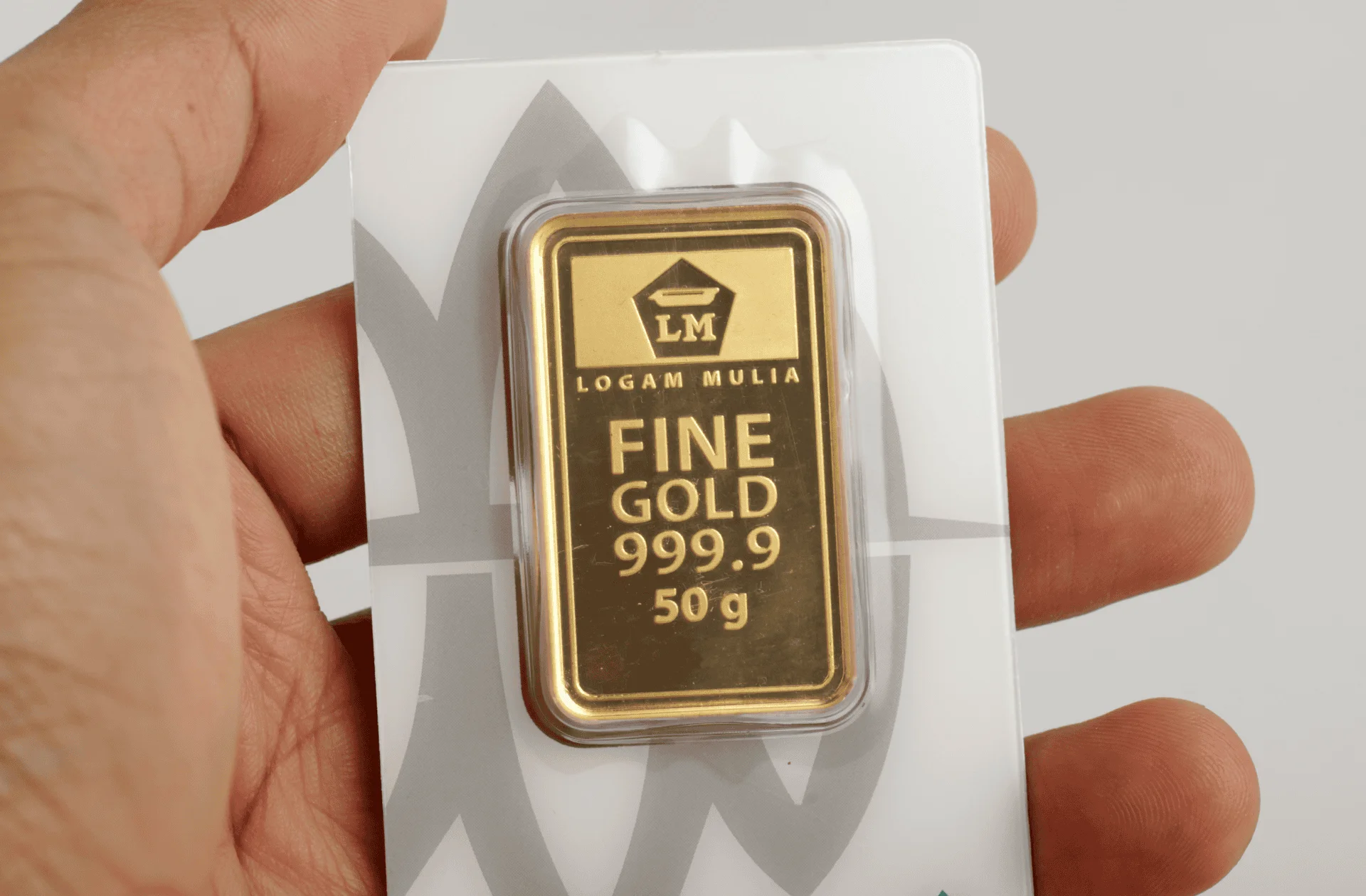
999 Gold: What It Means, Value, Purity & How to Identify It


From bullion bars and sovereign coins to jewelry and collectible pieces, the “999” stamp appears throughout the precious metals market as a hallmark of extremely high gold purity.
For anyone with a gold piece stamped “999,” this guide explains what that marking actually means, how much 999 gold is worth, how to determine its authenticity, and important considerations before buying or selling it.
In a nutshell
999 gold refers to gold that is 99.9% pure, making it one of the purest forms of commercially available gold and essentially equivalent to 24K gold. It is commonly used in bullion bars, coins, and some jewelry, with its value closely tied to the live spot price of gold.
What Is 999 Gold?

999 gold refers to gold that is 99.9% pure. In most consumer contexts, it’s also referred to as 24K gold, which means that 999 gold and 24K gold are essentially the same thing.
Pure 999 gold is commonly associated with investment-grade products like gold bars and sovereign bullion coins due to its extremely high gold content. But it’s also found commercially available as jewelry, especially in Asian markets.
What does 999 mean on gold?
A “999” stamp on gold indicates that out of every 1,000 parts of metal, 999 parts are actual gold. The remaining fraction consists of other trace metals.
For the sake of comparison, other gold purity markings are as follows:
- 916 = 91.6% pure gold (22K)
- 750 = 75% pure gold (18K)
- 585 = 58.5% pure gold (14K)
- 417 = 41.7% pure gold (10K)
These three-digit hallmarks are purity markings based on the millesimal fineness system, which measures precious metal purity in parts per thousand rather than karats.
So instead of saying “24 parts out of 24 are gold,” the marking says “999 parts out of 1,000 are gold.”
Why gold uses “999” stamps

The millesimal fineness system is adopted primarily for gold used for investment purposes, particularly gold bullion. In fact, many gold bars produced by refiners accredited by the London Bullion Market Association (LBMA) are stamped with purity markings such as “999.9 Fine Gold.”
Gold jewelry, on the other hand, usually follows the traditional karat system, using markings such as 24K, 18K, and so on.
However, one can still occasionally encounter gold jewelry stamped with “999” simply because it leaves far less room for confusion when communicating purity, both for jewelers and consumers.
Seeing a “999” stamp immediately communicates that 999 out of 1,000 parts are pure gold. In contrast, the karat system divides purity into 24 parts, with each karat representing roughly 4.17% purity. The karat system is equally accurate, though it is somewhat less straightforward.
Where 999 gold is commonly used
999 gold is most commonly used in bullion and investment products rather than everyday jewelry.
It contains very little alloy content, and so, it’s much softer and easier to scratch or bend. That makes it less practical for everyday jewelry compared to variants like 18K and 14K.
However, 999 gold jewelry does exist, and it’s popular both as fashion jewelry and as a portable store of wealth in countries such as India, China, Thailand, and parts of the Middle East.
That’s not to say it’s impossible to find 999 gold jewelry in the U.S., but it’s more common to see it sold by jewelers with Asian or Middle Eastern roots.
Characteristics of 999 Gold
Below are some of the defining characteristics that distinguish 999 gold from lower-karat gold.
- Deep yellow color: Richer and more vibrant than 10K, 14K, and 18K gold alloys.
- Softer metal: Scratches and bends more easily because there are fewer strengthening metals mixed into it.
- Highly resistant to tarnish: Pure gold does not rust or corrode like many other metals.
- Dense and heavy: Genuine gold feels substantially heavier than its size suggests.
- High intrinsic value: Contains extremely high actual gold content, which keeps it closely tied to live gold spot prices.
999 Gold vs 24K Gold
Are 999 gold and 24K gold the same thing?
999 gold and 24K gold are essentially the same – pure gold with trace amounts of metals mixed in. As discussed earlier, “999” derives from the millesimal fineness system commonly used in gold bullion and international precious metal trading, while “24K” derives from the traditional karat system dominant in the jewelry market.
So why not just use one system?

The reason both systems still exist mostly comes down to history and industry practice.
The karat system is much older and has historically been tied closely to jewelry-making. One can say with certainty that consumers are already accustomed to hallmarks such as 10K, 14K, 18K, and 24K, especially when shopping for rings, necklaces, bracelets, and other wearable gold pieces.
The millesimal fineness system was later more widely adopted in bullion markets and international precious metal trading. It offers more standardized, precise measurements that better accommodate large-scale trading.
In other words, it makes it easier for institutional buyers, refiners, and bullion exchanges to distinguish, for example, between 999 gold (99.9%), 999.9 gold (99.99%), and 995 gold (99.5%).
Those small percentage differences may not look like much to casual jewelry buyers, but across large quantities of gold, they can have major financial implications.
Is 999 Gold Real or Fake?

999 gold is real gold and, in fact, one of the purest commercially available forms of gold one can buy. A “999” marking means the item contains 99.9% pure gold, making it essentially equivalent to 24K gold in practical terms.
Can fake 999 gold exist?
Yes, fake 999 gold absolutely exists. Just because an item says “999” does not automatically mean it is genuine.
Such is the case with counterfeiters who market gold-plated pieces as “999” gold, or those who use tungsten beneath the plating, whose density closely resembles that of real gold. Regardless of the method used, counterfeit pieces can be difficult to detect at first glance.
What’s the Difference Between 999 Gold and 999.9 Gold?

The most obvious difference between 999 gold and 999.9 gold is one extra decimal place in purity.
Between the two, 999.9 gold is slightly closer to pure 24K gold because it contains fewer trace impurities, which means it carries a slightly higher intrinsic value. Sometimes it’s written as “9999 gold” and commonly referred to as “four nines fine.”
To put that into perspective, a 100-gram 999 gold bar contains approximately 99.9 grams of actual gold. On the other hand, a 999.9 gold bar of the same weight contains 99.99 grams of gold – a difference of just 0.09 grams.
That gap may not look like much when comparing only 100 grams. But scale that difference across 1 kilogram (1,000 grams) of gold, and it amounts to nearly 1 extra gram of pure gold, which absolutely matters considering how valuable even a single gram already is.
It’s a bit curious how 999.9 gold is even possible in the first place, but modern refining technology has advanced enough to remove impurities to extremely low levels.
As a result, bullion markets also came to view “ultra high purity” gold as a premium investment-grade product. And as global precious metal trading expanded, so did the demand for higher purity standards among refiners, investors, and financial institutions.
Outside of large-scale bullion transactions, however, there is very little practical difference between 999 gold and 999.9 gold. From a resale standpoint, both are highly liquid and closely tied to the live market spot price of gold.
How Much Is 999 Gold Worth?
999 gold price per gram

The live, market-based value of 1 gram of 999 gold is roughly . This is based on the current spot price of $ 3995.16 per ounce.
The spot price, or the live market price of pure 24K gold, can change at any given moment. And so, it follows that the price of 999 gold per gram also fluctuates.
Several major factors influence gold prices, including:
- Inflation concerns
- Interest rates
- Central bank buying
- Economic uncertainty
- Geopolitical tensions
- Investor demand
- Strength of the U.S. dollar
How to calculate the value of 999 gold
The simplest way to calculate the value of 999 gold is by using this formula:
Value = Weight × Purity × Spot Price
For 999 gold, the purity is 99.9%, or 0.999 in decimal form.
Let’s use a simple example. Say someone owns a 10-gram 999 fine gold bar, and the spot price of gold is $147 per gram.
The calculation would look like this:
10 × 0.999 × $147 = ~$1,468.53
So the estimated intrinsic gold value would be approximately $1,469.
This represents the melt value of the gold, or the value of its pure gold content alone.
The actual resale payout will usually be lower than the melt value because buyers must account for refining costs, operating expenses, margins, and other business factors. Use this FREE gold melt value calculator to get a baseline estimate of what your gold should roughly be worth.
999 Gold Calculator
What types of jewelry use 999 gold?

999 gold jewelry can come in many of the same forms as lower-karat gold, including bangles, bead bracelets, necklaces, chain links, pendants, and more.
What particularly stands out is that 999 gold jewelry is often thicker, heavier, and simpler in shape and detailing. That’s partly intentional, as these sturdier shapes help compensate for the naturally soft and malleable nature of pure gold.
999 Gold vs 916 Gold
999 gold contains more pure gold overall, while 916 gold (commonly known as 22K gold) sacrifices a small amount of purity in exchange for added strength and durability from alloy metals like copper and silver.
In terms of intrinsic value alone, 999 gold is worth more than 916 gold of the same weight.
On the durability front, however, 916 gold is noticeably sturdier and more scratch-resistant, making it more practical for jewelry. Even then, both 999 and 916 gold are still relatively soft compared to more common jewelry alternatives like 10K, 14K, and 18K gold.
How to Identify 999 Gold
For anyone with a gold piece unsure of whether it’s 999 gold or another karat, here are a few ways to identify it.
Common 999 gold stamps
One of the first things to check on a gold item is the hallmark or purity stamp. Common markings found on 999 gold products include:
- 999
- 999.9
- Fine Gold
- 24K
The location of the purity stamp depends on the type of gold item. For jewelry, the hallmark is usually placed somewhere discreet but still accessible. Typically:
- Rings: inner band
- Chains: near the clasp
- Bracelets: clasp or inner surface
- Pendants: back side or bail area
For bullion products, the purity markings are often displayed prominently on the front face of gold bars and on either side (obverse or reverse) of gold coins.
Simple ways to test gold at home

While professional testing is still the most reliable option, there are a few simple at-home checks that can help identify obvious fake gold pieces.
- Magnet test: Real gold is not magnetic, so a strong attraction to a magnet can indicate the presence of other metals.
- Weight and density check: Gold is extremely dense and heavy for its size. Fake gold items often feel noticeably lighter.
- Hallmark inspection: Look for clean stamps, consistent engraving, correct purity markings, and signs of wear exposing different-colored metal underneath.
- Surface wear check: Gold plating may fade around edges or high-contact areas over time, revealing the base metals beneath.
- At-home acid test: Gold testing acid kits can help estimate purity by observing how the metal reacts to acids calibrated for different karat levels. However, testing should be done carefully since acids can damage surfaces if used improperly.
Check out the guide on gold testing methods for a deeper look into the topic.
Home testing methods still have limitations. Some counterfeit pieces can imitate gold’s weight surprisingly well or pass simple magnet tests, which is why higher-value gold items should ideally be professionally tested before buying or selling.
Professional testing methods
Professional gold buyers and refiners use more advanced testing equipment to verify both authenticity and purity.
One of the most common methods today is XRF testing. This involves XRF (X-ray fluorescence) analyzers that use high-energy X-rays to analyze the metal composition beneath the surface without damaging the item.
The process is fast, non-destructive, and highly accurate, which is why it’s widely trusted throughout the precious metals industry.
Can You Sell 999 Gold Easily?
Yes, 999 gold is generally very easy to sell because it is one of the most recognized and liquid forms of gold in the global precious metals market.
Where to sell 999 gold
One has several options when selling 999 gold, but each comes with different tradeoffs in pricing, convenience, speed, and expertise.
| Buyer | Pros | Cons |
|---|---|---|
| The Alloy Market |
| Requires physically shipping gold and waiting for evaluation |
| Cash-for-Gold Stores |
| Offers can vary heavily between stores and are generally lower than those of online gold buyers due to the higher overhead costs associated with brick-and-mortar operations |
| Pawn Shops |
| Offers can vary heavily between stores and are generally lower than those of online gold buyers due to the higher overhead costs associated with brick-and-mortar operations |
- High payouts of up to 90% of spot price
- Convenient mail-in process so sellers can sell from home or anywhere
- Free shipping insurance and tracking
Requires physically shipping gold and waiting for evaluation
- Fast in-person transactions
- Easy local access
- Ability to negotiate prices in person
Offers can vary heavily between stores and are generally lower than those of online gold buyers due to the higher overhead costs associated with brick-and-mortar operations
- Immediate cash walk-in
- Same-day transactions
Offers can vary heavily between stores and are generally lower than those of online gold buyers due to the higher overhead costs associated with brick-and-mortar operations
Sell Your 999 Gold with The Alloy Market

With The Alloy Market, you can request a free, insured evaluation kit and have your gold professionally evaluated, with no obligation to sell.
The kit includes prepaid shipping, tracking, and insurance coverage, allowing you to send your items safely and securely from home. If you are local, you may request an in-person evaluation. Have questions before sending in your items? Reach out to one of our Alloy Advisors who are happy to help with estimates and any questions you may have.
After your items arrive, our team performs a professional evaluation and sends you a detailed, itemized offer based on current market prices. Accept the offer and receive a same-day payout, or decline and have your items returned free of charge.
Items with resale potential may be selected for our marketplace. If they resell, you automatically receive an additional 10% of the resale profit, or 25% as an Alloy Insider, through our Double Pay program. You get the upside of the marketplace with none of the hassle!
Join the thousands of happy customers who have made Alloy their go-to precious metal dealer today by requesting your free kit.


