
916 Gold: Purity, Facts, and Tips for Selling


Anyone can buy gold, but understanding what “916” gold means and how that stamp affects resale value is what separates a careful buyer from everyone else. If someone is putting real money into gold, they want to know what they’re getting back out of it.
This guide will discuss how 916 gold is valued, how to price it correctly, and how to make better decisions whether buying or selling.
In a nutshell
916 gold is 22 karat gold, meaning it contains 91.6% pure gold and carries strong intrinsic value. It is widely used in jewelry because it balances high purity with durability. When selling, its value is based on weight, purity, and the current gold price, so understanding how to calculate its melt value and compare offers is key to getting a fair payout.
What Does 916 Gold Mean?

916 gold means a piece of gold is 91.6% pure gold and 8.4% other metals. That essentially makes 916 gold equivalent to 22 karat gold, making it a high-purity gold alloy commonly used in jewelry.
To put that into perspective, here’s how it compares against other gold karats:
- 24K gold: 99.9% pure (stamped as 999)
- 22K gold: 91.6% pure (stamped as 916)
- 18K gold: 75% pure (stamped as 750)
- 14K gold: 58.3% pure (stamped as 585)
- 10K gold: 41.7% pure (stamped as 417)
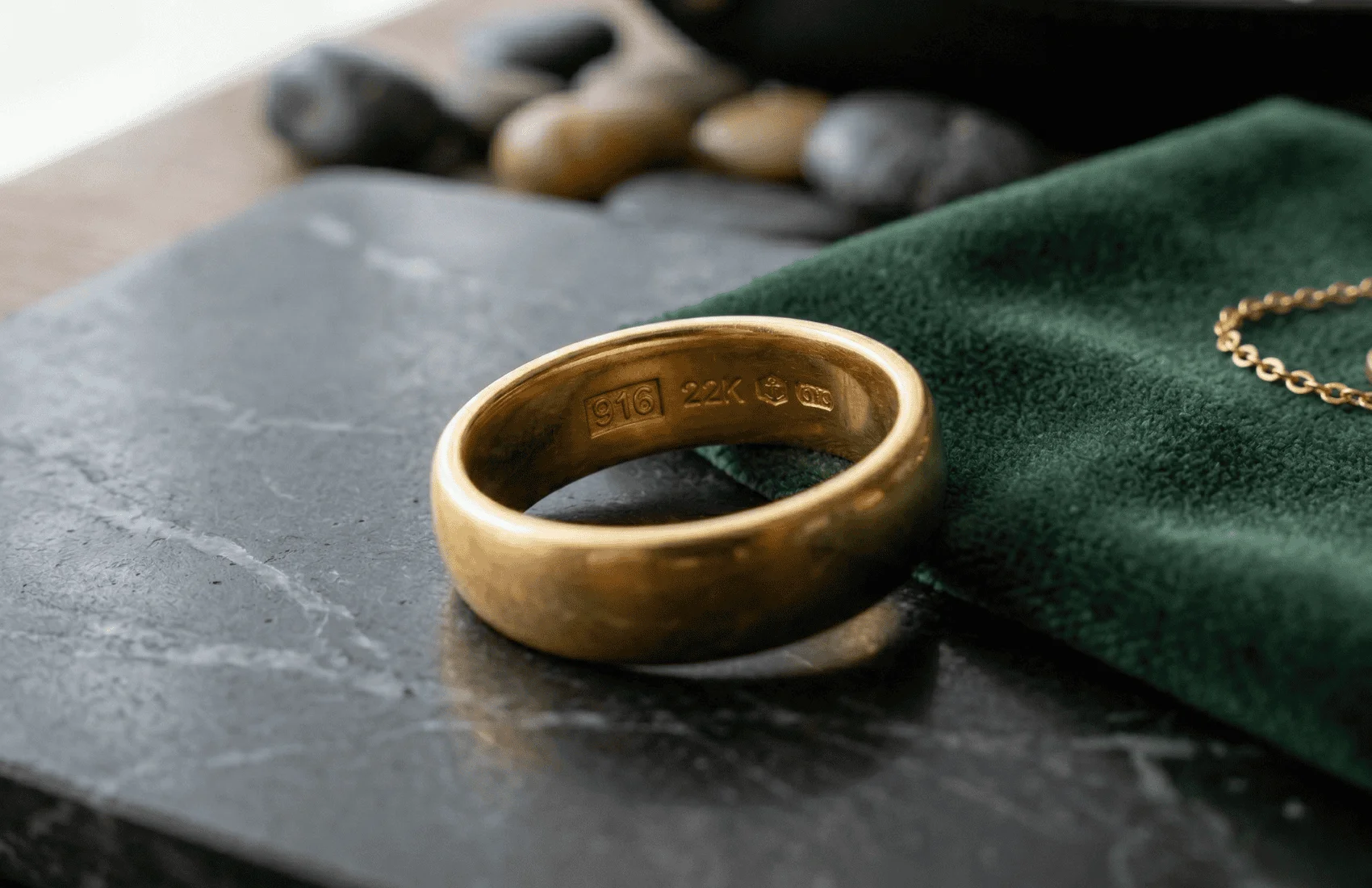
For starters, one can usually identify 916 gold by looking for a “916” stamp on the piece. This is often found on the inside of rings, near the clasp of necklaces and bracelets, or along the inner edge of bangles.
Is 916 Gold 22K or 24K?

916 gold is 22 karat gold, not 24 karat. It contains 91.6% pure gold, with the remaining 8.4% made up of other metals like copper, silver, and zinc.
A simple way to understand it is by putting the karat system and parts-per-thousand system side by side:
- 24K: 24/24 parts gold (99.9% pure)
- 22K: 22/24 parts gold (91.6% pure)
Difference between 916 gold and 999 gold

The main difference between 916 gold and 999 gold is purity: 916 gold is 91.6% pure, while 999 gold is 99.9% pure. But there are other differences as well:
- Durability: 916 gold is more durable due to its alloy mix, while 999 gold is very soft and can bend or scratch easily with daily wear.
- Value per gram: 999 gold has a higher value per gram since it’s purer, while 916 gold is about 91.6% of the spot price. For example, if gold is priced at $140 per gram, 999 gold and 916 gold would be worth around $140 and $128 per gram, respectively.
- Resale value: Both are easy to sell, but 999 gold is often preferred by investors due to its higher gold content, while 916 gold is more common in jewelry resale and is still widely accepted by buyers.
Why is gold stamped as “916” instead of just “22K”?

22 karat gold can be labeled as “22K” or “916”, but why is that? Why isn’t a single system used to measure purity?
Just a short history lesson; this actually dates back centuries. The karat system (designations “K”, “k”, “kt”) was developed when gold was traded more locally, expressing purity as parts per 24.
The millesimal fineness system (e.g., 999, 916, etc.) emerged as the gold trade became more global and standardized. It expresses purity in parts per thousand, making it much easier for buyers, refiners, and traders to understand exactly how much gold is in a piece without conversion.
Even today, this system is widely used in regulation. For example, India’s BIS hallmarking system uses “916” to certify 22K gold. The same standard is also commonly seen across the UAE and Southeast Asia.
Is 916 Gold Real or Fake?
Yes, 916 gold is real gold, since it’s composed of 91.6% pure gold. Where it can get tricky is that, despite its authenticity, it can still be faked. So one needs to do their due diligence and check if it’s genuine beyond the stamp alone (more on this later).
One common issue is that some items stamped “916” may actually be gold-plated rather than solid gold. In ideal cases, gold-plated jewelry is also marked with a “GP” stamp, though some pieces may not make this clear, especially if the intent is to mislead.
How to Check 916 Gold

The blog has covered how to check if gold is real in a previous guide, but here’s a quick look at what was shared there to help identify whether 916 gold is genuine before selling or appraising it.
- Magnet test: Real gold is not magnetic. If an item strongly sticks to a magnet, it likely contains little to no gold.
- Hallmark check: Look for stamps like “916”, “22K”, or official assay marks. While helpful, do remember that stamps alone can be faked.
- Acid test kits: This involves applying a small drop of testing acid designed for 22k gold to a scratched area. If the mark remains unchanged, it’s likely close to 916 purity.
- Professional testing: This is the most accurate method, as advanced tools such as X-ray fluorescence (XRF) machines are used to analyze the exact metal composition without damaging the item.
Is 916 Gold Valuable?
Yes, 916 gold is highly valuable because it contains 91.6% pure gold, making it among the highest-purity levels commonly used in jewelry.
When one talks about intrinsic value, it largely comes down to how much actual gold an item contains. Since 916 gold is over 90% pure, it carries significantly more value than lower karat options like 14K (58.3%) or 18K (75%). That makes it well-suited as a store of value you can sell later.
The exact amount you’ll get, though, depends on how pricing works and what deductions buyers apply.
How 916 gold is priced
916 gold is priced based on a simple formula:
Gold Value = Weight × Purity × Spot Price
Let’s say gold is trading at $140 per gram and someone has a 10-gram 916 gold item:
10 × 0.916 × 140 = $1282.40
That number represents the inherent or raw gold value before any deductions.
Compared across common gold purities, it’s evident that 22K sits just below pure gold in terms of value:
- 24K (999): $1,398.60
- 22K (916): $1,282.40
- 18K (750): $1,050.00
- 14K (585): $816.20
What affects resale value
Even though 916 gold has high intrinsic value, its resale price is primarily determined by three core factors discussed earlier, namely:
- Weight: The heavier an item, the more total gold it contains, which directly increases its value.
- Purity: 916 gold contains 91.6% pure gold, so a higher purity means more actual gold per gram and a higher base value.
- Spot price: The current market price of gold per gram, which fluctuates daily and directly affects how much gold is worth at any given time.
But apart from these intrinsic factors, several external factors can influence how much someone actually gets paid, such as:
- Condition: Scratches, dents, missing stones, or broken parts can negatively impact resale price, but only if selling to jewelry resellers or secondhand buyers. For melt-value buyers (like The Alloy Market), condition has no impact since they price based on gold content, not appearance.
- Brand or design: Gold pieces from known brands or with intricate designs can fetch higher prices when sold to collectors, luxury resellers, or secondhand jewelry buyers. However, for melt-value buyers who pay based on gold content, the brand, design, or aesthetic typically does not affect the price.
- Dealer margins: Buyers need to make a profit, so they pay below the gold’s intrinsic value. This is where large differences in payouts happen.
That last point is where most people lose money. The gold itself holds value, but where someone sells their gold determines how much of that value they actually keep.
Can 916 Gold Be Resold Easily?
Yes, 916 gold is easy to resell because it is recognized worldwide and contains high-purity gold content. In fact, many local melt-value buyers and refiners are willing to buy gold items, whether they’re a complete piece someone wants to let go of or broken jewelry that can no longer be used.
But before selling, it helps to know what a fair price looks like. Use our free Gold Melt Value Calculator to estimate gold’s baseline value, so it’s easy to compare offers and avoid getting lowballed.
What Are the Advantages of 916 Gold?
Below are the characteristics that make 916 gold an advantageous choice for jewelry:
- High purity with durability: At 91.6% gold, it retains strong intrinsic value, while the remaining alloy metals provide sufficient strength for daily use.
- 916 gold doesn’t tarnish easily: Being over 90% pure, it resists discoloration far better than lower karat gold, where alloy content is higher.
- Doesn’t rust: Gold is a noble metal, so it doesn’t react with oxygen or moisture like iron or steel.
- Water resistant: It’s safe for occasional exposure to water, but can gradually dull with repeated contact with chlorine, saltwater, or harsh soaps.
- Hypoallergenic: With minimal reactive metals, it’s less likely to cause skin irritation compared to lower karat gold.
What Are the Disadvantages of 916 Gold?
916 gold is valuable and widely used, but it still comes with trade-offs one should understand before buying or selling.
- Higher upfront cost: Because it contains more gold, 916 gold is more expensive than 18K or lower-karat jewelry.
- Not ideal for “heavy” everyday wear: With fewer alloy metals, 916 gold is softer and more prone to scratches, bending, and wear over time.
- Higher making charges (for buyers): 916 gold jewelry often comes with higher craftsmanship fees, especially for intricate designs. These costs are usually not recovered when reselling, since buyers pay based on gold weight, not design.
Selling Your 916 Gold? Tips to Get the Highest Price for Your Piece

For anyone planning to sell their 916 gold, the goal is simple: Get as close as possible to its true value without being underpaid. Here’s how to do:
- Know gold’s value before selling: Use the formula (Weight × 0.916 × gold price) to estimate its intrinsic value. This provides a baseline so low offers are instantly recognized.
- Weigh the gold accurately. Even small weight differences affect a payout. Use a digital scale if possible, or have it weighed at a jeweler’s counter, for example.
- Avoid selling based on appearance or brand: Focus on purity and weight. This gives the best chance of getting the highest payout.
- Compare multiple offers: Don’t accept the first quote. Getting at least 2–3 quotes can quickly reveal whether an offer is too low.
- Choose the right place to sell. Most buyers don’t pay full value. Pawn shops, for example, often offer around 40% of the spot price, while other buyers may pay 70% or more. Check out the guide on the best place to sell gold.
Sell 916 Gold with The Alloy Market

If you’ve got 916 gold to sell, The Alloy Market makes the process simple, allowing you to do so from the comfort of your own home. To get started, request a free evaluation kit, and we’ll ship it right to your door. Use the provided postage-paid parcel to package your items and ship them directly to us. You may either drop the package at the nearest FedEx location or request an at-home pickup. Your items ship to us fully insured and tracked, so you know they are safe.
If you are near our office in Newtown, you can request an in-person evaluation by scheduling an appointment. Want to know what your items are worth before sending them in? Contact an Alloy Advisor to discuss what you have. They can give you an estimate over the phone.
Our team evaluates each piece with professional tools to determine karat and weight. From there, they send a detailed, itemized purchase offer. When you accept, we’ll initiate your payment the same day. If you choose not to sell, we’ll send your items back to you at no cost.
Thousands of happy customers have made Alloy their go-to precious metal buyer. Join them by requesting your free kit today.


