
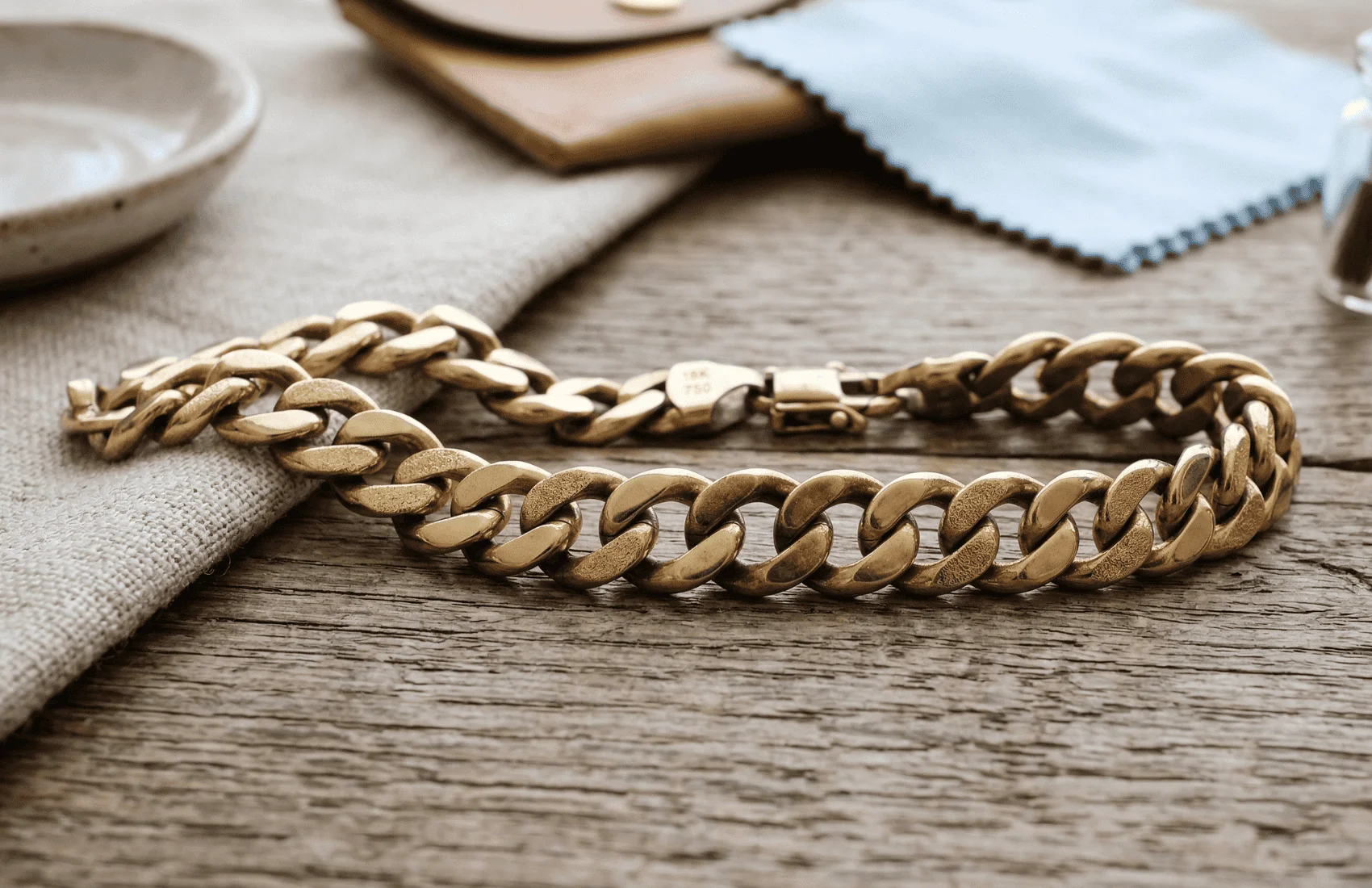
Does 18K Gold Tarnish?

If 18K gold jewelry starts looking dull or slightly discolored, it’s easy to jump to the worst conclusion: has it gone bad, or worse, is it fake? This matters even more if someone is planning to sell it or bought it with resale value in mind. Does 18K gold tarnish?
This guide will clarify whether 18K gold tarnishes, what causes it, and whether it affects what buyers are willing to pay.
In a nutshell
18K gold can tarnish, but it’s rare and mild, usually just surface-level dullness caused by the small percentage of alloy metals reacting with air, moisture, sweat, or chemicals. Thanks to its high gold content (75%), it resists tarnishing far better than 10K or 14K gold and can stay shiny for years.
Most “tarnish” people notice is often just buildup from everyday wear and can be easily cleaned. Even if real tarnish occurs, it does not affect the value when selling, since buyers care about weight and purity, not appearance.
Does 18K Gold Tarnish?

Yes, 18K gold can tarnish, but when it does, it’s usually light and surface-level. It usually shows up as slight dullness, faint darkening in crevices, or a thin film that appears as discoloration.
However, compared to lower-karat options like 10K and 14K gold, 18K gold tarnishes the least. A big reason for that is its composition.
It’s made of 75% pure gold that doesn’t corrode and is highly resistant to oxidation, while the remaining 25% consists of other metals, including more reactive ones.
All that’s to say, one can expect 18K gold to hold its appearance well and not tarnish easily over the long term.
Why does 18k gold tarnish?

18K gold tarnishes because the alloy metals, particularly copper, silver, and nickel, react and oxidize when exposed to elements like:
- Air: particularly oxygen present in the air
- Moisture: humidity or frequent water exposure helps those reactions occur
- Sweat: high sweat or natural skin acids can react with copper and leave a patina over time
- Chemicals: perfumes, soaps, lotions, chlorine, cleaning agents, and even trace amounts of oils or food residues during cooking can speed up oxidation
What does 18K gold tarnish look like?
The most common signs of 18K gold tarnish include:
- Dull finish: The bright shine fades into a muted, cloudy appearance, sometimes looking slightly matted
- Thin surface film: a faint layer that makes the gold look less reflective
- Darkened crevices: areas around earring backs, necklace clasps, chain links, and ring settings appear a shade darker due to buildup, especially in hard-to-clean spots.
- Uneven tone: small patches look a bit darker or warmer than the surrounding areas, especially on chains and pendants that move and rub against skin
That said, what most people get wrong is treating all kinds of changes in appearance as tarnish when not all of them actually are.
In many cases, it’s a simple buildup of dirt from everyday contact with grime or residue from soap, lotion, or hard-water minerals. These deposits can usually be removed with basic cleaning.
Nonetheless, it’s still important to clean them off regularly, as leaving them in place can eventually lead to reactions that cause actual tarnish.
Does 18k gold turn green?
18K gold typically doesn’t leave a green tint or bluish tint on the skin due to its high gold content (75%). However, in rare cases, this can happen, especially for individuals with more acidic skin chemistry.
How Fast Does 18K Gold Tarnish?
18K gold tarnishes very slowly and, in many cases, may not show noticeable tarnish at all due to its high gold content. In fact, 18K gold jewelry can maintain its original luster for years before any visible change appears, and even then, it’s usually minor.
How long does it take 18K gold to tarnish?
18K gold takes a long time to show any signs of tarnish, and for some people, it can even last a lifetime without noticeable change. But there’s no definite timeline.
As much as 18K gold doesn’t tarnish easily, what happens in day-to-day life can affect how quickly it does:
- Frequency of wear: 18K gold jewelry worn every day is more exposed to air, sweat, and other elements compared to pieces that sit in a drawer.
- Lifestyle: Daily activities matter. Frequent sweating or exposure to chemicals or harsh conditions can speed things up.
- Environment: Humid climates in particular tend to accelerate tarnishing.
Do Other Types of 18K Jewelry Tarnish?
Does 18k rose gold tarnish?

Yes, 18K rose gold can tarnish slightly over time, but it’s still relatively resistant.
Rose gold contains a higher percentage of copper, a metal that’s highly susceptible to oxidation and gives it its signature pinkish hue.
That means the redder the piece, the more susceptible it is to tarnishing.
Still, given that it’s 75% pure gold, the degree of tarnishing is usually mild compared to lower-karat rose gold.
Does 18k yellow gold tarnish?
18K yellow gold can still tarnish, although it’s the least likely to tarnish among colored gold types.
Traditional yellow gold has an alloy mix that’s closer to pure gold, often using silver and only small amounts of copper to maintain its classic color. With fewer reactive metals, there’s less chance of oxidation and, therefore, less tarnishing.
Does 18k white gold tarnish?
18K white gold doesn’t tarnish in the traditional sense, but it can change appearance over time.
White gold is typically coated with a bright, reflective plating called rhodium that wears off over time. When that happens, the jewelry may look slightly yellow underneath and appear dull instead of bright white.
A simple re-plating restores the original look.
Does 18K gold-plated tarnish?

Yes, 18K gold-plated jewelry can tarnish, and it generally does so faster than solid gold.
Gold-plated pieces have only a thin layer of gold applied over a base metal. Over time, that outer layer can wear down, gradually exposing the metal underneath, which is more reactive to air, moisture, and chemicals.
How quickly tarnishing happens depends largely on the base metal:
- 18K gold-plated copper: Copper is highly reactive and can oxidize easily, leading to discoloration or greenish residues on the skin.
- 18K gold-plated brass: Brass contains copper and zinc, making it similarly prone to tarnishing over time.
- 18K gold-plated stainless steel: More resistant to corrosion, but the gold layer can still wear off with frequent use.
- 18K gold-plated white gold: The rhodium finish used to enhance whiteness can wear off, leaving the piece dull or slightly yellow underneath.
Does 18K gold vermeil tarnish?
Yes, 18K gold vermeil can tarnish, but it typically lasts longer than standard gold-plated jewelry.
Gold vermeil uses a thicker layer of gold over sterling silver, rather than cheaper base metals like brass or copper. As such, it takes longer for the gold layer to wear down. And even when it does, the underlying sterling silver is less reactive than other metals.
Does 18K gold-filled tarnish?
Yes, 18k gold-filled jewellery can tarnish, though it’s much more resistant than gold-plated pieces.
Gold-filled jewelry features a much thicker layer of gold mechanically bonded to a base metal, rather than just a surface coating. As a result, the gold layer takes significantly longer to wear down.
Does 18K Gold Tarnish in Water?
In pure water, 18K gold shouldn’t tarnish, since there’s no meaningful chemical reaction between gold and water.
But in real, everyday life, the water you come into contact with likely isn’t pure. Tap water, pools, and even seawater contain chlorine, salt, and dissolved minerals.
These don’t affect the gold itself, but they can react with the alloy metals mixed into 18K gold, dulling the surface or causing slight discoloration over time.
Can 18K gold go in the shower?

People can wear 18K gold in the shower without damaging it, but it’s not recommended as a habit. Products like soap, shampoo, and conditioner can leave a film on the surface, slowly dulling the shine over time.
Hard water is another issue. It’s rich in minerals that can interact with the alloy metals in 18K gold, contributing to gradual discoloration.
All that said, it’s best to remove all jewelry before showering. If worn, rinse it with clean water afterward and dry it gently with a soft cloth to prevent buildup and avoid small surface scratches.
Is 18K gold waterproof?
18K gold is water-resistant. It doesn’t rust, corrode, or break down in water, which explains why gold is widely used in applications like dental work and electronics, where corrosion matters.
However, it’s not “waterproof” and can still tarnish, especially when constantly exposed to mineral-rich, saltwater, and treated water.
Is 18K gold-plated waterproof?
No, 18K gold-plated jewelry is not waterproof. Plated pieces have only a thin gold overlay that gradually wears down when frequently exposed to chemicals in water or shower products.
Now, some 18K gold-plated pieces use PVD (Physical Vapor Deposition) coating, which bonds the gold layer more securely to the surface. These are generally more water-resistant and durable than traditional plating, but even then, they’re not completely immune to tarnish.
Either way, gold-plated jewelry should be kept as dry as possible to preserve its appearance and prevent shortening its lifespan.
Does Tarnish Affect the Value When Selling 18K Gold?
Tarnish doesn’t reduce the intrinsic value of 18K gold. Scrap gold buyers, for example, focus more on gold content rather than appearance, particularly:
- Weight
- Purity (karat)
- Current market price
In this case, any tarnish is completely irrelevant.
When selling to gold jewelry collectors or resellers, it could go either way.
On the downside, tarnish can reduce the resale value of jewelry, since buyers often judge based on appearance first.
On the upside, minor tarnish can be wiped off easily, so it doesn’t negatively affect payouts. On a lucky day, it may even boost the item’s appeal and value, as a bit of patina can give off a vintage feel and a sense of authenticity that has stood the test of time.
Tip:
Got a piece you’re planning to sell? Check how much it’s worth with this free Cash-For-Gold Calculator to see what a fair price looks like.
How to Prevent and Clean Tarnish on 18K Gold
How to clean 18K gold and remove tarnish

Complicated products aren’t necessary to keep 18K gold looking good. In many cases, what appears as “tarnish” on 18K gold is actually surface buildup from oils, soap, or everyday residue, which can be removed with simple cleaning.
Use this method:
- Mix warm water with a few drops of mild dish soap.
- Soak the jewelry for at least 10 minutes.
- Gently brush with a soft toothbrush (especially in crevices)
- Rinse with clean, warm water.
- Thoroughly pat dry with a soft cloth (not tissue paper).
For stubborn tarnish, consider either of the options below. However, avoid these if your piece comes with gemstones:
- Baking soda paste: Mix 1 tablespoon of baking soda with a few drops of water, then rub the paste gently onto the 18k gold piece. Rinse and dry with a microfiber cloth.
- Vinegar solution: Soak the gold piece in vinegar solution (1 part vinegar, 2 parts water) for at least 10 minutes. Brush gently with a soft brush and rinse with clean water. Dry thoroughly with a soft cloth.
Avoid using harsh chemicals or abrasive cleaners.
How to prevent tarnishing
Follow these simple habits to prevent or slow down tarnishing:
- Remove jewelry before showering or swimming.
- Avoid contact with perfumes and lotions.
- Store pieces in a dry, sealed container when not in use.
- Keep pieces apart to avoid scratches and potential reactions from accidental contact.
Should You Sell Tarnished 18k Gold?
If you’re ready to part ways with your tarnished 18K gold, there’s no reason not to sell it. The majority of buyers pay based on weight and purity, so any flaws in appearance or aesthetics shouldn’t be an issue.
But if you’re still mulling over whether it’s the right time to sell your gold, here’s a quick guide: Sell your 18K gold piece when:
- You need emergency cash.
- It’s tied to a bad memory or experience (divorce, breakup)
- You have no plans of wearing it, and letting it sit there feels like a waste of storage space.
- It’s broken, and you no longer want to use it.
- You believe gold is at an all-time high, and you want to use the money to invest in something else.
When You’re Ready to Sell

The Alloy Market makes it easy to sell your gold from the comfort of your home. To get started, request a free evaluation kit. It ships directly to your door and includes free, insured shipping for your items. Either drop your parcel at the nearest FedEx location or schedule a free at-home pickup.
If you’re local to Newtown, feel free to schedule an in-person consultation. Want to know how much to expect? You can reach out to one of our Alloy Advisors for more information and lock in your offer over the phone.
Once your items arrive with us, our team inspects them for purity and weight. We then send you a detailed, itemized purchase offer. Payment is issued the same day you accept. If you choose not to sell, we’ll send your items back to you at no expense. Get started today, and join the thousands of happy customers who have made Alloy their go-to precious metal buyer.


