
Gold-Filled vs. Gold-Plated: Which to Choose


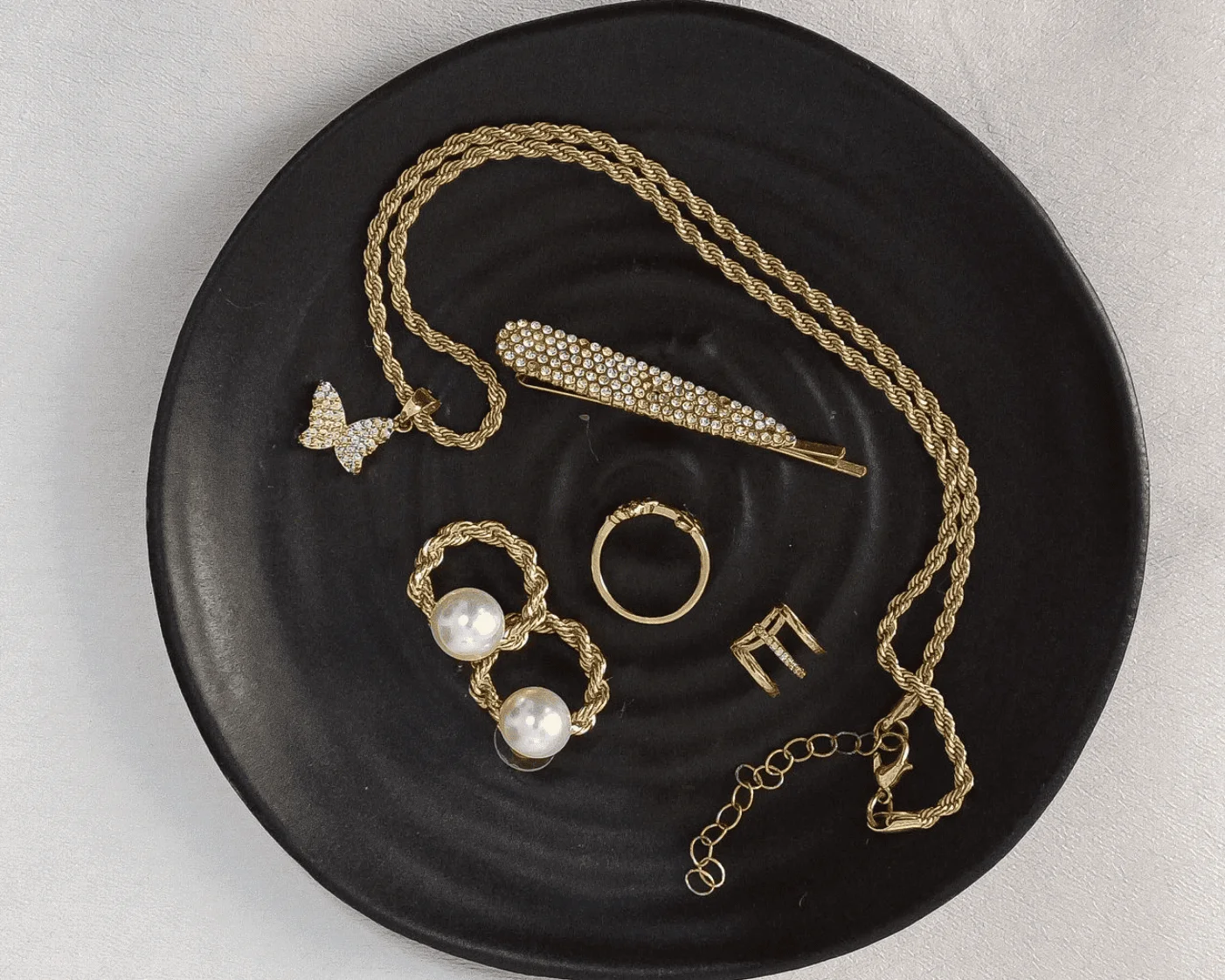
At a glance, a high-quality gold-filled and gold-plated necklace can look identical to solid gold. In fact, when clients send their pieces in to our team for evaluation, gold-filled and plated fashion pieces are among the most common items mistaken for solid precious metal.
Beneath that shiny layer, however, the construction, total gold content, and long-term durability couldn’t be more different. Because The Alloy Market exclusively purchases solid gold, understanding these differences is crucial if you’re evaluating jewelry to sell. It’s also important to understand what you’re getting when purchasing pieces for everyday wear.
Here’s how gold-filled and gold-plated jewelry actually stack up beneath the surface.
The Alloy Takeaway
If you’re looking for something inexpensive with the appearance of gold, often gold-plated or gold-filled jewelry will fit the bill. But we’d like to suggest considering the cost per wear of fast fashion jewelry; that inexpensive piece you bought can quickly tarnish and lose its luster, while solid gold lasts a lifetime and beyond. Fine, pre-loved jewelry can lower your out-of-pocket costs more so than buying new, making the value even greater. Not only that, solid gold jewelry retains its value because gold can always be sold for its melt value; not a trait cheaper gold-plated jewelry can claim.
Defining Gold-Filled and Gold-Plated Jewelry
Many people don’t understand the difference between different categories of gold jewelry. Because gold-filled and gold-plated use a thin layer of gold on the exterior, many people take one look and assume they’re solid gold. In fact, many sellers mistakenly label plated or filled pieces as “solid gold” on secondary marketplaces, leading buyers to overpay for fashion jewelry. Understanding how these two manufacturing methods differ is the first step in knowing what you actually own or are interested in buying.
What is gold-filled jewelry?
Gold-filled jewelry consists of a thick outer layer of real gold that is mechanically bonded to a base metal, most commonly brass, using heat and extreme pressure.
Under the FTC Jewelry Guides, jewelry marketed as gold-filled must use at least 10K gold, with the gold layer making up at least 1/20 (5%) of the item’s total metal weight.
Common hallmarks for gold-filled jewelry include:
- 1/20 14K GF: 5% of the total weight is 14-karat gold.
- 1/20 12K GF: 5% of the total weight is in 12-karat gold.
- 14K GF / GF: Standard markings indicating gold-filled construction.
Gold-filled jewelry is manufactured by applying heat and pressure to permanently bond a solid layer of gold to the base metal, a process commonly known as pressure bonding.
This gold layer is substantially thicker than that of conventional gold plating; it withstands friction from skin, clothing, and everyday wear much better. In fact, many vintage wristwatches from the mid-20th century feature gold-filled cases that remain in circulation today with much of their original gold layer still intact, illustrating how well this construction can hold up over decades.
Though these types of pieces feature a small amount of gold, refining them to a higher purity is more labor- and resource-intensive. At Alloy, our intake team tests incoming items specifically to separate these fashion pieces from 100% solid gold jewelry and return them to their owner.
What is gold-plated jewelry?
Gold-plated jewelry consists of a microscopic layer of real gold applied over a non-precious base metal such as brass, copper, stainless steel, or zinc alloy. The gold layer is just a few microns thick (one micron equals one-thousandth of a millimeter), making up only a tiny fraction of the item’s total metal weight.
Under FTC standards, gold-coated jewelry falls into a few key tiers based on thickness:
- Gold Flashed / Gold Washed: A microscopic layer under 0.175 microns. This coating wears off rapidly, often within a few weeks of regular skin contact.
- Gold Electroplate (GEP): Must have a minimum gold thickness of 0.175 microns and at least 10K purity.
- Heavy Gold Plate (HGP / HGE): Indicates a thicker electroplated layer, though exact thickness varies by manufacturer.
Common gold-plated hallmarks:
- GP (Gold Plated): Standard gold-plated jewelry.
- GEP (Gold Electroplate): Indicates the jeweler applied the gold layer through electroplating.
- HGP (Heavy Gold Plate) or HGE (Heavy Gold Electroplate): Indicates a thicker electroplated gold layer than standard gold plating, though thickness standards vary by manufacturer.
A note on modern PVD coating: You will often see modern fashion brands advertising “waterproof” or “tarnish-free” gold jewelry made with PVD (Physical Vapor Deposition). Unlike GP or GEP, PVD refers to the coating method rather than a hallmark or jewelry category. It produces a harder, more wear-resistant coating compared with traditional electroplating.
Each of these types of construction contains substantially less gold than gold-filled jewelry. Because of this, they wear through more quickly and have a shorter service life before the underlying metal becomes exposed. They also carry no melt value due to the minute amount of gold in the piece.
Gold-Filled vs. Gold-Plated: What’s the Difference?
When items arrive at The Alloy Market, our intake team uses non-destructive XRF (X-ray fluorescence) scanners to test metal purity. If a piece doesn’t scan as 100% solid gold, silver, or platinum, it is safely returned to the owner.
However, if you are evaluating jewelry in your own collection or shopping for everyday pieces on a budget, knowing how gold-filled and gold-plated items perform can save you money and disappointment. Here is how they stack up side-by-side:
| Aspect | Gold-Filled | Gold-Plated |
|---|---|---|
| Construction | Solid gold sheet bonded to base metal under heat and pressure | Thin gold layer applied to the surface through electroplating |
| Gold Content | Minimum 5% gold by total weight (e.g. 1/20 14K) | Microscopic layer measured in microns; negligible weight contribution |
| Durability | Withstands years of regular wear before base metal exposure | Wears down relatively quickly with friction and use |
| Typical Lifespan | Several years with consistent wear | Months to a few years depending on usage |
| Tarnish Resistance | Resists tarnish longer due to thicker gold barrier | Tarnishes once the thin gold layer wears and the base metal is exposed |
| Everyday Wear | Suitable for frequent, long-term use | Better suited for occasional use |
| Price | Higher upfront cost due to gold content and construction | Lower cost due to minimal gold usage |
| Intrinsic Value | Small intrinsic value based on gold content | Negligible intrinsic value |
| Resale Value | Limited scrap value | Little to no scrap value |
Construction / manufacturing process
Gold-filled jewelry relies on pressure bonding, fusing a solid sheet of gold to the base metal under extreme heat and mechanical force, creating a thick outer layer that becomes permanently attached to the piece. That permanent bond is a major reason for its durability and longevity.
On the other hand, gold-plated jewelry uses a thin coating of gold applied to the surface, typically through electroplating. This electrical process deposits a very thin layer of gold onto the base metal. The coating remains only on the surface, leaving the underlying metal itself unchanged.
Gold content
By FTC standards, gold filled jewelry contains at least 5% gold by total metal weight. A 20-gram gold filled bracelet, for example, contains at least 1 gram of gold.
Gold plated jewelry, on the other hand, has a microscopic gold layer measured in microns. Since that coating is extremely thin, it contributes very little to the jewelry’s overall gold content.
All that said, gold-filled jewelry contains substantially more gold and therefore has greater intrinsic metal value than gold-plated jewelry, though very few refiners accept it. The cost to refine it often outweighs the benefit. Solid gold can easily be sold for its melt value and melted down to be repurposed, which is why Alloy only purchases solid gold items.
Durability
Durability comes down to how well the gold layer resists abrasion and how long it can protect the base metal underneath.
Gold-filled jewelry: Thanks to its thick, pressure-bonded outer shell, it is far more resistant to friction and everyday wear. It maintains its surface for years of consistent use before the base metal becomes exposed.
Gold-plated jewelry: Because electroplated gold is microscopic, it wears down much faster. Bracelets rubbing against desks or rings brushing against hard surfaces gradually remove that outer layer until the underlying metal becomes visible, reducing both the appearance and comfort of the piece unless it is replated.
Tarnish resistance
Pure gold itself doesn’t tarnish, but the base metal beneath the gold-plated layer does. The piece’s tarnish resistance depends on how well the gold layer seals the underlying metal from air, moisture, sweat, and other environmental contaminants that cause dulling or discoloration.
Gold-filled jewelry resists tarnishing longer because the outer layer contains a much thicker layer of gold that remains intact even with repeated wear. As long as that outer layer remains in place, the surface maintains its color and sheen without exposing the underlying metal.
The case is different for gold-plated jewelry, as its much thinner gold layer wears away more quickly. Once the base metal becomes exposed, it can react with environmental elements and everyday products, causing tarnish to develop, often around clasps, edges, and ring bands.
Price
Gold-filled jewelry carries a higher upfront cost than its gold-plated counterpart. This price difference reflects two factors: the 5% real gold content by weight and the heavy machinery required to pressure-bond the materials.
This is where gold-plated jewelry has the edge, as its simple construction makes it a more affordable option, particularly for fashion jewelry.
However, factor in the cost-per-wear: because gold plating erodes quickly, replacing a worn-out plated chain every year often ends up costing more over time than buying a single gold-filled, or pre-owned solid gold, piece from the start.
Is Gold-Filled Better Than Gold-Plated?
Gold-filled jewelry is generally the better option for buyers who prioritize durability and longevity, especially if they intend to wear it every day or keep it for years. For those who want the look of gold at a more affordable price, gold-plated jewelry is the better choice.
That being said, there’s no universal “better” option between the two. The right choice ultimately comes down to factors such as budget, lifestyle, and personal preferences.
Other Types of Gold Jewelry to Consider Buying
Gold-filled and gold-plated jewelry are both options when buying gold jewelry, though several other alternatives often come up in the same conversation. Each has its own strengths and weaknesses that may make it a better fit depending on what a buyer is looking for.
Gold vermeil
Gold vermeil is a premium form of gold-plated jewelry in which a layer of gold at least 2.5 microns thick, with a minimum fineness of 10K, is applied over a sterling silver base (92.5% pure silver).
Compared with standard gold-plated jewelry, that thicker gold layer provides better durability and longevity before the underlying sterling silver becomes exposed. At the same time, the sterling silver base also gives gold vermeil a higher precious metal content than gold-plated jewelry made with brass, copper, or stainless steel.
Common hallmarks for gold vermeil include a sterling silver mark (925 or S925), often accompanied by a karat stamp indicating the gold purity. Some manufacturers may also stamp “Vermeil” or “VM,” although these markings are less common.
Rolled gold plate (RGP)
Rolled Gold Plate (RGP) is an older type of gold-coated jewelry made by mechanically bonding a sheet of gold to a base metal. Although the name includes “plate,” it differs from modern gold plating because the gold layer is much thicker and is mechanically bonded rather than electroplated.
RGP can be considered the predecessor to modern gold-filled jewelry, which is why the term is typically associated with vintage, antique, and estate jewelry. Eventually, gold-filled jewelry became the standardized FTC classification with minimum gold-content requirements. Common markings include:
- RGP
- RGP 1/20 12K
- 1/20 12K RGP
- 1/30 12K RGP
Solid gold
Solid gold represents the highest standard among these options, both in terms of intrinsic value and long-term durability. Pure 24K gold is the highest purity you can purchase, though it is rarely used for everyday jewelry and is more commonly associated with bullion.
The lower karat alloys are far more common in jewelry because the added metals improve strength, making them better suited for everyday wear.
Common examples include:
- 18K: 75% pure gold, 25% metal alloy
- 14K: 58.3% pure gold, 41.7% metal alloy
- 10K: 41.7% pure gold, 58.3% metal alloy
The higher the karat, the more gold the alloy contains, resulting in greater intrinsic value and a richer yellow color. Lower karat gold contains more alloying metals, which improve durability for everyday wear.
Since the entire piece consists of a gold alloy rather than a surface layer, solid gold can be polished repeatedly. Scratches can be refined, surfaces can be restored, and the piece retains its composition throughout its lifespan.
Of course, that level of material value and longevity comes at a higher purchase price. The good news is that you can often buy the same gold for less in the secondary market. A pre-owned 14K gold ring, for example, contains the same amount of gold as a brand-new one. In many cases, you’re simply paying less for the same gold content.
Not to mention, if you tire of a piece of jewelry made from solid gold, you can still sell it for its intrinsic precious metal content. That’s not something a gold-filled or plated piece can say.
Which Type of Gold Jewelry Should You Buy?
Below is a decision table to help buyers compare gold-filled, gold-plated, and solid gold jewelry based on different priorities.
| Priority | Best Choice |
|---|---|
| Lowest price | Gold-plated |
| Luxury fine jewelry | Solid gold |
| Everyday wear | 14K solid gold or gold-filled |
| Sensitive skin | Solid gold or gold-filled |
| Fashion trends | Gold-plated |
| Highest resale value | Solid gold |
Shop Affordable Quality Gold Jewelry at The Alloy Market

Given the advantages of solid gold, it’s no surprise many buyers set aside the idea of choosing gold-filled or gold-plated jewelry. The downside, of course, is that the price often puts solid gold out of reach.
The Alloy Market features a carefully curated selection of pre-owned fine jewelry, including solid gold pieces alongside platinum, natural gemstones, and luxury brands.
With inventory that changes regularly, buyers can discover everything from Victorian heirlooms and vintage classics to modern designer pieces. Every item is verified for purity and weight and offered at prices well below retail for the same quality gold. Shop The Alloy Marketplace today!


