
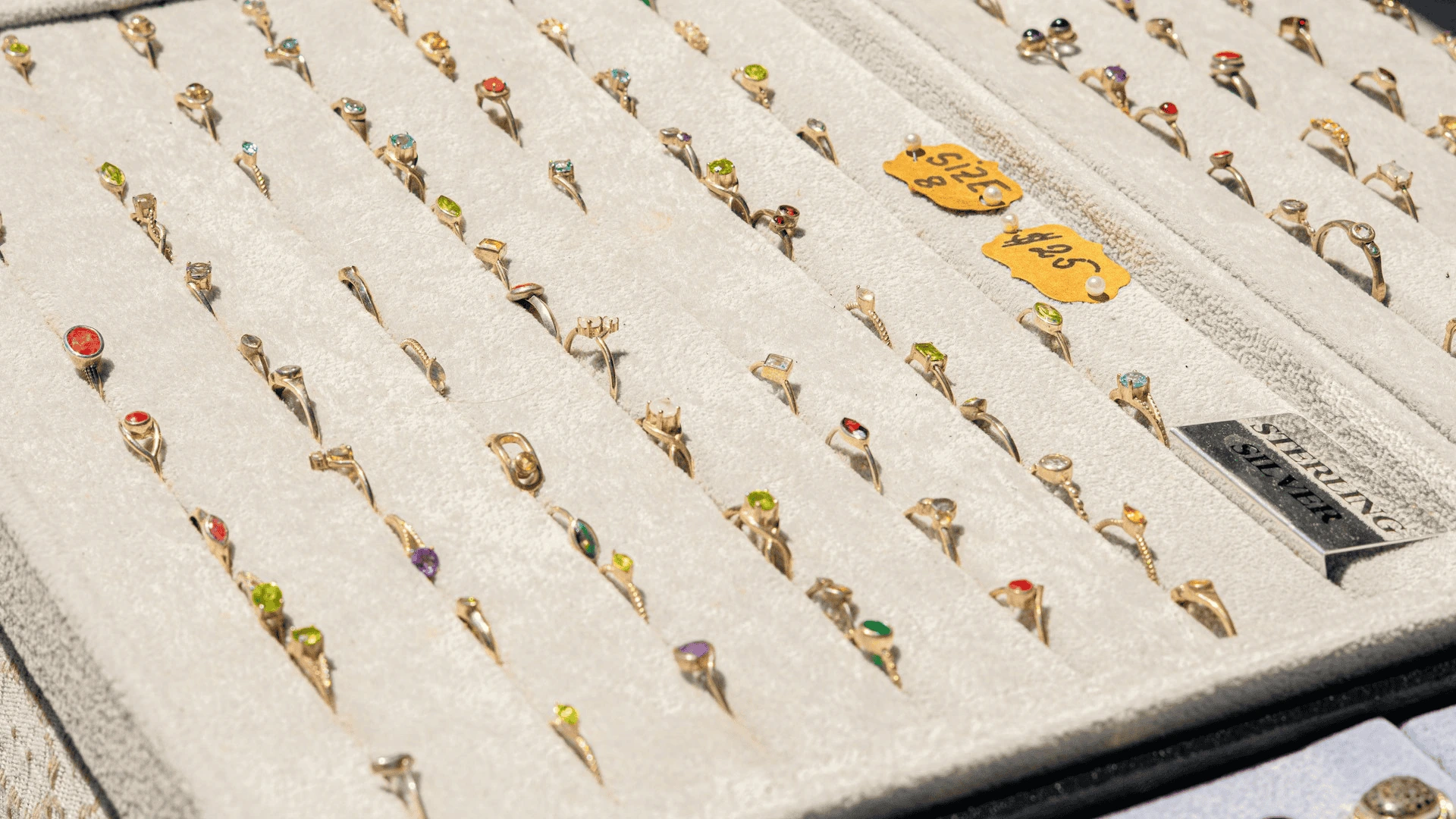
Is Gold-Plated Jewelry Worth Anything? A Guide for Buyers & Sellers


Whether you’ve got a jewelry box full of gold-plated pieces you’re thinking of selling or you’re eyeing a new piece to buy, you may wonder: Is gold-plated jewelry worth anything?
The short answer is yes, but its value has little to do with the gold itself. Instead, it can fetch a good price because of its condition, rarity, intricate craftsmanship, or designer label.
Gold-plated jewelry has won people over with its affordable price tag. But as tempting as that sounds, there are good reasons to think twice before choosing it over solid gold.
The Alloy Takeaway
Gold-plated jewelry has virtually no scrap gold value because its gold coating is extremely thin. However, designer, vintage, and collectible pieces may have resale value based on their rarity, craftsmanship, or condition. For long-term value, solid gold is generally the better investment because it retains intrinsic value based on its precious metal content.
What Does Gold-Plated Mean?

Gold-plated jewelry refers to jewelry made by coating an inexpensive base metal (typically brass, copper, or sterling silver in the case of vermeil) with an extremely thin layer of real gold through a process called electroplating. The result is a piece that looks like solid gold but costs a fraction of the price.
According to the Federal Trade Commission (FTC), jewelry described as gold-plated should have a gold coating of at least 10 karats and a minimum thickness of 0.175 microns (about 7 millionths of an inch) of pure gold. To put that into perspective, that’s roughly 400 times thinner than the diameter of a typical human hair.
You can sometimes identify gold-plated jewelry through markings or stamps such as:
- GP (Gold Plated)
- GEP (Gold Electroplated)
- HGE (Heavy Gold Electroplate)
You may also see markings such as 18K GP or 24K GP, which refer to the purity of the gold coating. Keep in mind, though, that not all gold-plated jewelry carries these markings.
Is Gold Plated Jewelry Worth Anything?
Yes and no. When people think about how much gold-plated jewelry is worth, they usually look at it in two ways: whether it has any scrap value because of the gold it contains, and whether it’s worth anything in the jewelry resale market. Let’s look at both.
Gold-plated jewelry has virtually no scrap value

Many people assume that because gold-plated jewelry is coated with real gold, they could sell it to a gold buyer and walk away with some cash. Unfortunately, buyers who purchase jewelry strictly for its precious-metal content typically won’t accept conventional gold-plated pieces.
The reason is that these pieces have very little gold deposited on them. If you have a gold-plated ring, the cost of recovering the gold from the underlying base metal would probably exceed the value of the recovered gold. That would put the scrap gold buyer at a net loss.
Perhaps if you had thousands upon thousands of gold-plated pieces to offer in bulk, recovering the gold might become economically worthwhile. But let’s be real: who has a stash that big sitting in their closet?
Gold-plated jewelry can have resale value
If you’re hoping to make money from gold-plated jewelry, you’re better off selling it as a wearable piece rather than for its gold content. However, how much cash you can get depends on the jewelry type.
| Type of Gold-Plated Jewelry | Resale Value Potential | Additional Notes |
|---|---|---|
| Ordinary Fashion Jewelry | Low (or none) | Mass-produced gold-plated jewelry has very little resale value. You might have better luck selling them as part of a jewelry lot. |
| Designer and Luxury-Brand Jewelry | Low to high | Gold-plated costume jewelry from brands such as Dior, Chanel, or Gucci may attract buyers willing to take it for the brand name. |
| Antique and Vintage Jewelry | Low to high | It’s not necessarily the metal but the artistry, rarity, and provenance that command a premium. Best to deal with private collectors or auction houses. |
| Gold-Plated Jewelry with Gemstones | Low to high | The more valuable the stones, the better your chances of getting a higher resale price. Think natural diamonds, rubies, sapphires, or emeralds of good size and quality. |
| Gold Vermeil Jewelry | Low to moderate | Unlike ordinary gold-plated jewelry, vermeil has a sterling silver base, which means you have two precious metals in one piece. Even so, scrap buyers may value the entire piece primarily for its silver content, with no additional value assigned to the thin gold coating. |
Unlike ordinary gold-plated jewelry, vermeil has a sterling silver base, which means you have two precious metals in one piece.
Even so, scrap buyers may value the entire piece primarily for its silver content, with no additional value assigned to the thin gold coating.
Gold-plated jewelry has a reputation as affordable, fast-fashion jewelry, which can make buyers reluctant to pay much for secondhand pieces. As a result, you’re likely to sell it at a loss, often for much less than you paid at retail.
Sure, certain designer, antique, and collectible pieces may fetch impressive prices, but those are the exception, not the rule.
This is where gold-plated jewelry falls short compared to solid gold. A pre-owned solid gold piece may be out of style but still retain intrinsic value from its gold content, with the potential to appreciate if global gold prices rise.
Can You Get Any Money for Gold-Plated Jewelry?
Yes, you may be able to get some money for your gold-plated jewelry, though its value depends more on its appeal as a wearable piece than its precious-metal content. As such, your jewelry should have something that makes it desirable to secondhand buyers, such as:
- Pieces featuring genuine diamonds, rubies, sapphires, or emeralds. The larger and better-quality the gemstones, the more valuable and attractive the jewelry could be to buyers, especially if the stones are authenticated.
- Gold-plated costume jewelry from luxury houses (e.g., Dior and Gucci). Beyond brand reputation, original boxes, dust bags, receipts, and authenticity documentation can make your pieces more appealing to buyers.
- Antique or vintage jewelry with distinctive period designs, such as Victorian brooches or Art Deco necklaces, may attract buyers who appreciate their craftsmanship and historical character.
- Limited-edition releases, discontinued designs, and rare pieces from sought-after designers may appeal to collectors willing to pay a premium.
- Matching jewelry sets from the same collection. Complete sets may appeal more to collectors who want to own every original piece from a particular collection.
- Jewelry in good overall condition. Regardless of which category your gold-plated jewelry falls into, its condition matters. It should have minimal plating wear, no discoloration or chipped coating, securely set stones, and functioning clasps.
Will pawn shops take gold-plated jewelry?
Many pawn shops won’t take ordinary gold-plated pieces. They prefer items they can resell quickly and profitably, so they more often accept solid gold jewelry, diamonds, and other valuable items.
Your chances may be better if your jewelry is in good condition and has one or more of the qualities we mentioned above, such as a coveted designer label, the collectible appeal of a rare vintage piece, or valuable gemstones.
Gold vermeil jewelry, a type of gold-plated jewelry with a sterling silver base and typically a thicker gold coating, can sometimes be swapped for cash based on its silver content.
However, gold is worth dozens of times more than silver per ounce, and pawn shops are notorious for offering only a fraction of an item’s actual market value. For what amounts to pocket change, a trip to your nearest pawn shop might not be worth the trouble.
Do jewelers buy gold-plated jewelry?
Jewelers who buy secondhand jewelry for its precious-metal content won’t purchase conventional gold-plated pieces. Like scrap gold buyers, they have little financial incentive to recover so little gold from the underlying base metal.
However, jewelers who specialize in estate jewelry, antique pieces, or pre-owned designer jewelry may be interested in certain gold-plated items.
An estate jeweler might consider a rare Art Deco cocktail ring or an authenticated vintage Chanel necklace if they believe they can resell it for a profit. Even an unbranded piece could attract interest if its style is currently in demand.
That said, jewelers need enough room to make a profit after covering expenses. So, even if they want your jewelry, they may offer far less than they expect to pay.
Is It Worth Buying Gold-Plated Jewelry?

Gold-plated jewelry is worth buying if you want the look of real gold without paying the full price of solid gold jewelry. Its biggest selling point is affordability, letting you keep up with the latest jewelry trends and experiment with different styles without breaking the bank.
It’s also a good option if you want to add more pieces to your rotation. This way, you won’t wear the same necklace, bracelet, or pair of earrings every day.
However, if you’re buying jewelry with the intention of selling it later, perhaps to raise cash for emergencies or as a tangible asset that could grow in value, gold-plated jewelry isn’t a wise purchase:
- Ordinary gold-plated pieces have virtually no scrap value because they contain negligible amounts of gold.
- Even if you own something that could command a higher price, say, a rare design or a piece with intricate artistry that collectors would pay a premium for, finding the right buyer can take time.
- If you need cash sooner, you may have to settle for far less than what the piece could fetch.
Solid Gold vs. Gold-Plated Jewelry: Which Is Worth Your Money?
If you’re buying jewelry with future resale value in mind, choose solid gold instead.
Unlike gold plating, solid gold has substantial intrinsic value tied to gold’s market price. And historically, gold has appreciated over the decades. That means your jewelry’s underlying gold content could increase in value in the years ahead.
Even if you decide to sell just a few months after buying it, you can approach a scrap gold buyer and receive an offer based on a percentage of its current melt value.
For example, at The Alloy Market, we base our offers solely on the piece’s gold content.
Here’s a side-by-side comparison of solid gold and gold-plated jewelry to help you decide which offers better value for your money:
| Comparison | Solid Gold Jewelry | Gold-Plated Jewelry |
|---|---|---|
| Upfront Cost | More expensive because it contains gold throughout the piece; pre-owned fine jewelry is an affordable alternative. | Very affordable |
| Intrinsic Gold Value | Has measurable gold value based on its weight, purity, and current gold prices. | Negligible gold value. Even with 24K or 18K plating, the gold layer is too thin to be worth much on its own. |
| Scrap Value | Can be sold for a percentage of its gold melt value. | No recoverable scrap gold value. |
| Resale Potential | Can retain value through its gold content, even if the design falls out of fashion. | Poor resale value unless it’s a desirable designer, antique, or collectible piece. |
| Potential to Appreciate | Its underlying gold value may increase if gold prices rise, though it isn’t guaranteed. | No appreciation potential based on gold content alone. |
| Durability and Wear | Won’t lose its gold color through plating wear, although it can scratch or dent. | The coating can wear away quickly, especially with everyday use. |
| Best For | Buyers who want jewelry for long-term wear and the option to recover some of its precious-metal value later. | Buyers who prioritize affordability, follow trends, and want to experiment with different styles. |
Shop Genuine Gold Jewelry for Less

We get it. Solid gold jewelry can be expensive. But why pay full retail price for genuine gold jewelry?
Our marketplace offers a wide selection of pre-loved fine jewelry below retail, from everyday gold chains and bracelets to vintage rings, earrings, and one-of-a-kind pieces.
It’s a chance to own genuine gold jewelry within your budget while making a more sustainable choice by giving pre-owned pieces new life.
Our team of experts carefully selects each piece for quality and condition and verifies its precious-metal purity through XRF testing before it enters our collection (so no gold-plated pieces or fakes slip through).
Ready to add another piece to your jewelry rotation? Browse our marketplace today!


