
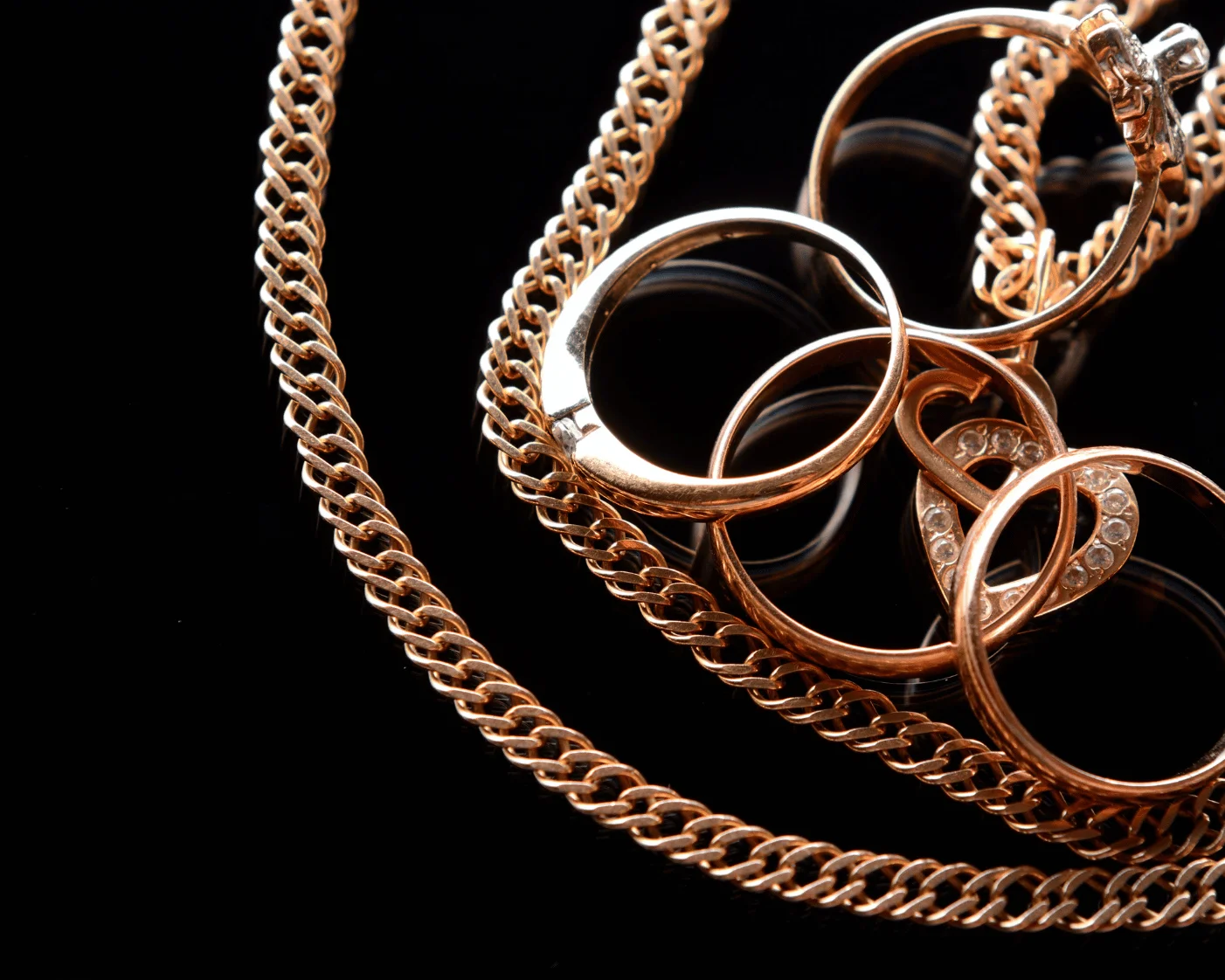
Gold Vermeil Meaning & What to Consider Before Buying


Gold vermeil has long been a strong contender among gold jewelry alternatives. It gives you the rich look and feel of solid gold without the hefty price tag, and “ver-may” sounds undeniably luxurious.
But behind the high-end name, there is a lot to consider: What does gold vermeil mean? How much real gold is in it, and how will it hold up against months or years of daily wear?
The Alloy Takeaway
While FTC standards require gold vermeil to have a 92.5% sterling silver core and a 2.5-micron gold shell, it is still plated jewelry. That thin outer layer means vermeil carries little secondary market value, and many gold buyers will not accept it. For jewelry designed to last a lifetime, withstand daily wear, and retain verifiable precious-metal value, solid gold is the ultimate investment.
What Does Gold Vermeil Mean?

Gold vermeil is essentially gold-plated sterling silver. Under the Federal Trade Commission (FTC) Jewelry Guides, jewelry marketed as “vermeil” must strictly satisfy three criteria:
- A sterling silver base: The core metal must be at least 92.5% pure silver (925 sterling).
- Minimum purity: The surface must be coated on all significant surfaces with pure gold or a gold alloy that’s at least 10 karats.
- Minimum thickness: The gold layer must be at least 2.5 microns thick (100/1,000,000ths of an inch).
Vermeil offers significant advantages over conventional gold-plated jewelry. First, the entire piece is made of gold and silver, so you have tangible precious metals with real intrinsic value.
Second, though the gold coating may seem very thin, it is much thicker than the plating found on typical gold-plated jewelry. As a result, it holds up better against rubbing, scratching, and the everyday contact that comes with wearing jewelry.
Last but not least, sterling silver as the base comes with its own benefits. Its hypoallergenic properties, for example, make it a good choice for people with sensitive skin. That’s just one of several advantages we’ll cover a little further ahead.
That said, while gold vermeil is a step above standard brass- or copper-based gold-plated jewelry, it still contains far less gold than solid gold. That’s also part of its appeal. You get the legitimate, luxurious look of gold at a much more affordable price.
In fact, celebrities including Coco Gauff and Kendall Jenner have been spotted wearing gold vermeil pieces. This shows that vermeil can look every bit as polished and stylish as more expensive gold jewelry.
Is gold vermeil real gold?

The outer coating on gold vermeil is real gold of 10K, 14K, or 18K purity. The underlying jewelry, however, is sterling silver, not gold.
So, when you see jewelry labeled “14K gold vermeil” or “18K gold vermeil,” remember that the number refers to the purity of the gold finish, not the entire piece.
How is gold vermeil made?
Gold vermeil is made through a process called electroplating. An electrical current applies gold from a liquid plating solution onto the silver surface until a gold layer of the required thickness builds up.
Before electroplating became commercially viable in the 1840s, goldsmiths relied on fire gilding, a process that used toxic mercury. Modern electroplating eliminated those risks while giving manufacturers precise control over coating thickness to meet official vermeil standards.
Characteristics of Gold Vermeil
So, what is gold vermeil actually like to own and wear? Here are a few characteristics worth knowing before you buy.
Does gold vermeil wear off?
The gold coating on vermeil jewelry can wear off over time from friction and repeated contact. Gold vermeil rings and bracelets usually take the biggest beating from rubbing against surfaces. The more frequently you wear them, the sooner the gold layer can thin. A visible patch of silver underneath should tell you it’s time for replating.
Does gold vermeil tarnish?
Yes, gold vermeil can tarnish over time, often starting as red-brown or blue patches before progressing to dull gray or solid black.
Gold itself is highly resistant to tarnishing. Tarnish can therefore indicate that the gold coating has worn away and the exposed sterling silver base has reacted with tarnishing agents, particularly sulfur compounds.
Unless you spend your days around a volcanic crater or sulfur-rich hot spring, your piece is unlikely to tarnish so soon. However, sulfur compounds are still present in outdoor air, certain skincare products, and even our own sweat. All of these sources can contribute little by little to tarnishing.
Will gold vermeil discolor your skin?
The gold layer in vermeil doesn’t leave any bluish or greenish discoloration on your skin. You’re more likely to see those stains with cheap jewelry containing higher amounts of metals like copper or brass, both of which can react with your sweat.
However, once a vermeil piece wears through this protective gold layer, the sterling silver underneath can be exposed and react when it comes into contact with the environment. The resulting tarnish may leave behind marks on your skin.
Can gold vermeil get wet?

A splash of water won’t hurt your gold vermeil jewelry. However, consistent exposure can eventually contribute to tarnishing and, worse, damage.
Water itself isn’t necessarily the biggest concern, though frequent exposure to moisture can accelerate tarnishing. Shower products like soaps and shampoos can also dull your vermeil’s shine by leaving residue on the gold finish. Nonetheless, these issues are primarily cosmetic.
The bigger concern is chlorinated water in swimming pools and hot tubs, as it does more than discolor the surface. Chlorine can corrode the silver and copper in vermeil and form tiny cavities or pits. Severe pitting can eat away enough material to weaken joints, clasps, and other small, delicate components.
Alloy tip: Take your vermeil off before showering or swimming to protect its strength and shine.
Is gold vermeil hypoallergenic?
High-quality, nickel-free gold vermeil is hypoallergenic. That said, not all gold vermeil pieces sold on the market are completely hypoallergenic.
Nickel is notorious for triggering allergic skin reactions. Yet jewelers and manufacturers still use it as a hardener in some gold alloys, mainly because it’s a much cheaper alternative to other white metals like platinum and palladium.
Alloy tip: If you have sensitive skin or a metal allergy, we recommend verifying a piece’s exact composition before buying it.
How long does gold vermeil last?
Gold vermeil can last 3 to 5 years. However, people who wear a vermeil piece more often also expose it to more opportunities for bumps, scratches, and tarnishing. So, tarnish or damage can happen in less than a year.
Between different vermeil styles, vermeil earrings, necklaces, and chains tend to last longer than vermeil rings and bracelets.
Types of Gold Vermeil
Much like solid gold jewelry, gold vermeil comes in different karat purities. Again, the karat rating applies only to the gold coating.
| Type | Purity of Gold Coating | Description |
|---|---|---|
| 10K gold vermeil | 41.7% gold | Contains the highest proportion of alloying metals and is generally harder than higher-karat gold |
| 14K gold vermeil | 58.3% gold | Offers a middle ground between gold purity and durability |
| 18K gold vermeil | 75% gold | Contains more pure gold and gives vermeil a richer gold appearance |
| 22K gold vermeil | 91.7% gold | Very high gold purity, but scratches more easily than lower-karat gold alloys |
| 24K gold vermeil | About 99.9% gold | Nearly pure gold and the softest option, which can make the surface more susceptible to scratching |
Karat isn’t the only difference you’ll find among gold vermeil pieces. Color varieties also exist, specifically yellow, rose, and white gold vermeil.
Traditional yellow gold combines gold with metals like silver and copper to retain its classic warm luster. Meanwhile, rose gold gets its pink-red hue from a higher copper content. While romantic and distinctive, the higher copper content can make it more susceptible to corrosion or tarnishing.
White gold vermeil is a little different: its silvery appearance comes from white metals like palladium, silver, or nickel. Often, it also has a rhodium finish for an even brighter white appearance.
How to Care for Gold Vermeil Jewelry
Gold vermeil can tarnish, scratch, and eventually lose some of its gold coating. You can’t prevent it for good, but here are a few habits that can slow the wear down and keep your jewelry looking good and intact for years to come:
- Rotate your everyday jewelry. If you want your favorite vermeil piece to last longer, give it a day (or days) off from the bumps and scrapes of everyday wear.
- Take your gold vermeil off before showering or swimming. Pat dry thoroughly with a soft, clean cloth to wipe away accidental splashes.
- Store gold vermeil separately from other jewelry pieces to prevent rubbing and scratching. Use a soft pouch or lined jewelry box.
- Wear vermeil only after applying perfume, lotions, and other personal-care products.
- Have your jewelry professionally replated once the gold layer becomes visibly thin or patches of sterling silver begin showing through.
- Don’t polish vermeil the way you would polish solid metal. General-purpose polishing cloths and polishes may contain abrasives that can damage your vermeil.
Gold Plated vs. Gold Vermeil vs. Solid Gold
Gold vermeil is just one of several gold jewelry options. If you’re still deciding between vermeil, conventional gold-plated jewelry, and solid gold, here’s a side-by-side comparison to help you choose:
| Aspect | Gold Plated | Gold Vermeil | Solid Gold |
|---|---|---|---|
| Composition | Gold coating over brass or copper | Gold coating over sterling silver | Gold alloy throughout the entire piece |
| Gold coating | Thinner than vermeil (at least 0.175 microns) | At least 2.5 microns of fine gold | No coating needed (entire piece is made of gold) |
| Gold purity | Varies by piece | Gold coating must be at least 10K | Commonly 10K, 14K, or 18K |
| Durability | Gold finish can wear quickly, especially when used daily | Gold coating gradually fades, but more resistant to wear than conventional gold-plated pieces | Can last for generations; scratches and dents are possible especially on high-karat varieties |
| Hypoallergenic | Often not hypoallergenic; commonly uses base metals such as brass or copper, and may contain nickel | Hypoallergenic if the gold coating is nickel-free | Hypoallergenic if the gold alloy is nickel-free |
| Price | Usually the cheapest option | Mid-range: more expensive than conventional gold plating but more affordable than solid gold | The most expensive of the three |
| Precious-metal value | Usually has very little (almost negligible) precious-metal value from its thin gold coating | Moderate; contains both gold and sterling silver, though relatively little gold by weight | Highest precious-metal gold value |
| Gold replating | Can be replated, but some base metals require additional surface preparation | Relatively straightforward since the underlying sterling silver can be prepared and replated with gold | Doesn’t require gold replating |
| Stamp or identification | May be marked GP, GEP, HGE, or HGP, usually alongside the gold karat; markings vary | May be marked 925, Sterling, or Sterling Silver, sometimes alongside a vermeil or gold-karat designation | Commonly stamped with karat marks such as 10K, 14K, or 18K, or fineness marks such as 417, 585, or 750 |
| Best suited for | Buyers prioritizing affordability or experimenting with trendy pieces | Buyers who want the appearance of real gold without the price of solid gold | Buyers prioritizing longevity and precious-metal value |
Set on Solid Gold? Consider Pre-Owned Fine Jewelry

While vermeil gives you the look of gold for a lot less, solid gold gives you the real thing: a timeless piece you can gift a partner or pass on to your loved ones for generations.
If you’re on a budget, consider buying pre-owned fine jewelry from our Marketplace! You’ll find handpicked pieces spanning different styles and eras, from ornate Victorian rings to Y2K gold chains and statement pieces, all at below-retail prices.
Our experts use XRF analysis to test every piece that comes through our doors and verify its karat rating. That way, you’ll have peace of mind knowing you’re getting the gold you’re paying for.
Shop from a place hundreds of customers already trust. Browse our Marketplace today!


