Where to Sell Dental Gold: A Complete Seller’s Guide
It’s strange to think of gold not as jewelry but as something that may have spent decades inside someone’s mouth. That’s because dental gold, including crowns, bridges, and fillings, sits in its own resale category.
Sure, it isn’t pure 24K in most cases, but it still contains real, recoverable value. The real challenge then isn’t figuring out whether it’s worth something, but knowing where to sell dental gold without leaving money on the table.
Read on to learn how dental gold is valued, where reputable buyers can be found, and how to approach the sale the right way.
In a nutshell
Dental gold contains real value based on its gold content, weight, and the current spot price. Most pieces fall between 10K and 22K, and who a seller sells to directly affects the payout. By understanding how dental gold is tested and how different buyers operate, sellers can avoid low offers and choose the option that best balances speed, transparency, and value.
What Is Dental Gold and Why It Has Value

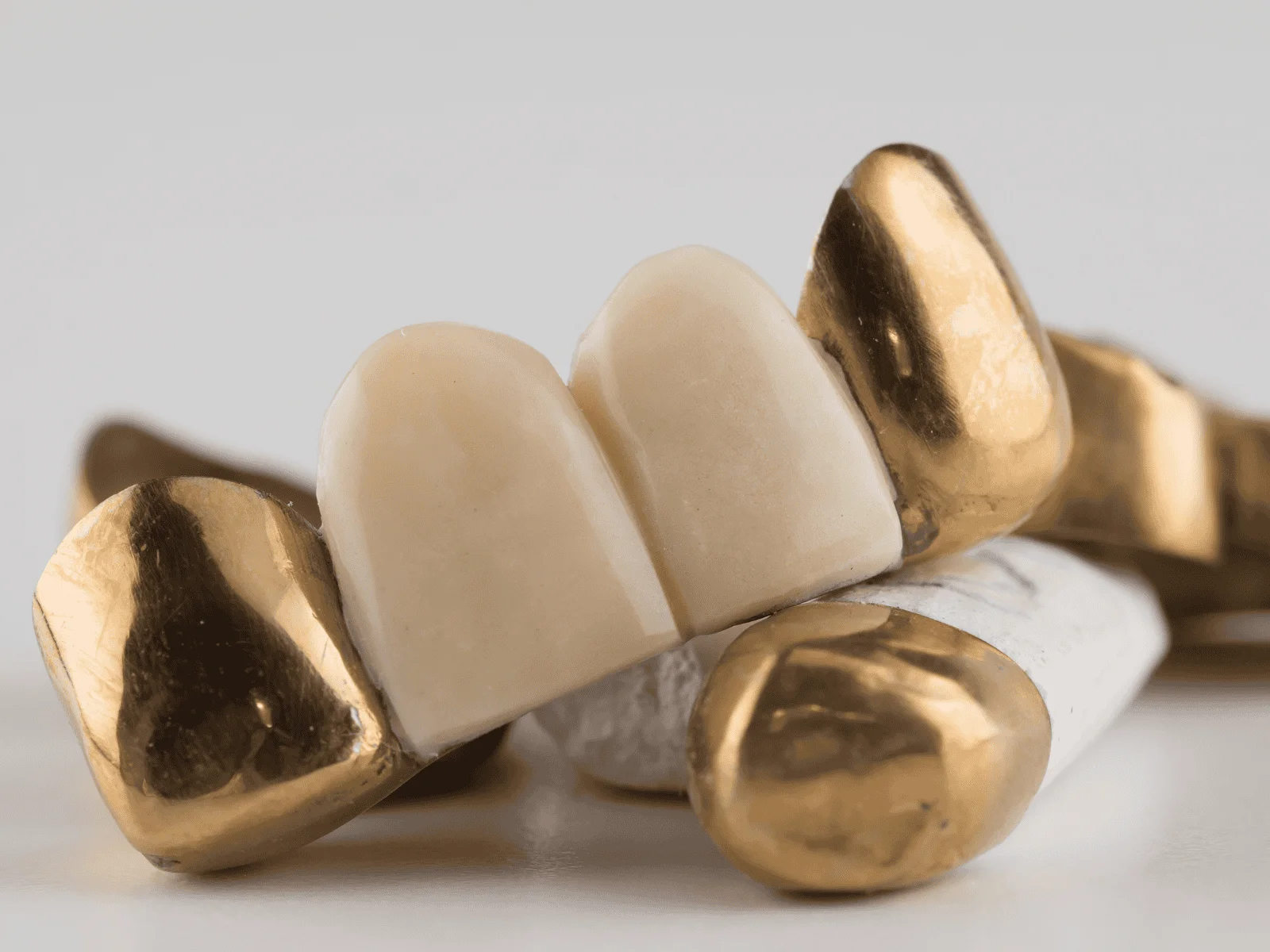
Dental gold is an alloy of gold with other metals, such as copper, silver, and palladium, used in dentistry for crowns, bridges, fillings, inlays, onlays, and gold teeth. This biocompatible alloy has value because it contains measurable gold content that retains resale value even when sold as dental scrap.
In fact, most dental alloys contain roughly 10K to 22K gold.
The remainder of the mix consists of metals like copper, silver, palladium, and platinum. They’re added to improve durability, hardness, and corrosion resistance, making the alloy suitable for dental procedures and able to withstand decades of use in the mouth.
Even these additional metals carry intrinsic value of their own, which further contributes to the overall value of dental gold when sold as scrap.
Types of dental gold

Dental gold comes in several common forms, each used for a specific dental purpose.
- Gold crowns: Single-tooth caps placed over damaged teeth. These are among the most common forms of dental gold and often contain a significant amount of gold alloy.
- Gold bridges: Multi-tooth restorations that act as a full replacement for missing teeth. Bridges tend to weigh more than crowns, which often makes them more valuable when sold.
- Inlays: Small gold pieces fitted inside a tooth rather than covering it. These usually weigh less but can still hold resale value.
- Onlays: Similar to inlays but covering a larger portion of the tooth surface. Their value depends heavily on size and alloy mix.
- Gold teeth: Removable gold caps or coverings that are cosmetic or decorative by nature. They’re also known as “gold grillz” and can vary widely in purity and weight.
- Gold partial dentures: Removable dental prosthetic created from a durable, biocompatible gold alloy.
Typical karat ranges
Most dental gold falls between 10K and 22K, with an average gold content of around 67% (roughly 16K). The exact karat depends on the specific dental application and the alloy formula used by the lab that produced it.
The table below shows how typical dental gold compositions compare by karat and gold content.
| Dental Gold Type | Typical Karat Range |
|---|---|
| Crown | 10K–22K |
| Bridge | 10K–22K |
| Inlays/Fillings | 18K–20K |
| Onlays | 18K–20K |
| Gold Teeth | Variable |
| Gold Partial Dentures | 16K–18K |
The simple reason is that pure gold is very soft. In a dental setting, that softness would cause the metal to deform, wear down, or lose its shape within weeks or months.
Unlike jewelry, dental gold is engineered first for strength, biosafety, and long-term durability, making it able to withstand years of chewing.
Where to Sell Dental Gold

Different buyers assess value differently, depending on how they test it, how they resell or refine it, and how much margin they need to build into their offer. In other words, where someone sells dental gold directly affects how much dental gold is worth.
Online dental gold buyers
Online dental gold buyers sit between local convenience and full-scale refiners. They may offer higher payouts than pawn shops or jewelers, without requiring sellers to negotiate in person.
Here are the main types of online buyers one will encounter and how they differ.
| Buyer Type | Mail-In Available? | Free Testing? | Insurance Coverage? | Notes |
|---|---|---|---|---|
| The Alloy Market | Yes | Yes | Yes (insured shipping) |
Does not require a minimum of dental gold to obtain an offer |
| Dedicated Refiners | Yes | Yes | Yes (insured shipping) |
Require bulk quantities |
| Precious Metal Marketplaces | Yes | Varies | Varies | Requires managing listings, fees, buyer screening, and potential disputes, which adds time and risk |
The Alloy Market
The Alloy Market is an online precious metals buyer that allows people to sell dental gold by shipping it directly to the company using a prepaid, insured kit for evaluation.
This process allows sellers to complete the entire sale from home, on their own schedule, and without the pressure of in-person negotiations. When selling dental gold, no additional work is required. The gold can still be attached to the tooth; there is no need to clean it or worry about the condition. We don’t just buy dental gold; we also purchase all finished gold, silver, platinum, and palladium.
Dedicated refiners
Dedicated refiners are companies that specialize in melting and processing scrap precious metals, including dental gold. They conduct testing using formal assay methods, so sellers can be confident that the valuation is based on the metal’s actual content rather than estimates or visual checks.
And because refiners process the metal themselves, they can eliminate the added expenses of engaging third parties or middlemen. So it’s no surprise that they can often offer much higher payouts.
But here’s the big catch: refiners usually work in bulk or impose minimum quantity requirements. If someone only has a piece or two to sell, this option won’t work.
Precious metal marketplaces
These online marketplaces and auction platforms (e.g., eBay) connect sellers directly with individual buyers or refiners through auctions or direct offers. In some cases, competition can push offers higher, especially for heavier or higher-karat dental gold.
The main drawback? Time. It can take a long while to find serious bidders. And to make matters worse, there’s no guarantee of attracting legitimate buyers at all. Then, there’s the headache of dealing with potential disputes, returns, or payment issues.
All that being said, sellers are trading higher upside for more work and more risk. It’s up to them to decide whether that trade-off is worth handling all at once.
Local buyers

Local buyers are arguably the most accessible option for quickly swapping dental gold for cash in person. The tradeoff for that speed and convenience, however, is the likelihood that offers could be much lower than your dental gold’s actual value.
Let’s dive deeper into each type of local buyer to understand why that is the case.
| Buyer Type | Turnaround Time | Expertise With Dental Gold |
|---|---|---|
| Dentists | Not applicable | High familiarity with dental materials, but do not buy directly from patients |
| Jewelers | Same day to 1–2 days | Moderate; stronger with jewelry scrap than dental alloys |
| Pawn Shops | Same day, often minutes | Low; dental gold treated as generic scrap |
| Cash-for-Gold Dealers | Same day, cash in hand | Focused on quick transactions; dental gold is accepted, but payouts vary and often depend on negotiation |
Dentists
Practically speaking, dentists don’t buy dental gold directly from patients. In fact, they’re more likely to collect removed dental gold crowns and bridges and sell them to refiners, often as standard practice.
That said, sellers shouldn’t expect a direct cash offer from dental offices. At best, they may point people to a dental refiner (often one they already work with) where they can sell their dental gold themselves.
Jewelers
Some local jewelry shops, especially smaller independent stores, may be willing to buy scrap dental gold. They usually test the piece for karat and weigh it on the spot.
However, many jewelers are more comfortable with jewelry scrap than with dental alloys, which can dramatically influence payout. Customers should call before showing up with dental gold to ensure that the jeweler buys it. Payouts vary, so it’s best to check with jewelers to get a quote.
Pawn shops
At pawnshops, sellers are typically paid the same day, often within minutes. That makes them one of the fastest ways to swap dental gold for cash.
However, they also tend to offer the lowest payouts for dental gold, often around 20–40% of melt value. Most pawn shops price dental gold as generic scrap and build in a wide margin to cover resale risk.
So, unless someone is pressed for cash, there’s little reason to settle for such a low offer.
Cash for gold dealers
Most cities have a cash-for-gold dealer who will buy scrap gold for quick cash. Customers can come in with their dental gold and leave with cash in hand. They can sometimes be intimidating for those who don’t like to negotiate, so they aren’t the right choice for everyone. Payouts vary, so it’s best to get quotes from a couple of buyers before making a decision.
Refiners and dental scrap buyers

Whether someone sells dental gold locally or online, the end buyer is almost always one of two parties: a refiner or a dental scrap gold buyer.
A refiner melts dental gold down and separates the precious metals it contains. Because refiners recover the metal directly, their pricing is closely tied to melt value and spot price.
A scrap gold buyer, on the other hand, purchases dental gold to resell it to a refiner later. That extra step usually means a wider margin built into their offer.
Regardless of which route someone chooses, here’s what actually matters when deciding who to sell to:
- Credentials and licensing: Legitimate refiners and scrap buyers are properly licensed, operate established facilities, and can explain how dental gold is tested. A buyer who avoids these questions should signal poor standards or practices.
- Reputation and third‑party reviews: Look for consistent feedback on platforms like Trustpilot or the BBB. A handful of complaints is normal. Repeated issues around payout reductions, slow payments, or poor communication are not.
- Payout transparency: Reputable buyers explain offers clearly, usually as a percentage of melt value tied to the current gold spot price. Vague quotes or a refusal to explain pricing should be red flags. Alloy provides a dental gold calculator to give estimated payouts up front.
- Assay reports and testing detail: Sellers don’t need lab-level detail, but they should be able to see how purity and weight were determined. Opt for buyers who share assay results and allow sellers to decline without pressure.
- Return policy and insurance: Trusted buyers insure shipments, confirm receipt, and allow dental gold to be returned if you decline the offer.
Preparing Your Dental Gold for Sale

Cleaning and sorting
Buyers expect dental gold to arrive intact and will account for non-gold materials during testing. So make sure any remnants or attachments stay in place. In most cases, a light rinse to remove loose debris is enough. Aggressive cleaning methods, however, can cause chipping or damage, potentially reducing the final payout.
For anyone with multiple pieces, they should sort them loosely by type, such as gold crowns, bridges, or partials. This helps create a more efficient process for both the seller and the buyer.
Identifying hallmarks vs. no markings
Dental pieces typically don’t carry the traditional purity hallmarks one would see in standard jewelry. The best bet is to have them professionally tested, ideally via XRF analysis, or to work with a buyer who conducts in-house testing as part of the evaluation process.
Weighing the gold
Accurate weight matters because dental gold is priced by the gram. For the best reading, use a scale that measures in grams rather than ounces. Then weigh the items together and, if possible, individually. This should provide a realistic baseline before requesting offers and help sellers spot unusually low quotes.
Documentation & photos for online sale
Clear documentation helps buyers assess the dental gold more accurately and reduces the risk of payout issues later. Take well‑lit photos from multiple angles, including a few close‑ups, and make sure the images are clear and easy to review.
Along with photos, provide basic documentation when requesting quotes. This should include the total weight, the number of pieces, and the approximate karat range if known. This will help buyers respond faster and avoid multiple re-quotes.
How Dental Gold Buyers Assess Value

Gold content & purity
Buyers first determine how much of the dental piece is actual gold. The most common method is acid testing, in which a small sample is tested with different solutions to estimate the karat range.
More advanced buyers use XRF testing, which scans the metal and reports a precise breakdown of gold and other metals without damaging the piece.
Weight in grams
Once purity is established, buyers turn their attention to weight. They use calibrated scales that measure to at least two decimal places. This part is crucial. Dental items are often lightweight, and a half‑gram difference on a high‑karat crown can materially affect the offer.
Current spot price + melt value

The final input is the gold spot price on the day the dental gold is evaluated. The spot price reflects what gold is trading for on global markets and changes daily. When spot prices rise or fall, offers generally follow suit.
Next, buyers calculate melt value by multiplying the item’s verified gold content by its weight and applying the current spot price.
When compressed into a single formula, it looks like this:
Weight × Gold Purity × Spot Price = Melt Value
The final offer is then calculated as a percentage of that melt value, with adjustments made to account for refining and processing costs.
Alternatively, sellers can use Alloy’s dental gold calculator below to quickly estimate the value of their dental gold. At the same time, this should provide a reliable baseline for how much other mail-in gold buyers should be offering.
For more context on why gold prices shift and why offers can vary from one week to the next, check out Alloy Market’s Historical Gold Prices guide.
Payout Expectations & Timeline

How quickly someone gets paid for dental gold depends largely on who they sell to and how the gold is evaluated. Below are the three most common payout timelines.
- The Alloy Market: Alloy offers same-day payouts once sellers accept the quote, but sellers must factor in shipping time.
- Local in‑person offers: Jewelers and pawn shops can often quote and pay within the same day, sometimes within an hour or up to a day or two.
- Refiner processing: Refiner payouts may take one to several weeks. Refiners often batch dental gold for melting and full assays. This adds processing time, which may explain why their payouts can sometimes be higher.
Regardless of who one sells to, several factors can affect timing. Assay backlogs can slow testing at refiners, shipping delays can occur due to carrier issues, and additional verification steps, such as secondary testing, can extend the process.
When Not to Sell Dental Gold

Selling dental gold makes sense in most cases, but there are situations where holding off may be the better move. Before selling, consider the following scenarios:
- Pieces with high sentimental value: Some dental gold items are tied to personal memories or milestones. If someone is not ready to part with them yet, it may be worth holding on for now, because once the gold is melted, that connection is gone.
- Antique dental work: Very old dental restorations may carry value beyond their gold content. Once sold as scrap, these pieces are melted down and permanently lose any historical or collectible significance, when they could’ve been valued more by collectors, historians, or museums.
- Mixed‑metal pieces with minimal gold content: Some dental items contain only a very small amount of gold mixed with mostly base metals. In these cases, it may not make financial sense to proceed with the sale, as the time and effort required may not justify the low payout.
Sell Your Dental Gold with Alloy Market

For the simplest way to sell your dental gold from the comfort of your home, give Alloy a try. Start by requesting a free evaluation kit, and we’ll ship it straight to your door. Use the free, postage-paid parcel to package and ship your items via FedEx. We even cover tracking and insurance, so you know your items are safe. Feel free to pack more than just dental gold to boost your offer. Alloy accepts finished gold, silver, platinum, and palladium items.
When your items arrive, our team will evaluate them and send you a detailed, itemized offer right away. When you accept, we initiate payment on the same business day. Customer service is our highest priority; just check out the reviews from our happy customers. We look forward to serving you.
