
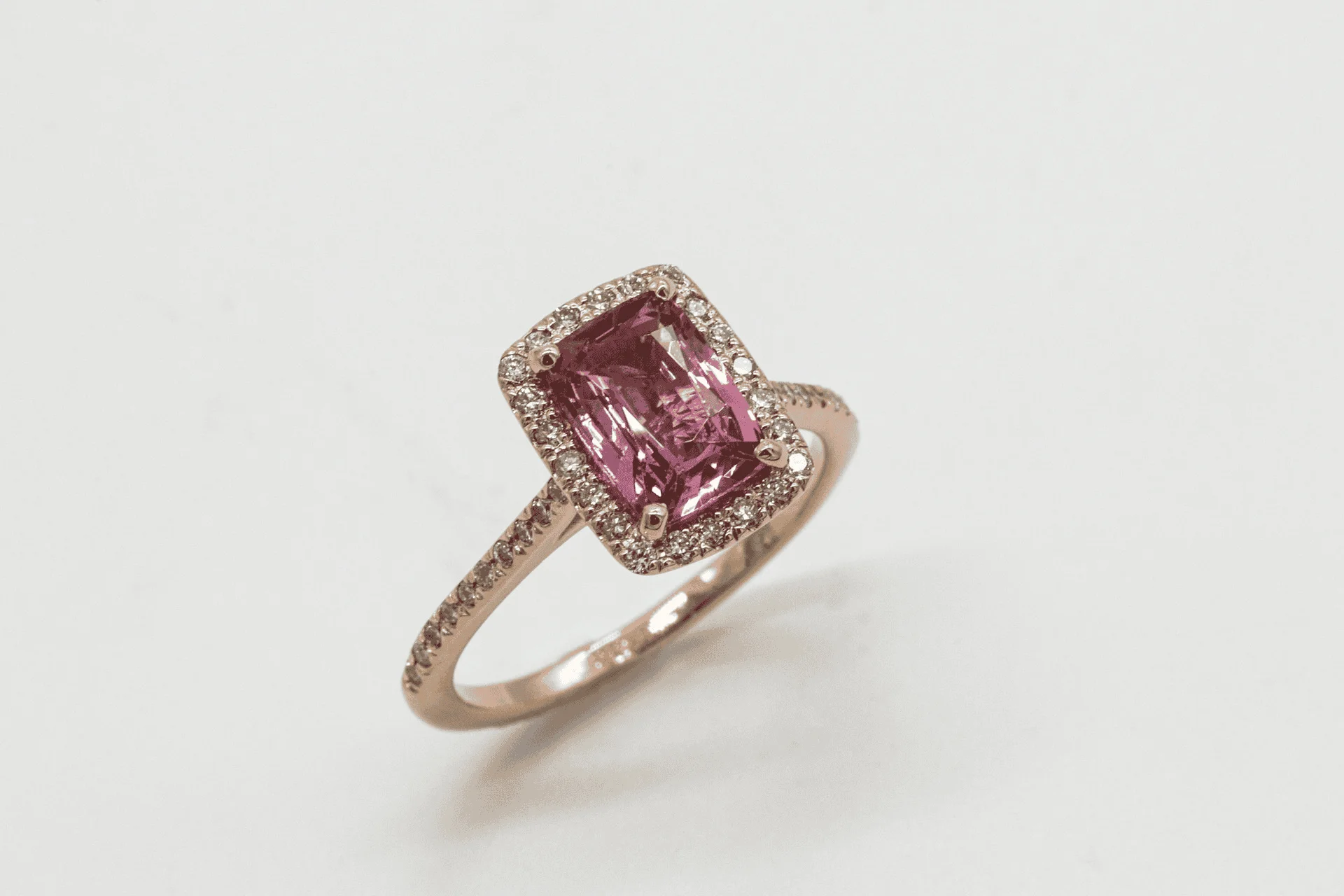
How Is Rose Gold Made?

Rose gold has become one of the most popular choices in fine jewelry, admired for its warm blush tone and timeless character. Its color carries a sense of intimacy; no wonder it shows up in so many engagement rings and nostalgic, vintage-inspired watches we see today.

How is rose gold made? This guide explains what gives rose gold its color, how it’s formed from a mix of metals, and why it continues to stand out among other gold types.
In a nutshell
Rose gold is a manufactured alloy, not occurring in nature, of gold, copper, and silver. The color of the piece can vary depending on its karat and the amount of copper present. It has the same intrinsic value as other colors of gold of the same karat.
What Is Rose Gold?
Rose gold is a precious metal alloy made by combining pure gold with copper and, in some cases, a small amount of silver. The copper gives it a pink tone, while the silver softens the shade and improves workability for jewelers.

Unlike pure 24K gold, which is soft and bright yellow, rose gold is engineered for strength and color. The result is a durable metal that keeps gold’s value while adding a romantic, rosy hue that complements both modern and vintage jewelry.
Composition of rose gold
The mix of gold, copper, and silver determines both the color and hardness of rose gold. A higher copper ratio deepens the pink hue, while more silver lightens it. Typical blends include:
- 18K rose gold: About 75% gold, 22% copper, and 3% silver
- 14K rose gold: About 58% gold, 33% copper, and 9% silver
- 10K rose gold: About 41.7% gold, 38% copper, and 20% silver
These ratios influence not only color but also durability. Lower-karat rose gold, such as 10K, appears slightly redder and offers greater resistance to scratching (suitable for everyday casual wear). At the same time, higher-karat pieces contain more gold, giving them a softer tone and feel.
What makes rose gold unique
Rose gold stands out for its warmth and versatility, as it complements a wide range of skin tones and pairs beautifully with both diamonds and colored gemstones. Beyond appearance, its relatively higher copper content makes it stronger than yellow gold, making it ideal for daily wear.
Compared to the bright, timeless luster of yellow gold and the cool, luxurious tone of white gold, rose gold offers a romantic hue that aligns with current minimalist and mixed-metal trends.

Modern designers often use rose gold for stacking rings, delicate chains, and bezel-set pendants, blending vintage craftsmanship with sleek silhouettes. Its pink tone softens geometric designs and pairs perfectly with diamonds, morganite, and neutral gemstones, giving pieces both a timeless and fashionable appeal.

Alloy Buys Rose Gold
Request a free Alloy Kit, ship from home, and receive a same-day offer after evaluation.
Alloy Buys Rose Gold
Request a free Alloy Kit, ship from home, and receive a same-day offer after evaluation.
How Is Rose Gold Made?
Below is a step-by-step breakdown of how rose gold is manufactured, followed by specific details for 14K and 10K variants.

The manufacturing process
Jewelers begin with pure 24K gold, melting it down before introducing measured amounts of copper and, in some cases, silver.
The blend is mixed and refined until the metals bond evenly, then poured into bars or rolled into sheets, ready for crafting. The exact proportions and temperature control vary depending on the desired karat.
For example, creating 18K rose gold requires less copper and more gold to achieve a lighter pink tone, whereas 10K or 14K versions use a higher copper ratio, which deepens the color and increases hardness.

Once cooled, the resulting alloy is stronger than pure gold, making it durable enough for daily wear and intricate jewelry designs.
How is 14k rose gold made?
Fourteen-karat rose gold contains about 58.3 percent pure gold, blended mainly with copper and a small amount of silver. According to the Gemological Institute of America, a typical 14K formulation consists of 58.3% gold, 32.5% copper, and 9.2% silver.

This mix produces a soft pink tone that balances beauty and durability. It’s considered more luxurious than 10K but sturdier than 18K gold, making it perfect for individuals who enjoy wearing high-end pieces every day without worrying about scratches.
And speaking of sturdy, rose gold’s resistance to bending and surface wear also makes it ideal for holding gemstones securely, even after years of everyday use.

How is 10k rose gold made?
Ten-karat rose gold contains approximately 41.7 percent pure gold, with the remainder primarily comprising copper and silver. Data from the Gemological Institute of America also lists a common ratio of 41.7% gold, 38.3% copper, and 20% silver.
The higher copper content gives 10K rose gold a deeper, reddish-pink tone and greater hardness than its 14K and 18K counterparts.
It holds less intrinsic gold value due to its lower gold content, but that’s also what makes it more affordable and ideal for budget-conscious buyers who want the look and durability of gold without the higher price tag.
Current Trends in Rose Gold Jewelry
According to the International Gem Society, rose gold remains one of the trendiest metals of 2025. People value it for its versatility and its ability to pair perfectly with white gold in mixed-metal looks that dominate modern collections and adapt to evolving seasonal trends.
Leading luxury fashion and lifestyle publication Harper’s Bazaar Arabia echoes this, noting that fine jewelry designers are increasingly exploring multi-metal combinations – particularly by bringing together white and rose gold – to create modern statement pieces that bridge timeless and contemporary styles.
Fashion brands and influencers continue to reinforce the relevance of rose gold in popular culture.
Tiffany & Co. featured Rosé of BLACKPINK in its HardWear campaign, wearing rose-gold pieces. At the same time, Vogue has spotlighted rose-gold jewelry in multiple editorial collections, showcasing the metal in layered necklaces, rings, and hoops.
These high-visibility appearances demonstrate how rose gold remains a preferred material for designers and a staple in modern luxury styling, with looks that resonate with Gen Z, Millennials, and older collectors alike.
Rose Gold vs Other Gold Types
Rose gold sits alongside yellow gold and white gold as the three main variations used in fine jewelry. While each shares the same base metal, their alloy compositions and appearances differ noticeably, affecting both style and durability.
| Aspect | Rose Gold | Yellow Gold | White Gold |
|---|---|---|---|
| Color & Appearance | Warm pink tone from copper; romantic and vintage feel | Classic rich yellow hue; traditional appeal | Silvery-white finish; sleek and modern look |
| Alloy Composition | Gold + copper + silver | Gold + silver + copper | Gold + nickel or palladium (plus rhodium plating) |
| Hardness | Slightly harder due to copper content | Softer than rose gold; moderate durability | Hard surface after rhodium plating, but plating can wear off |
| Maintenance & Price | Low maintenance | Requires occasional polishing to restore shine | Needs periodic rhodium re-plating to retain color |
| Popularity & Usage | Trendy and versatile; common in engagement and fashion jewelry | Traditional and timeless; common in heirloom pieces | Preferred for modern, platinum-like designs |
Rose Gold
| Color & Appearance: Warm pink tone from copper; romantic and vintage feel |
| Alloy Composition: Gold + copper + silver |
| Hardness: Slightly harder due to copper content |
| Maintenance & Price: Low maintenance |
| Popularity & Usage: Trendy and versatile; common in engagement and fashion jewelry |
Yellow Gold
| Color & Appearance: Classic rich yellow hue; traditional appeal |
| Alloy Composition: Gold + silver + copper |
| Hardness: Softer than rose gold; moderate durability |
| Maintenance & Price: Requires occasional polishing to restore shine |
| Popularity & Usage: Traditional and timeless; common in heirloom pieces |
White Gold
| Color & Appearance: Silvery-white finish; sleek and modern look |
| Alloy Composition: Gold + nickel or palladium (plus rhodium plating) |
| Hardness: Hard surface after rhodium plating, but plating can wear off |
| Maintenance & Price: Needs periodic rhodium re-plating to retain color |
| Popularity & Usage: Preferred for modern, platinum-like designs |
Color and appearance
Rose gold has a warm, pinkish hue that comes from copper alloying, giving it a soft glow that flatters most skin tones. Yellow gold maintains a traditional, bright golden look, while white gold offers a cooler, silvery finish reminiscent of high-end platinum. These color variations make each type suitable for different personal styles and gemstone pairings.
That said, rose gold is often chosen for its romantic, vintage-inspired aesthetic, whereas yellow gold remains a classic choice for traditional jewelry. White gold, on the other hand, appeals to those who prefer a clean, minimalistic look.
Composition and hardness
The ratio of gold to alloy metals influences both color and hardness. Yellow gold typically blends gold with silver and copper, white gold combines gold with palladium or nickel, and rose gold mixes gold with copper and a small amount of silver.
Due to its higher copper content, rose gold tends to be slightly harder than yellow gold of the same karat, yet still softer than white gold, which gains extra strength from metals like palladium or nickel.
Price and maintenance
The cost of any gold jewelry depends mainly on purity rather than color, since all gold types are priced relative to their karat value. However, white gold often requires rhodium plating to maintain its bright tone, which adds long-term maintenance costs.
Rose gold, by contrast, retains its color naturally and does not need plating, making it easier to maintain over time. Yellow gold sits in between, requiring occasional polishing to preserve its shine.
Popularity and usage
Rose gold has gained substantial popularity over the past decade, especially in engagement rings, watches, and fashion jewelry. Its soft tone pairs beautifully with diamonds, morganite, and neutral-colored gemstones.
Yellow gold remains a timeless option, especially among traditional gold collectors and jewelry enthusiasts, while white gold dominates settings where a platinum-like, high-end finish is desired.
Rose Gold Price Considerations
The price of rose gold jewelry primarily depends on the current market price of gold, which fluctuates daily in response to global supply and demand, as well as economic trends. When the gold spot price rises, the cost of all gold jewelry – including rose gold – increases proportionally.

As of October 2025, gold trades at approximately $4,000 per ounce (around $140 per gram), based on data from Macrotrends. This value marks one of the highest levels in recent years, continuing the strong upward trend seen since early 2024.
Because rose gold is an alloy, its overall price reflects not only the gold content but also the percentage of copper and silver in the mix.
While pure gold (24K) commands the highest market value, most rose gold pieces are crafted from 14K or 18K gold, meaning they contain 58–75 percent gold by weight.
The remaining portion (25% to 42%), composed of copper and silver, contributes little to the melt value and is often negligible. As a result, the intrinsic worth of rose gold jewelry is determined primarily by its gold content rather than its total metal weight.
However, jewelry buyers and sellers often value rose gold differently depending on design, craftsmanship, and brand. A handcrafted 14K rose gold ring may hold greater resale potential than a plain band, even if the melt value is identical.
If you’re interested in assessing real-time gold prices and calculating melt value, you can use the Alloy Market Gold Price Tool for accurate, up-to-date estimates.
Alloy Buys Rose Gold
Request a free Alloy Kit, ship from home, and receive a same-day offer after evaluation.
Alloy Buys Rose Gold
Request a free Alloy Kit, ship from home, and receive a same-day offer after evaluation.
Final Thoughts
Rose gold combines elegance, warmth, and durability, making it a timeless favorite for both modern and vintage jewelry. Its blush tone offers a romantic alternative to yellow and white gold while retaining the same intrinsic value of real gold.
If you own rose gold jewelry and want to understand its true worth, you can request a free Alloy Kit to get a transparent, same-day evaluation.


