
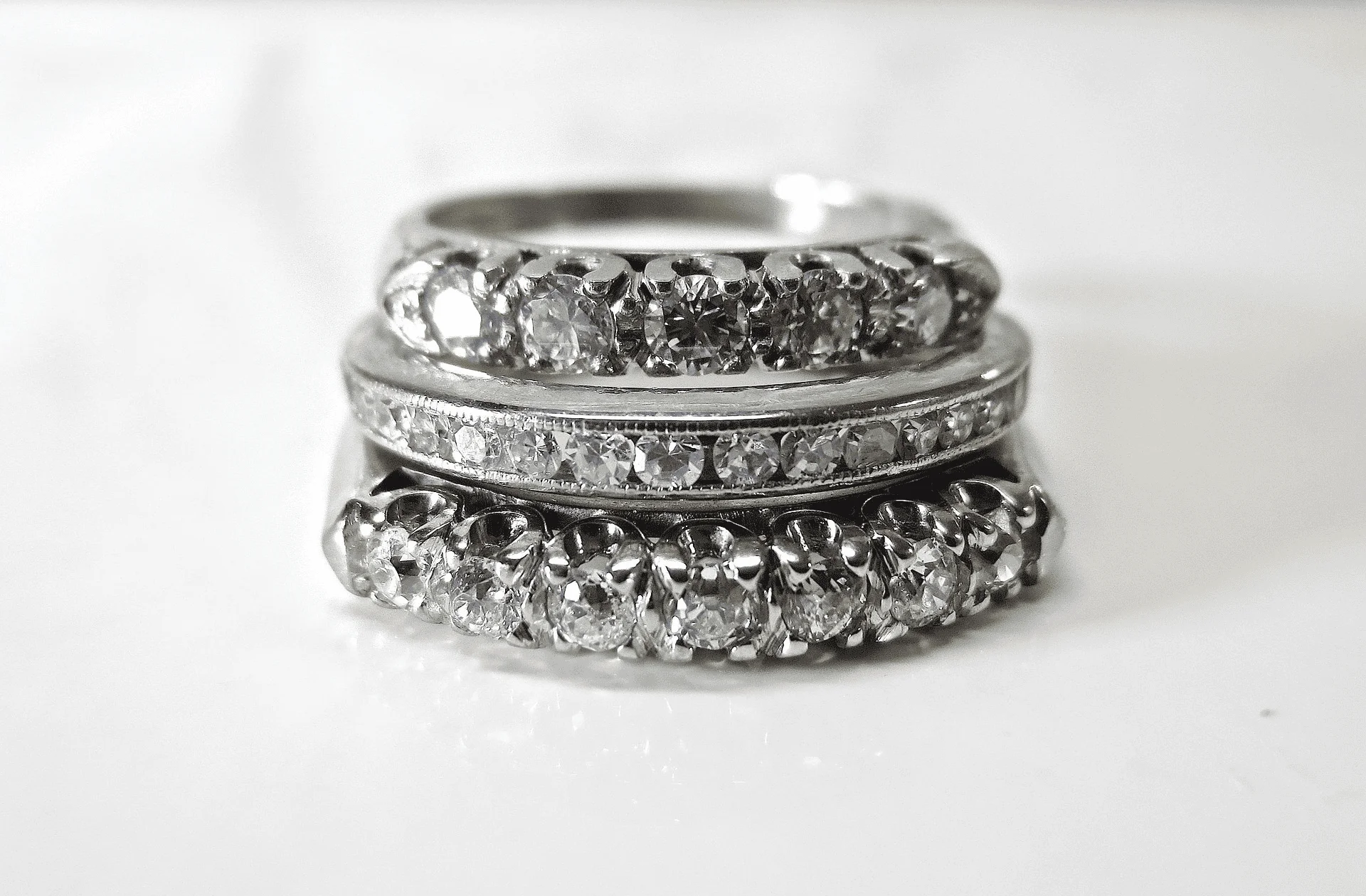
What Is Fine Jewelry? The Ultimate Guide to Quality and Value


Most jewelry loses its shine within a year or two. Fine jewelry doesn’t. Solid gold, platinum, and sterling silver pieces can stay in rotation for years and still resell for meaningful cash later. This guide explains what fine jewelry is, how it differs from demi-fine, fashion, and pre-loved estate pieces, and why the distinction matters for both style and value.
In a nutshell
Fine jewelry is jewelry made of at least 10K solid gold, 925 silver, or 950 platinum. Compared to semi-fine or fashion jewelry, it is generally the most durable and of high quality. Due to its precious metal content, it retains some of its value and can be resold for melting down or worn by a new buyer. Though it has a higher purchase price than lower-quality jewelry, it can last a lifetime, making it suitable for passing down as an heirloom.
What Is Fine Jewelry? The Definition of Longevity

Fine jewelry is made of solid precious metals and natural gemstones. Most pieces are 14K to 24K gold, but the minimum threshold to be declared fine jewelry is 10K gold, 950 platinum, or sterling silver. Many people start with silver because it’s the most affordable (while platinum is the most expensive).
The word “fine” comes down to how a piece holds up. A solid gold ring can withstand decades of daily wear, get wet without issue, and pass from one generation to the next with the same finish and color it had at the start.
What is Considered Fine Jewelry?

To determine whether jewelry is “fine,” examine the following:
- Hallmarks: The small stamp on a clasp or inside a band shows the metal’s purity. Look for 585 (14K gold), 750 (18K gold), 999 (24K gold), PLAT or 950 (platinum), and 925 (sterling silver).
- Stones: Real diamonds, sapphires, rubies, and emeralds come from the ground and are worth more when reselling. Lab-grown stones may look the same, but they sell for less.
- Construction: Solid pieces are made entirely of precious metal, resulting in greater weight and resale value. Hollow pieces have a thin layer of gold or silver wrapped around an empty core, so they cost less and resell for less.
High Jewelry vs. Fine Jewelry: The Art of the Exceptional
Fine jewelry has a quieter, more exclusive cousin: high jewelry. Also called haute joaillerie (a French term for the highest level of jewelry-making), it covers rare, one-of-a-kind pieces set with museum-grade stones.
High jewelry tends to appreciate over the years, especially when the designer’s name carries weight at auction. Fine jewelry rarely appreciates the same way. But the gold, platinum, and gemstones inside it hold steady value for decades on their own.
The Difference Between Fine, Demi-Fine, and Fashion Jewelry
Beyond fine and high jewelry, two more categories fill out the market: demi-fine and semi-fine, and fashion and costume.
What is demi-fine and semi-fine jewelry?
Demi-fine jewelry sits between fine and fashion jewelry. It uses real precious metals, but only as a thicker layer over a less expensive base, which is why it costs less than solid gold or platinum.
- Gold vermeil jewelry has a thick layer of gold over a sterling silver base.
- Gold-filled jewelry features a layer of gold bonded to a base-metal core, with the gold comprising at least 5% of the total weight.
Semi-fine is similar, though some brands use it to describe pieces that pair lower-karat gold or vermeil with genuine semi-precious stones like amethyst, citrine, or peridot. The materials are real, but not as rare as the natural diamonds and sapphires found in fine jewelry.
Both work well as “trend” pieces. They’re beautiful for several years of careful wear, but not built for resale or handing down, since a thin gold layer doesn’t carry the melt value of solid gold.
Fashion and costume jewelry
Fashion jewelry sits at the bottom of the quality scale. These pieces start with a base metal like brass, copper, or zinc. Then they may get a flash-plated layer of gold or silver on top. The plating is usually less than half a micron thick, thin enough to wear off within months.
That thin layer is also why some pieces leave a green stain on the skin. Once sweat, lotion, or water reaches the copper beneath, the metal starts to oxidize, and the green color rubs off onto the wearer. It’s not harmful, but it’s the clearest sign that a piece isn’t fine jewelry.
Why base metals matter for your skin and your wallet
The metal underneath a piece shapes how the skin reacts to it and how much the piece is worth later, in three ways:
- Skin sensitivity: Many fashion jewelry pieces contain nickel or lead, which can leave skin red, itchy, or breakout-prone. Fine jewelry is made of 10-karat or higher gold, platinum, or sterling silver, which are much less likely to irritate the skin.
- Cost per wear: A $50 fashion necklace that tarnishes and needs replacing in six months can cost more over a decade than a $500 gold chain worn daily for 50 years.
- Resale potential: A fashion necklace loses almost all its value the moment someone wears it. A solid gold chain holds its value in the metal itself, so owners can pass it down, trade it in, or sell it whenever the timing makes sense.
What is Estate Jewelry? The Smart Way to Build a Collection
“Estate” jewelry sounds antique, but it really means pre-owned. If someone sells their wedding ring two years after buying it, that ring counts as estate jewelry.
Age categories like retro, vintage, and antique only apply when a piece is older. Antique jewelry is at least a century old; vintage usually means 20 to 99 years; and retro typically refers to pieces made 20-30 years ago. A piece can be “estate” without falling into any of these categories.
The big draw with estate jewelry is the price. A new fine jewelry piece typically sells for two to three times the value of its metal and stones, since the retail price covers branding, design, and store overhead. Estate pieces skip all that, so the price lines up much more closely with the material value.
Did you know?
The Alloy Market’s Marketplace sells pre-loved jewelry, making fine pieces accessible at a fraction of retail.
The Investment Lens: Why Fine Jewelry Retains Value
Fine jewelry has intrinsic value, meaning the materials themselves are worth something on their own. The gold in a ring keeps its value whether the ring is five years old or 50, and a jeweler will still authenticate, weigh, and write a check for it decades later.
Longevity and the Circular Economy: Why Fine Jewelry is a Forever Asset
The same materials that make fine jewelry valuable also make it restorable, resellable, and recyclable.
The restoration benefit
Most jewelry can withstand basic repairs, but fine jewelry can undergo full restoration. Solid gold and platinum hold up to far more than plated pieces, and a jeweler can laser-weld cracks, resize bands, and polish the surface back to a mirror finish.
Keeping your collection “resale ready”

A few simple habits can keep fine jewelry pieces pristine (and protect their resale value):
- Cleaning: Warm water and some mild dish soap will get most pieces clean. For deeper buildup, an ultrasonic cleaner can help on harder stones like diamonds and sapphires. Skip it for porous stones like opals and pearls, though, since the vibrations can crack them.
- Storage: Give each piece its own soft pouch or padded compartment. Diamonds are harder than every other gemstone, so a loose diamond ring next to other pieces can scratch and chip whatever it touches.
- Documentation: Hang on to the original box plus any grading reports from labs like the Gemological Institute of America (GIA) or American Gem Society (AGS). These documents verify quality and authenticity, and can increase the resale price.
Recycled luxury: the original sustainable industry
Fine jewelry is inherently eco-conscious thanks to its closed-loop nature. Refiners can melt gold and platinum down again and again without a drop in purity, which means the same ounce of gold can travel through several different pieces over the years.
Buying and selling estate jewelry is one of the greenest ways to shop, since each pre-owned piece cuts the demand for new mining. Marketplaces like The Alloy Market serve as the “hub” of this circularity, letting owners trade older pieces for cash to put toward the next one.
Purchasing and Selling Fine Jewelry with Alloy
The Alloy Market has created a circular economy by both purchasing and selling fine jewelry. If you have old, unwanted, or even broken jewelry, Alloy will purchase it. You can begin the process by requesting a free evaluation kit. We’ll ship it right out to you and provide a postage-paid, insured parcel to send your items.
If you live in the area and prefer a face-to-face evaluation, you can request an appointment. Have questions before sending in your items? Reach out to one of our Alloy Advisors, who can provide an up-front estimate.
Each item is verified for purity and weight, and offers are based on the current spot price. We’ll send a detailed, itemized offer as soon as your items have been evaluated. When you accept, we initiate payment the same day.
Eligible, resale-ready jewelry may sell on our marketplace, providing sellers with the opportunity to receive Double Pay. If an item sells, the seller automatically receives an additional 10% of the resale profit, or 25% as an Alloy Insider. It’s a simple way to capture more of your jewelry’s value with little to no effort.
Shopping on the Alloy Marketplace means you can find pre-loved fine jewelry at a fraction of the retail cost. Prices are based on the item’s weight, and we don’t charge for traditional business overhead that typically calls for a 400% markup. You can find unique pieces at great prices every day.


