
What Color Jewelry Should I Wear?


Standing in front of your jewelry box, you might wonder, “What color jewelry should I wear? Does gold or silver suit my complexion or match what I’m wearing?” Ultimately, you should wear whatever you love and what makes you comfortable.
The Alloy Takeaway
While traditional color theory claims warm skin undertones should wear yellow or rose gold and cool undertones should wear silver or white gold, your personal style always takes priority. As precious metals specialists who test and evaluate thousands of pieces, we know that metal performance comes down to composition, like rose gold’s copper-backed durability or white gold’s rhodium luster. Whether you match your undertones, create high-contrast outfits, or mix gold and silver, the best jewelry color is simply the one you love to wear.
Quiz: Which Jewelry Color Should You Wear?
First, take our quick gold, white gold, rose gold, or mixed metal jewelry test below to see what color might fit you best:
FIND YOUR MATCH
What Jewelry Color Should You Wear?
Not sure whether yellow, white, or rose gold is more your style? Answer five quick questions to find your starting point. There are no wrong answers, and no jewelry color is off-limits.
Which colors show up most in your closet?
Which description sounds most like your personal style?
When you add jewelry to an outfit, what are you usually hoping it does?
If you know your skin undertone, what is it?
Not sure? That’s completely fine. Traditional styling advice uses undertone as one way to choose jewelry colors, but it’s only one factor.
Forget all the styling advice. Which one are you instinctively reaching for?
YOUR MATCH
Yellow Gold
You might love the warmth of yellow gold.
You’re drawn to warmth, richness, and a more classic jewelry look. Yellow gold may feel especially at home with the colors and styles you already wear, whether you use it to complement warm tones or create contrast against cooler ones.
Try it with: cream, camel, olive, burgundy, black, navy, and other rich or earthy shades.
Remember: This is inspiration, not a rule. If another metal catches your eye, wear it.
Shop Yellow Gold →YOUR MATCH
White Gold
You might love the clean look of white gold.
Your answers lean toward a cooler, crisp, and polished look. White gold can feel understated and modern, making it an easy addition to minimalist outfits while also creating fresh contrast against warmer colors.
Try it with: black, white, gray, navy, blue, emerald, burgundy, or warmer shades when you want more contrast.
Remember: This is inspiration, not a rule. If another metal catches your eye, wear it.
Shop White Gold →YOUR MATCH
Rose Gold
You might love the softer warmth of rose gold.
You seem drawn to softer color and a little warmth without the traditional yellow-gold look. Rose gold’s pinkish tone gives jewelry a distinctive appearance that can blend beautifully with muted colors or provide subtle contrast against cooler ones.
Try it with: blush, mauve, cream, burgundy, soft green, navy, gray, and other muted shades.
Remember: This is inspiration, not a rule. If another metal catches your eye, wear it.
Shop Rose Gold →YOUR MATCH
Mixed Metals
You don’t have to pick just one.
You’re less interested in choosing one jewelry color and more interested in how everything works together. Mixing metals lets you combine pieces you already love, add contrast, and create a more layered, collected look.
Try it with: pretty much anything. Start with two metal colors, repeat each at least once, or use a mixed-metal piece to tie the look together.
Remember: This is inspiration, not a rule. You don’t have to choose one metal and stick with it.
Shop Mixed-Metal Jewelry →How to Choose the Best Jewelry Color for You

When you’re unsure what jewelry color to wear, think through the following:
- Skin undertone: Warm metals tend to glow against warm undertones, while cool metals do the same against cool ones.
- Colors in your outfit: A metal can harmonize with what you’re wearing, or contrast with it on purpose. Warm gold against a cool blue dress doesn’t have to be a “clash” — it could be your deliberate way to make the jewelry stand out. The same goes for a silver cuff against a mustard sweater; it’s a clean, modern contrast rather than a mismatch.
- Personal style and preference: Nothing matters more than what you like wearing. Comfort and confidence often do more for how a piece looks than any color rule.
We encourage you to use these as a framework, not a strict checklist.
Once you understand how undertone, outfit color, and contrast work together, you’ll find it easier to decide what looks right to you.
What Color Jewelry Looks Best With Your Skin Tone?
Traditional styling guidelines pair yellow gold with warm undertones and silver or white gold with cool ones. Neutral undertones tend to work well with both. These are conventional color-harmony tips, though, not objective rules about what you’re allowed to wear.
- Greenish veins suggest warm undertones
- Blue or purple veins suggest cool undertones
- A mix of both suggests neutral undertones
Alloy tip: If your veins are hard to read, compare a gold and silver item side by side against your skin in natural light. Whichever one looks more flattering is a decent clue to your undertone.
Warm undertones
Golden, peachy, or olive hints in the skin are the telltale signs of a warm undertone, along with skin that tans easily. If that sounds like you, reach for yellow gold and rose gold first.
Cool undertones
Cool undertones lean pink, rosy, or bluish. People who burn easily in the sun often fall into this camp.
Silver, white gold, and platinum are the natural go-tos, since their silvery finish plays nicely with cooler skin. A white gold tennis bracelet looks crisp against fair, pink-toned skin rather than washing it out.
Neutral undertones
Neutral undertones sit right in the middle (a mix of warm and cool).
Yellow Gold vs. White Gold vs. Rose Gold
Undertone isn’t the only thing to consider when deciding what color jewelry to wear. Each gold color creates its own mood, so you can choose one based on the look you’re going for, not just your skin tone.
Yellow gold
Yellow gold is so recognizable for a reason.
- A plain wedding band or signet ring keeps things simple, and that simplicity makes it feel traditional and even a little understated.
- Filigree or engraving creates a more vintage, romantic vibe.
- Chunky chains and oversized hoops turn it into a statement piece.
- Thin, minimal designs strip it back to something quiet and modern.
White gold
White gold is cooler and more understated than yellow gold. It has a crisp, sleek look that fits contemporary and minimalist styles.
Rose gold
Rose gold isn’t as warm as yellow gold, and it isn’t as cool as silver either. It’s somewhere in the middle, with a pink or copper color that’s all its own.
What Color Jewelry Should You Wear With Different Clothing Colors?
Certain metals traditionally pair with certain clothing colors, which can make picking jewelry more straightforward.
| Clothing Color | Conventional Pairing | For More Contrast |
|---|---|---|
| Black | Yellow, white, or rose gold | All three work, depending on the look you want |
| White or cream | Yellow or rose gold | White gold for a cooler, crisper look |
| Navy or blue | Silver or white gold | Yellow gold for warm contrast |
| Burgundy | Yellow or rose gold | White gold for a cooler contrast |
| Warm green (olive, forest) | Yellow gold | Silver or white gold for a modern contrast |
| Cool green (emerald, mint) | Silver or white gold | Yellow gold for a warm contrast |
| Yellow | Yellow or rose gold | White gold or silver to cool it down |
| Pink | Rose gold | White or yellow gold for contrast |
| Red | Yellow gold | White gold or silver for a bold contrast |
- Complementing: Match the warmth or coolness of your metal to your outfit, and everything comes together in one cohesive look.
- Contrasting: Go the opposite direction instead, and your jewelry becomes the first thing people notice.
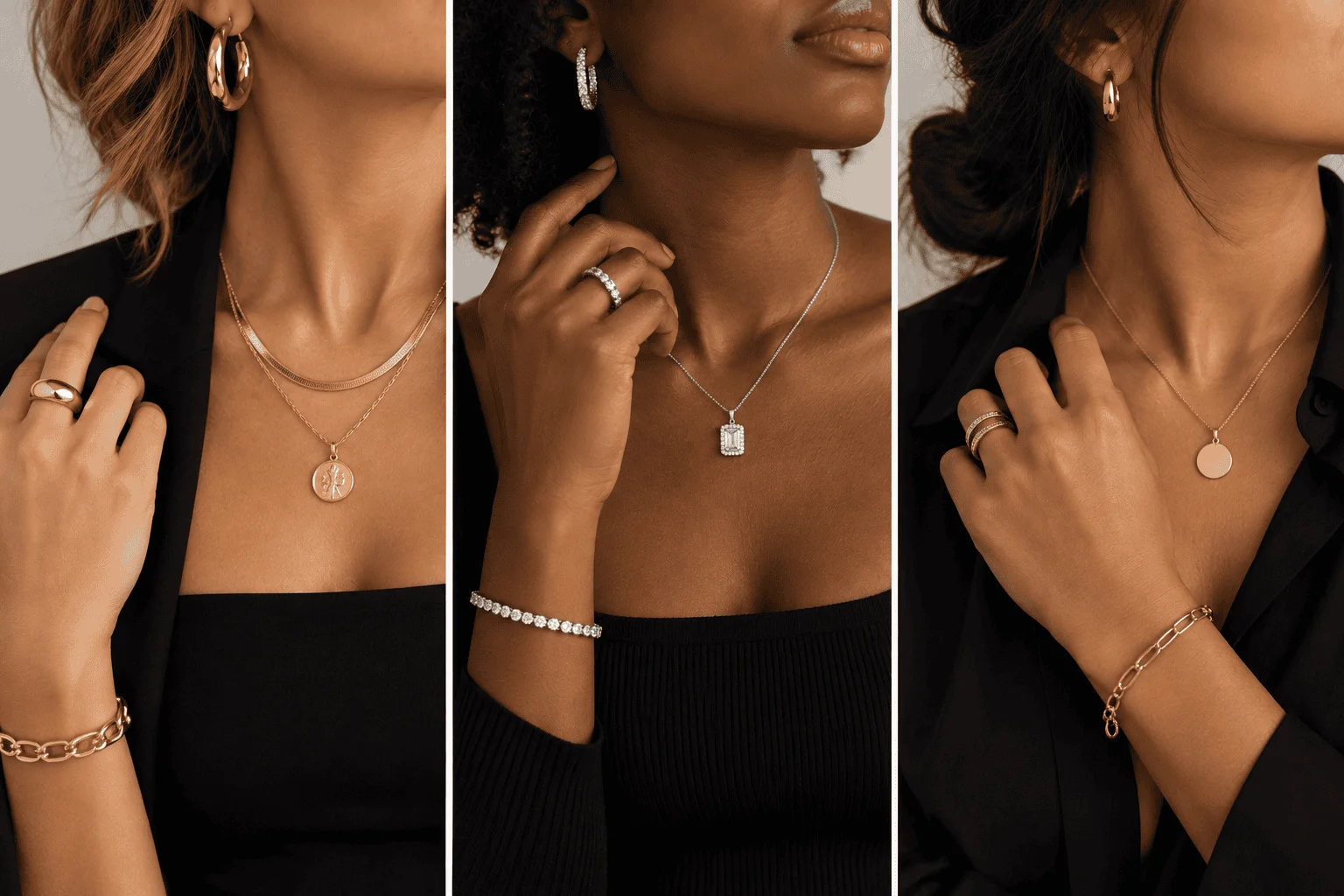
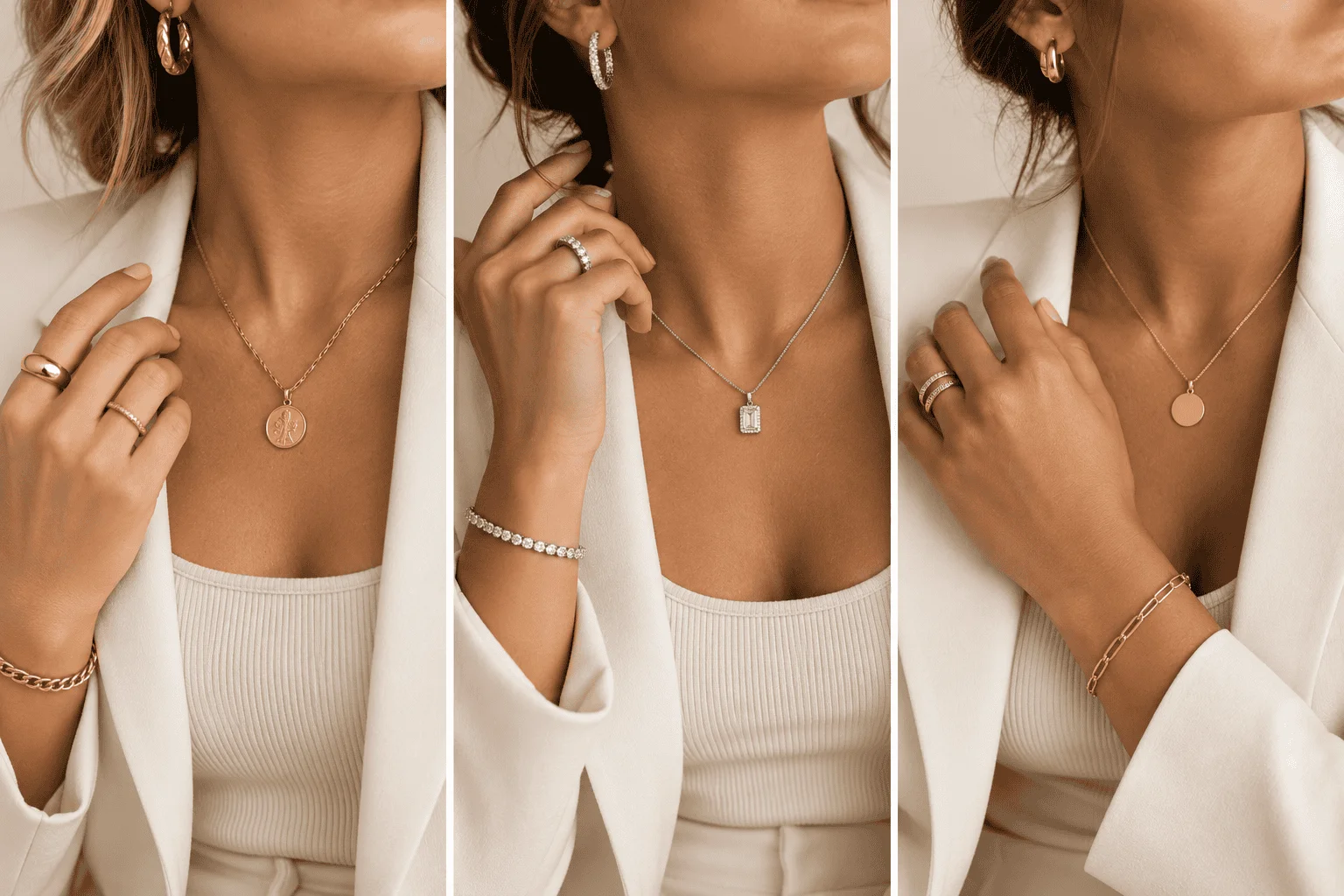
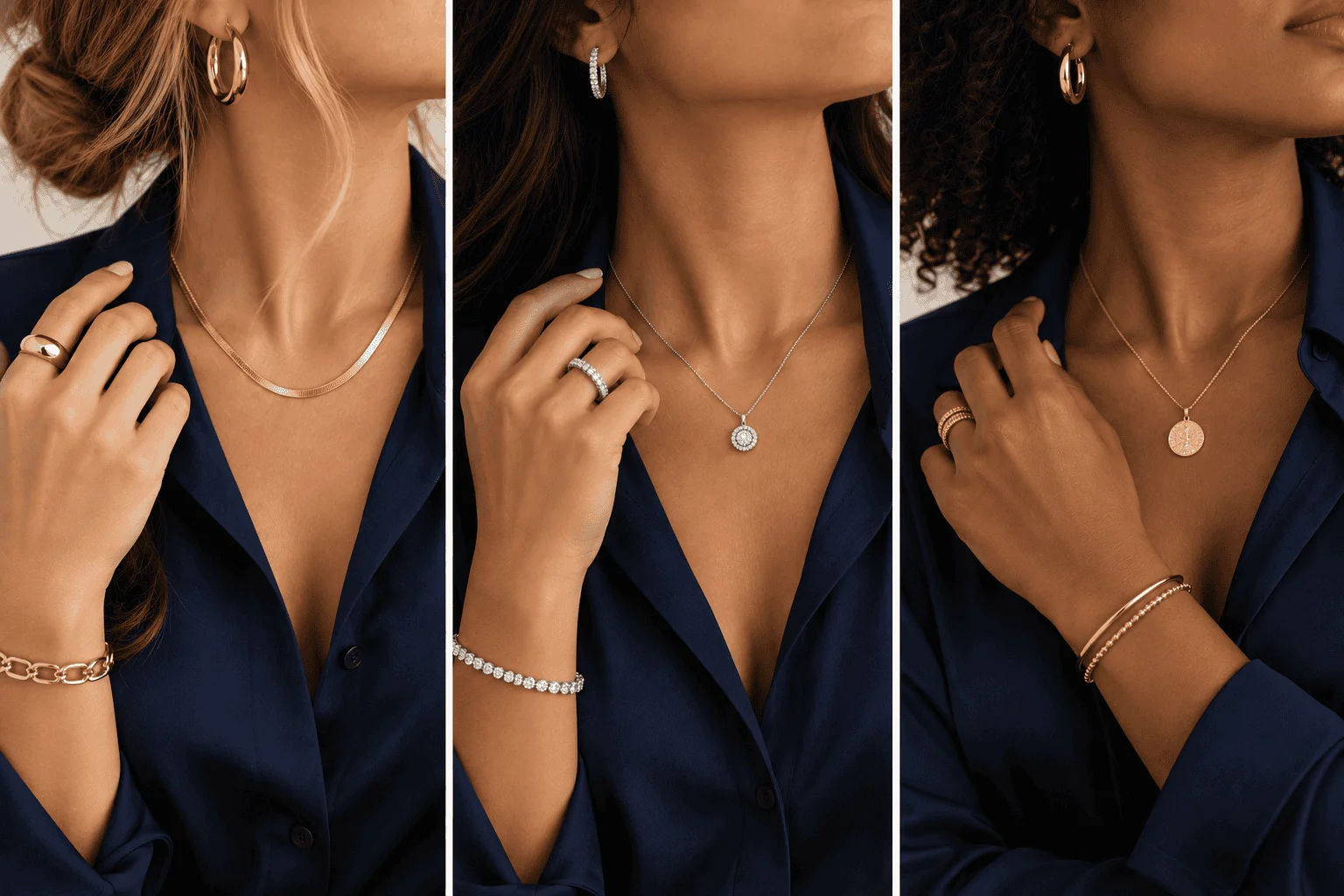
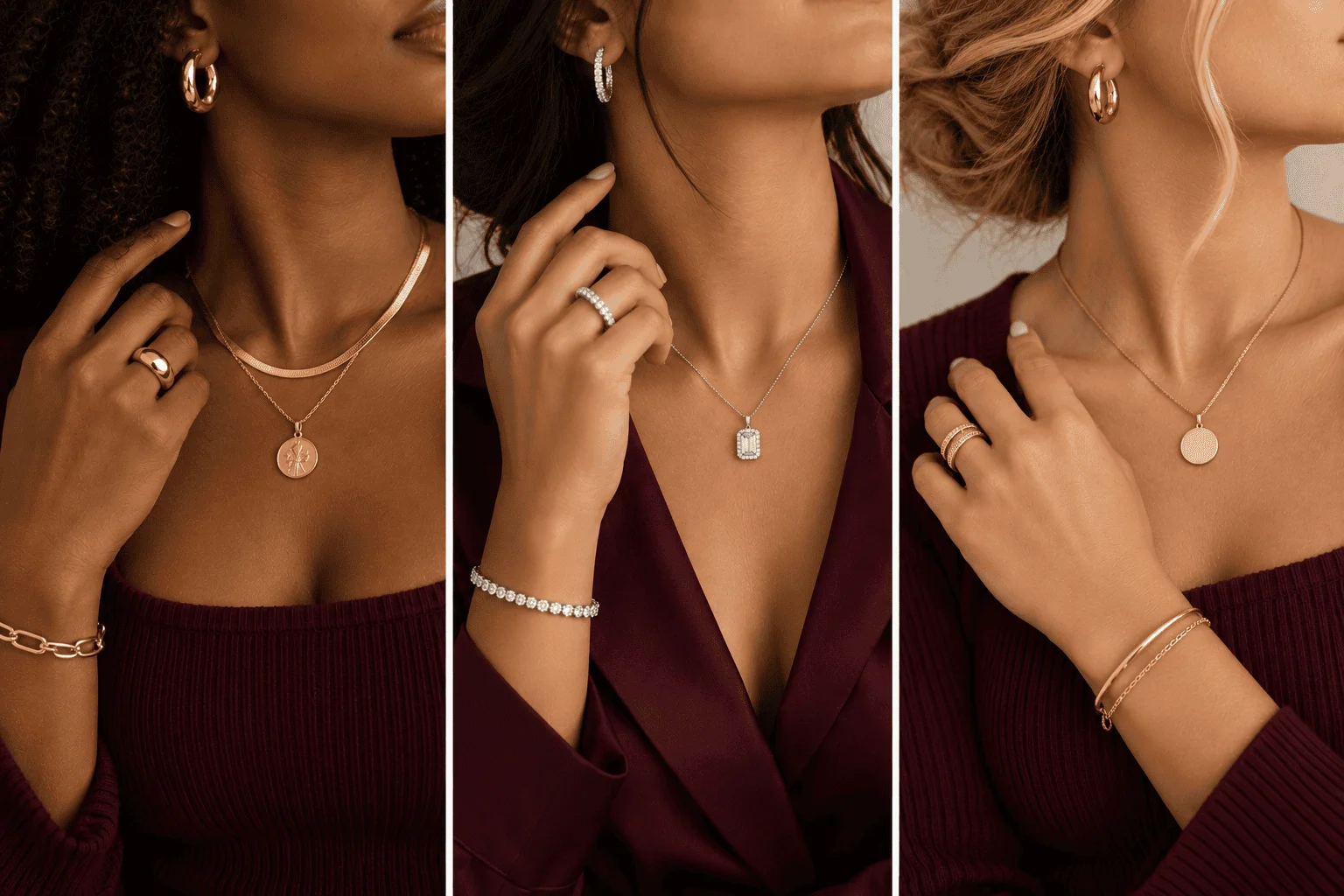
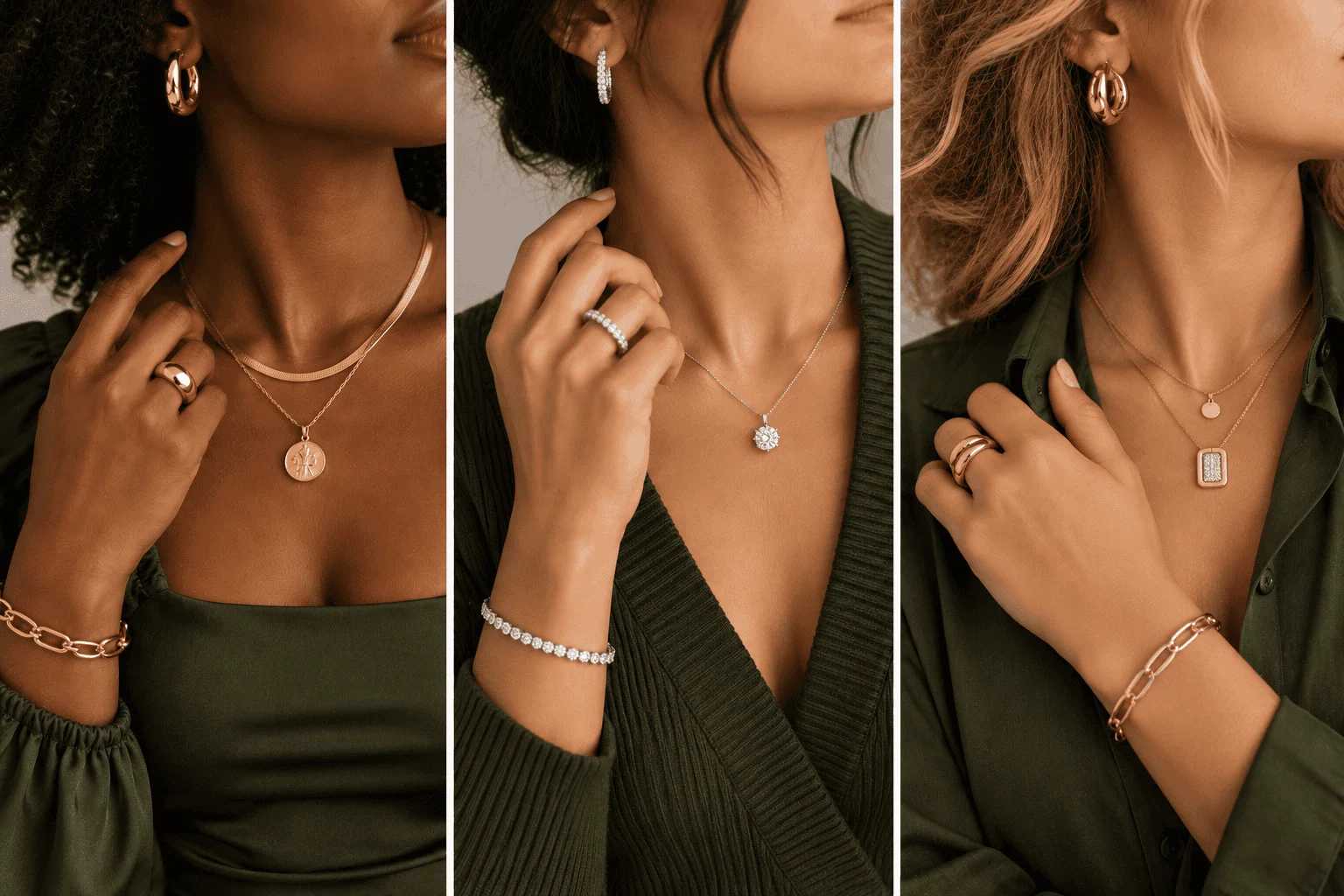
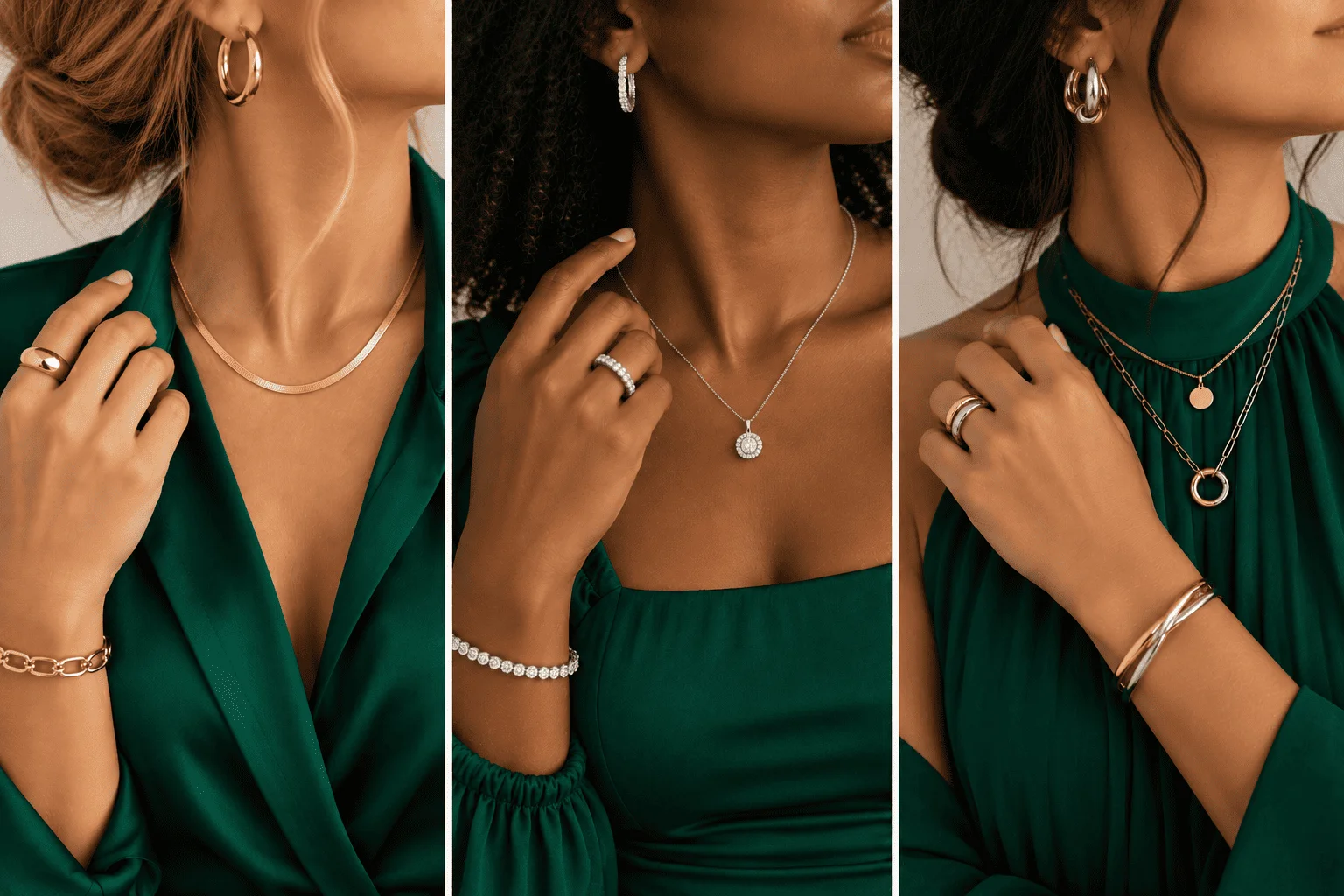
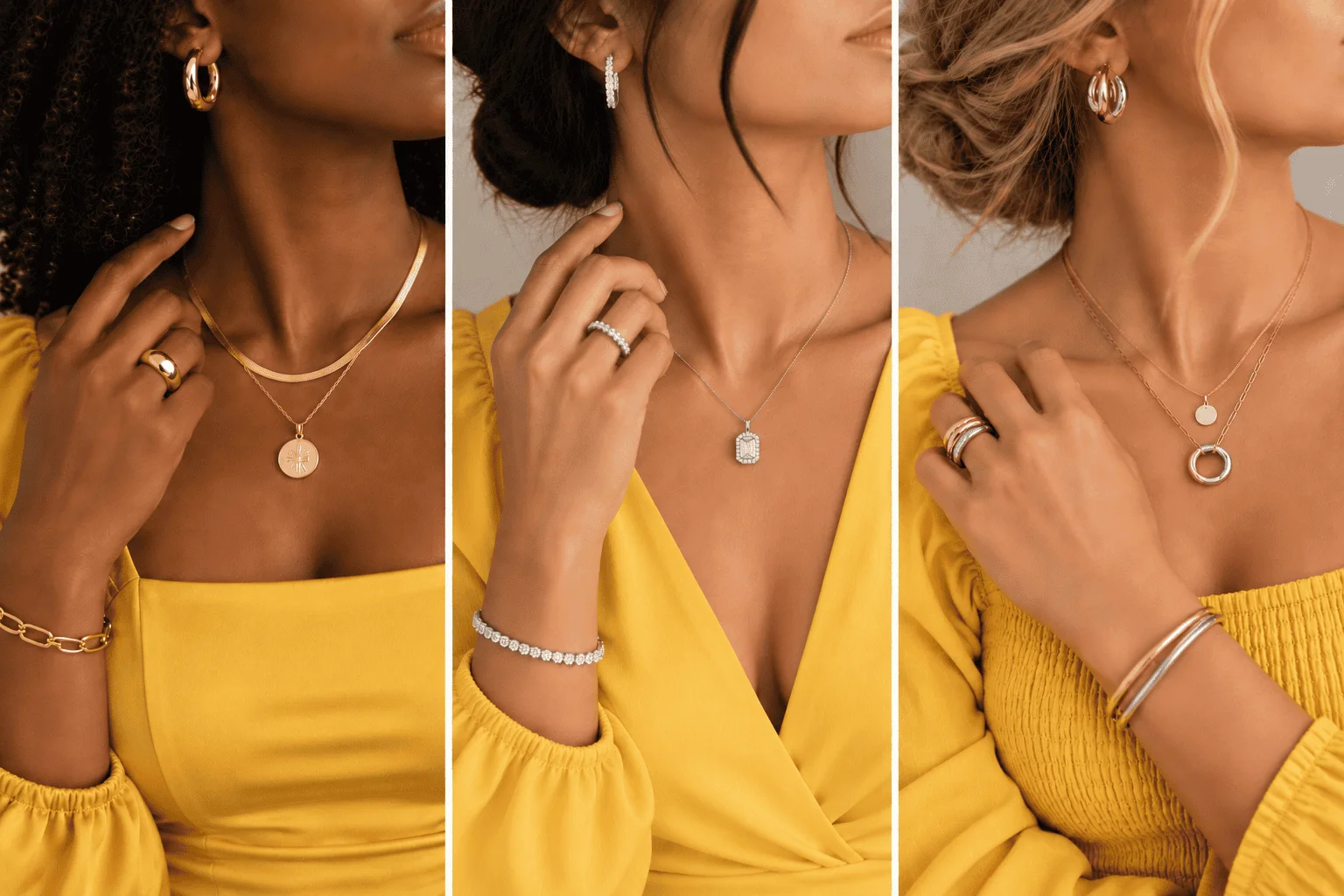
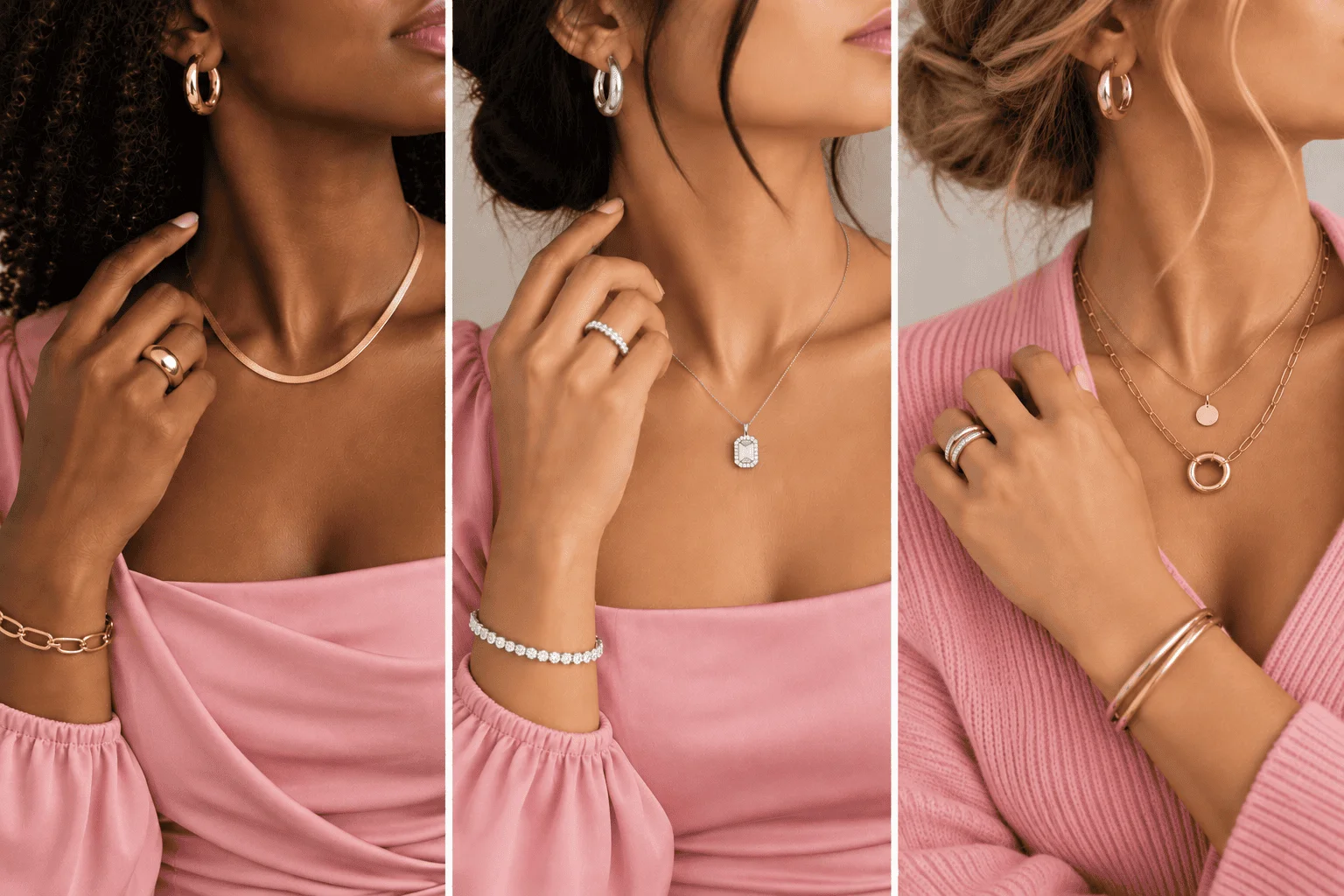
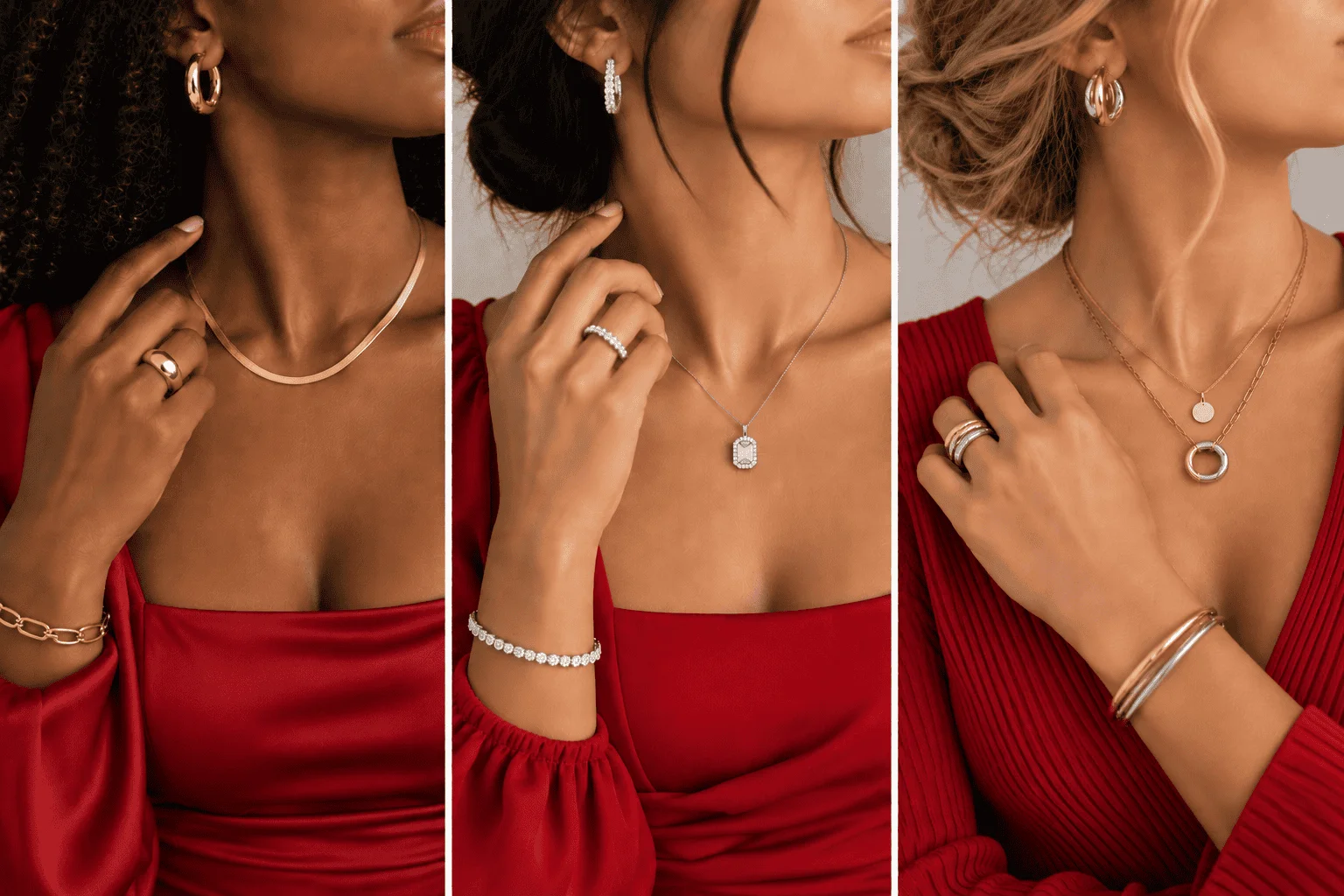
Neither approach is better than the other. Choose complementing if you want your jewelry to feel like a natural part of your outfit, or contrasting if you want it to be the focal point piece.
Can You Mix Gold and Silver Jewelry?
Absolutely! The old rule that you had to stick to one color at a time is long gone. In fact, on our appraisal bench, we regularly receive and evaluate classic pieces across different eras that prove mixing metals isn’t just allowed; it’s timeless design.
Mixing gold and silver can create a more collected, intentional look. Plus, it means you don’t have to leave half your jewelry box unworn simply because it doesn’t “match.”
- Use each metal more than once when layering several pieces, instead of wearing one gold item among a bunch of silver.
- Add a mixed-metal piece, like a two-tone ring or bracelet, to visually connect the warm and cool tones.
- Layer chains or bracelets in different metal colors so the mix feels on purpose.
- Keep one other element consistent, such as jewelry style or scale, so the metals are the only thing changing.
The Best Jewelry Color Is the One You Want to Wear
Color theory and undertone advice can help you narrow down your options, but neither one should override what speaks to you on any given day.
- Hold different metals up against your skin and your clothes to see what catches your eye.
- Experiment with contrast instead of always matching.
- Mix metals if you’re drawn to more than one.
- Choose based on how a piece makes you feel, not what a chart says you should wear.
Let the guidelines we’ve covered be a helpful starting point; what you end up wearing is entirely up to you.
Find Your Color at The Alloy Market

Whether you’re leaning toward a cooler white gold or a warmer yellow, The Alloy Market has it all! Find the perfect bracelet, earrings, ring, or charm that makes your fit uniquely you. Each piece is thoroughly tested for purity and thoughtfully hand-selected for a new life. Find pieces at prices way below traditional retail by shopping our curated collection of pre-loved jewelry today.


