
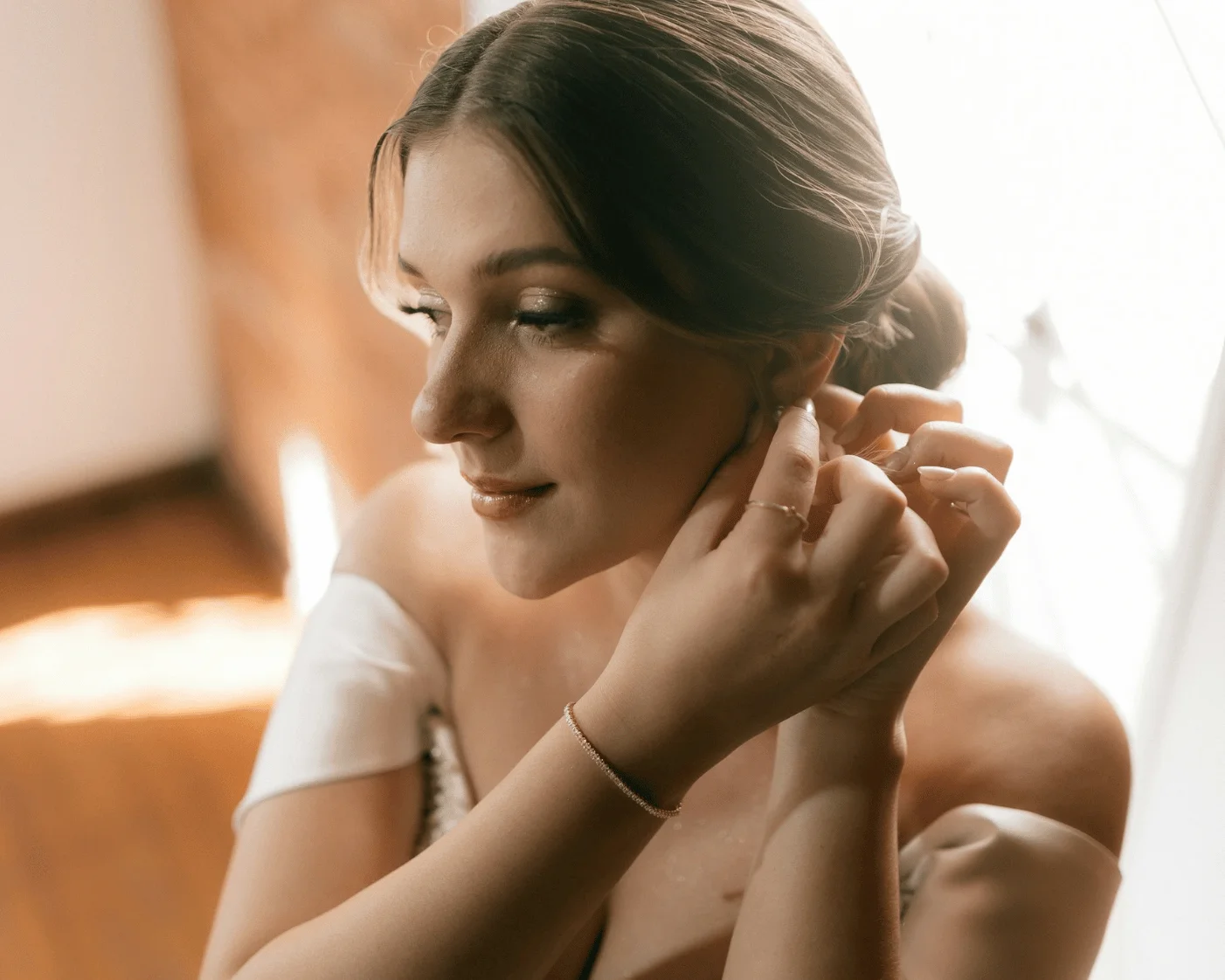
How to Choose Jewelry: What to Consider & Jewelry Pairing Tips

Jewelry gives you almost endless ways to choose, mix, and match. So much so that the possibilities can get a little dizzying and leave you wondering, “How do I know what jewelry looks best on me? Where do I even start?”
Learning how to choose jewelry takes more than picking whatever catches your eye, especially if you want to build a collection that makes you look and feel good, inside and out.
The Alloy Takeaway
Choosing jewelry isn’t about following every trend; it’s about finding quality pieces that fit your daily rhythm. By starting with a quick inventory of what you already own, balancing your metal choices against skin undertones, and understanding the occasion for each piece, you can build a collection that delivers maximum personal style and lasting, intrinsic value.
What to Consider When Choosing Jewelry
Occasion, event, and dress code

Your jewelry should fit the event or occasion. Consider the expected dress code, how much attention you want the jewelry to command, and whether the piece will stay comfortable after hours of wear.
If you’re attending a black-tie wedding, 18K gold diamond drop earrings can bring light and movement around your face without competing with your gown. On a first date, a delicate pendant that traces the neckline of a V-neck dress can add a subtle touch of allure while keeping your overall look elegant.
There are countless ways to accessorize for different occasions. Below are just a few ideas to get you started:
| Occasion | What Jewelry Works Well? | Examples |
|---|---|---|
| Everyday and casual outings | Go for pieces you can put on without overthinking them, and that work with most of your everyday outfits. |
|
| Work and the office | Keep things comfortable and appropriate for your workplace. Choose pieces that won’t interfere with typing, meetings, or hands-on tasks. |
|
| Dates and dinners | Choose one area to draw attention to, particularly around your face, neckline, or hands. |
|
| Weddings | Work with the dress code and your outfit’s neckline, color, and detailing. If your outfit already has plenty of color or detailing, you won’t need equally elaborate jewelry competing with it. |
|
| Parties | Here’s where you can have a little more fun with color, size, texture, and movement. |
|
| Galas and black-tie events | A formal outfit gives you room to wear larger gemstones, more elaborate settings, and bolder statement pieces, particularly when the jewelry serves as a focal point. |
|
| Travel and vacations | Bring pieces that are versatile and that you can comfortably wear with several outfits. Leave valuable or irreplaceable pieces safe at home. |
|
- Slim gold chain bracelet
- Small huggie earrings
- Stacking ring
- Dainty pendant necklace
- Charm necklace
- Classic wristwatch
- Pearl stud earrings
- Slim bangle
- Signet ring
- Small gold brooch
- Tennis bracelet
- Solitaire pendant
- Gemstone drop earrings
- Delicate body chain
- Cocktail ring
If your outfit already has plenty of color or detailing, you won’t need equally elaborate jewelry competing with it.
- Pearl strand necklace
- Sapphire cocktail ring
- Diamond studs
- Vintage brooch
- Delicate gold cuff
- Layered chain necklace
- Chunky cuff bracelet
- Oversized hoops
- Sculptural ring
- Statement choker
- Diamond rivière necklace
- Art Deco cocktail ring
- Emerald chandelier earrings
- Diamond line bracelet
- Jeweled hairpiece
- Stackable gold band
- Charm bracelet
- Sterling silver hoops
- Pendant necklace
- Anklet
Your existing jewelry collection
If you’re buying a new piece to add to your collection, one practical way to choose jewelry is to look at what’s already in your jewelry box. This can keep you from getting carried away by a beautiful piece that doesn’t fit what you wear and ends up forgotten.
A quick inventory can help you decide whether to add another piece in a style you already love or choose something that complements what you own:
1. Start with what you wear most.
Pull out the pieces you reach for regularly, then ask yourself why you wear them so often. Is it because of:
- Comfort: You can wear it for hours without pinching, snagging, or getting in your way.
- Versatility: It works with different outfits, necklines, or occasions.
- Personal style: The metal, color, shape, or design simply feels like you.
- Sentimental value: A wedding band, heirloom pendant, or engraved bracelet may earn a permanent place in your rotation because of what it means to you.
2. Take another look at what rarely gets worn.
There’s nothing wrong with owning chandelier earrings that only come out for weddings or formal dinners.
But if you have several statement necklaces and hardly wear any of them, it’s best not to spend your money on another one.
3. See what’s missing.
Maybe you have rings for days but only one pair of earrings. Or plenty of elaborate necklaces but not a single chain. Make your next purchase something that fills that need instead of adding more of what you already own.
4. Look for pieces that could make your current jewelry more wearable.
Sometimes you don’t need another standalone piece. A thin gold band could open up new ring stacks. A simple gold chain could give an ornate pendant you rarely wear a more everyday look.
Already figured out what your jewelry box is missing? Explore our marketplace, where new pre-loved finds are regularly added to the collection.
Choose from vintage, antique, and contemporary fine jewelry at below-retail prices. Our team of experts inspects each piece for quality and authenticates it using X-ray fluorescence (XRF) analysis to verify its precious-metal composition before it’s listed. We list the weight and karat of every piece so you know just what you’re getting.
Your personal style
Jewelry isn’t simply adornment; it’s also a form of self-expression. What you wear can say something about you before you even say a word. Just as your clothes help express your personal style, the jewelry you choose can (and should) reinforce that same sense of you.
Find your personal style below to discover which types of jewelry align with it.
| Personal Style | Jewelry Examples |
|---|---|
| Minimalist |
|
| Classic |
|
| Vintage or antique |
|
| Romantic |
|
| Bohemian |
|
| Statement or maximalist |
|
| Sporty or casual |
|
- Threader earrings
- Snake-chain necklace
- Open cuff ring
- Tiny disc pendant
- Akoya pearl earrings
- Diamond line bracelet
- Gold rope chain
- Three-stone ring
- Art Nouveau enamel brooch
- Victorian mourning locket
- Edwardian filigree pendant
- Georgian cluster ring
- Floral drop earrings
- Heart locket
- Rose-gold bow brooch
- Oval morganite ring
- Turquoise cluster ring
- Hammered silver arm cuff
- Tassel earrings
- Long beaded sautoir
- Bib necklace
- Oversized sculptural earrings
- Wide gemstone cuff
- Multi-finger ring
- Ball stud earrings
- Curb-chain bracelet
- Dog-tag pendant
- Plain dome ring
Of course, these categories are simply reference points to help you recognize what you’re drawn to. At the end of the day, personal style is personal. Who says an antique Victorian locket and minimalist gold huggies can’t live in the same jewelry box? Mix eras, metals, and aesthetics to your heart’s content.
How often you’ll wear it
The more often you plan to wear a piece, the more you need to consider how its metal composition holds up in daily life. A ring you wear from morning to night will encounter more bumps and scratches than a pendant you bring out for dinner once or twice a month.
A common misconception is that higher karat automatically means “better” jewelry. While an 18K gold ring contains more pure gold than a 10K one, pure gold is naturally soft. That makes 18K softer and more prone to surface scratches. For high-impact daily wear, lower karats (like 10K or 14K) offer greater structural durability.
If you aren’t sure of a piece’s true metal content, don’t rely on stamps alone. Our appraisal team uses laboratory-grade XRF (X-ray fluorescence) analyzers to test metal purity without damaging the piece. This ensures you know the exact karat alloy and durability profile before adding it to your daily rotation.
Another example: gold-coated jewelry, such as vermeil and gold-plated pieces. They’re an affordable way to try different jewelry trends while still getting the look of gold. However, frequent use can gradually wear away the outer gold layer.
Jewelry Styling Tips to Help You Choose What Works Together
The last thing you want is to splurge on a piece you love at first sight, only to realize later that it doesn’t suit you or your style. Many such “irresistible” adornments end up collecting dust in the jewelry box, so keep these pointers in mind.
Use one piece as your anchor
Choose one piece of jewelry as the visual anchor, and let the other pieces complement it. Otherwise, when every piece is fighting for the spotlight, none of them really gets it.
A good anchor should have a defining characteristic that sets it apart from the rest of your jewelry. It could be larger in scale, more colorful, more intricately detailed, or simply positioned somewhere you want to draw the eye.
Here are a few ways to put the one-anchor approach to work:
| Anchor Piece | Pair It With | Why It Works |
|---|---|---|
| Chunky yellow-gold curb-chain necklace |
| The smaller pieces repeat the necklace’s metal without matching its scale. As such, the chunky chain remains the first thing that catches the eye. |
| Oval emerald cocktail ring with a halo setting |
| The supporting pieces add detail elsewhere without competing in scale or color, leaving the emerald as the standout gemstone. |
| Long crystal chandelier earrings |
| Leaving the neckline bare gives the chandelier earrings room to stand out, while the simpler jewelry adds detail farther away from the face. |
| Wide hammered-gold cuff bracelet |
| The finer profiles and polished finishes contrast with the cuff’s width and hammered texture without vying for attention. |
| Ruby pendant necklace with a large center stone |
| Repeating the warm-toned metal ties the pieces together, while the ruby remains the only strong burst of color and therefore the focal point. |
- Small gold ball studs
- Slim yellow-gold band
- Fine gold chain bracelet
- Small bezel-set diamond earrings
- Dainty gold pendant
- Narrow polished bangle
- Slim stacking ring
- Tiny pearl studs
- Fine trace-chain necklace
- Slender gold ring
- Slim rose-gold hoops
- Two thin rose-gold stacking rings
Use the 2:1:1 rule to distribute jewelry
Some jewelry lovers aren’t content with just a necklace or a couple of rings. If you like wearing several types of jewelry at once, you may have wondered: How much is too much?
One simple framework you can try is the 2:1:1 rule:
- 2: Wear two pieces from one category, such as two stacked rings, two bracelets, or two layered necklaces.
- 1: Add one piece from a second category, such as a pendant necklace or bracelet.
- 1: Finish with one piece from a third category, such as a pair of earrings or a ring.
This should help you spread your jewelry across different categories while keeping your overall look well thought out.
Use the rule of odds when layering or stacking

If you’re specifically layering necklaces, stacking rings, or grouping bracelets, use the rule of odds.
The idea is that odd-numbered groupings, particularly sets of three, are harder for the eye to divide into equal pairs. When you’re stacking or layering jewelry, this can make the arrangement feel more varied and give you an easy way to create contrast between the individual pieces.
You can apply that principle by grouping three pieces and introducing differences in their size, shape, texture, or detailing. For example:
- Ring Stack: Combine a polished yellow-gold band, a bezel-set gemstone ring, and a twisted rope band. Three different textures and shapes give each ring its own character, while the shared yellow gold ties the stack together.
- Layered necklaces: Try a 16-inch snake chain, an 18-inch pendant necklace, and a 20-inch paperclip chain. Spacing each necklace about 2 inches (5 centimeters) apart helps keep the individual layers visible, while the different chain styles keep them visually distinct.
- Bracelet stack: Pair a slim tennis bracelet, a rigid gold bangle, and a fine chain bracelet. Their different structures and textures keep each piece distinct while still working as a single stack.
Choose jewelry colors around your undertone
If you’re torn between yellow gold, white gold, rose gold, or other metal colors, your skin undertone can help you choose. Your undertone is the subtle warm, cool, or neutral coloring beneath your skin that stays relatively consistent even as your skin gets lighter or darker.
The basic idea is to pair:
- Warm undertones with warmer-colored metals such as yellow gold, rose gold, and copper-toned jewelry.
- Cool undertones with cooler-colored metals such as white gold, platinum, and sterling silver.
- Neutral undertones with both warm and cool metals, so either yellow-gold or silver-toned jewelry can work well.
You can use the same idea when choosing gemstones. If you have warm undertones, you might try citrine, garnet, or warmer shades of topaz. With cool undertones, we suggest sapphires, aquamarines, and amethysts.
Use scale and proportion to balance your features
Consider the size and shape of a piece relative to the feature it sits on or beside. Larger jewelry occupies more visual space, while smaller pieces tend to draw less attention to that area.
You can see this relationship most clearly with earrings. As a general guide:
- Round faces: Long drop or linear earrings introduce vertical lines alongside the face, which can create the appearance of greater length.
- Long or oblong faces: Hoops, clustered earrings, or shorter drops introduce horizontal width rather than extending the vertical line further.
- Heart-shaped faces: Teardrop and chandelier earrings widen toward the bottom, adding more visual weight around the narrower jawline.
Match your necklace to the neckline
When choosing a necklace, look at the necklines you wear most often. You want a length and shape that works with that space rather than constantly landing on the edge of your clothing or disappearing underneath it.
Follow these general guidelines:
- V-neck: Choose a pendant necklace that follows the V and sits within the open neckline. A drop or pointed pendant can echo the same downward shape.
- Crew or round neck: Choose either a shorter chain that sits clearly above the neckline or a longer necklace that falls below it. Avoid lengths that put the pendant directly on the collar.
- High neck or turtleneck: Look to longer styles, such as pendant necklaces, lariats, or opera-length chains, that can sit over the fabric and draw the eye vertically.
- Strapless or off-the-shoulder: With more of the neck and upper chest exposed, a choker, collar necklace, or shorter statement necklace can occupy that open space without competing with your top’s neckline.
Coordinate your jewelry with the colors in your outfit

Look at the colors already present in your outfit when choosing jewelry. You can either:
Repeat those colors for a more coordinated look
For example, yellow-gold jewelry can echo gold-toned belt buckles, handbag clasps, buttons, or watch cases.
Likewise, sterling silver, white gold, and platinum can complement cooler accents such as a metallic handbag, silver shoes, or a sequined top.
Introduce a contrasting color for emphasis
For example, a deep-blue sapphire pendant can stand out against a rust-colored sweater or other warm shades such as mustard, terracotta, camel, or chocolate brown.
The blue doesn’t need to appear elsewhere in the outfit; its contrast is what makes the jewelry stand out.
Let the jewelry provide the main pop of color
Against a black, cream, or otherwise neutral outfit, a ruby cocktail ring or colorful birthstone pendant can become the strongest color in your look.
Other Tips for Choosing Jewelry With Confidence

You’ve narrowed down what looks good and works well together. These last few pointers can help you feel more certain about your final choice and pick pieces you’ll still be happy to own long after the initial excitement wears off.
- Comfort isn’t optional. If you’re already itching to remove the earrings or constantly adjusting a necklace, you’re unlikely to wear it regularly, no matter how elegant it looks.
- Picture it with clothes you own. A necklace can look fantastic in a product photo but prove difficult to wear with your usual necklines. Before buying, picture the piece alongside the colors, fabrics, and silhouettes that already make up your wardrobe.
- Don’t buy something simply because it’s trending. Trends can introduce you to styles you might love, but ask yourself whether you’d still wear the piece once that particular look loses popularity.
- Periodically reassess your collection. Your taste and lifestyle evolve. If you have fine jewelry sitting unworn in your box, selling those pieces is a practical way to unlock hidden value and fund your next piece. We offer direct, transparent valuations based on live precious metal market rates and state-regulated scales, giving you a simple way to recycle your collection responsibly.
Choose Value for Money With Pre-Loved Fine Jewelry

Pre-loved fine jewelry offers you a way to add quality precious-metal jewelry to your collection without paying full retail prices.
At The Alloy Market, we offer a hand-selected assortment of pre-loved pieces, from gold rings and necklaces to bracelets, earrings, and one-of-a-kind estate finds. Our inventory changes regularly, giving you fresh pieces to choose from whenever you visit.
Our experts inspect every piece selected for the Marketplace for quality and authenticate it via XRF analysis to verify precious-metal purity.
Browse our Marketplace today and find the next piece for your collection!


