
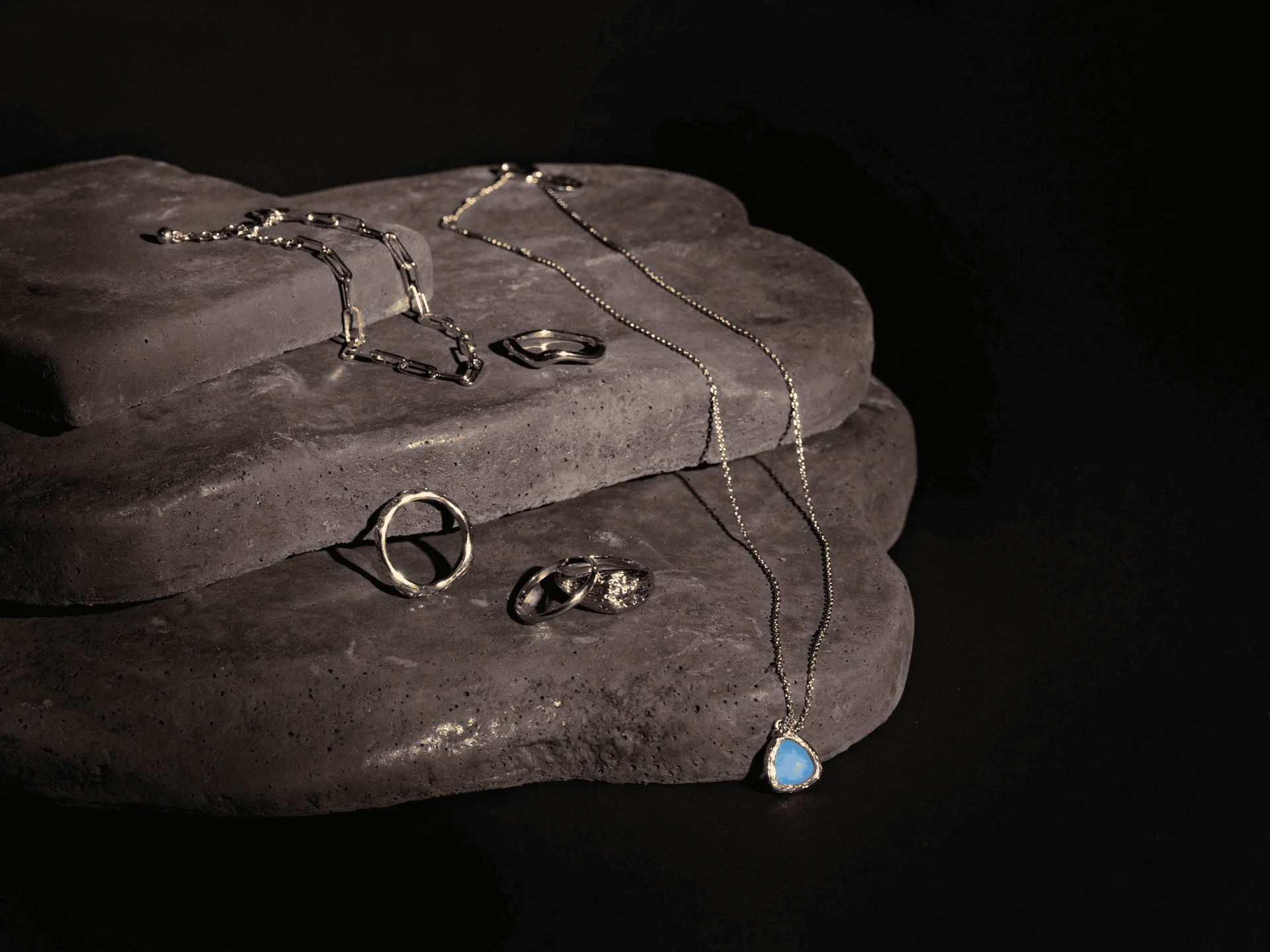
Staple Jewelry Pieces: The Timeless Essentials Every Collection Needs


Staple jewelry pieces aren’t just whatever’s trending this season, though plenty of people shop as if they are. A drawer full of statement pieces that only match one outfit, or fall out of style within a year, leaves you back at square one every time you get dressed.
That’s the problem with chasing trends over staples. You end up buying the same excitement over and over, adding friction to your morning instead of a foundation you can build on. The right pieces are comfortable, versatile, and never look dated, so you consistently reach for them without a second thought.
Learn what makes a piece a staple, which ones to prioritize, and how to buy jewelry that holds up for years so you can build a collection you’ll reach for on the daily.
The Alloy Takeaway
Staple jewelry pieces are the core pieces you can wear with almost anything. They set the foundation you can build on with statement pieces to round out your look and make it more personal. Common staple pieces include simple chains in varying textures and lengths, a simple ring, gold hoops or pearl earrings, and a basic bracelet. Buying your staple pieces intentionally can help you build a collection that stands the test of time.
What Makes a Piece a Jewelry Staple?

Jewelry staples share five qualities:
- Versatility: It works with casual clothes and dressy outfits.
- Longevity: It holds up through changing seasons and years of wear.
- Everyday wearability: It’s comfortable enough that you forget it’s there.
- Quality construction: It handles daily friction, moisture, and movement without breaking down.
- Timeless design: It skips loud details or seasonal motifs in favor of a look that works years from now.
Trends work the opposite way. They’re built around a single moment or whatever’s popular that season. And once that moment passes, so does your interest in wearing the piece.
The 80% rule
A good staple should work for roughly 80% of the occasions you dress for. If a piece only pairs with one outfit, one season, or forces you to plan around it, you’re looking at a statement piece, not a staple.
- Can I wear this to work and on the weekend?
- Does it pair with most of my wardrobe?
- Will I still enjoy wearing it years down the road?
- Does it layer well with other pieces I already own?
And when shopping, don’t overlook construction (more on what to check in “How to Choose Staple Jewelry That Actually Lasts” below). It’s easy to fall for a piece because of how it looks on a display. But daily wear puts every clasp, link, and setting to the test. That’s typically where cheaper pieces fail first.
The Essential Jewelry Pieces Worth Owning
A few jewelry essentials earn a permanent spot in your collection:
Everyday earrings

Small studs, gold hoops, or pearl drops frame your face without demanding attention. They work with a plain tee as well as they work with a formal dress, which is why they’re usually the first thing people put on and the last thing they take off.
Chain necklace
A simple gold or silver chain acts as a blank canvas. Wear it alone for something clean and minimal, or layer it under other necklaces when you want more.
Pendant necklace

A single stone, locket, or initial charm gives your outfit a focal point. It breaks up a plain top and adds a bit of personality without turning into a statement piece.
Bracelet or bangle
Look for something light, like a link bracelet or a simple cuff. It won’t weigh down your wrist, and it’ll pair beautifully with whatever you’re already wearing.
Everyday ring
A comfortable band or a low-profile stone is something you’ll enjoy glancing at throughout the day. It stacks well too, so it’s never the only ring you can reach for.
Watch (optional)

A classic watch adds function along with style, and a simple face works with casual and dressed-up looks.
The 3-Piece Stack Rule for Everyday Layering
The 3-piece stack rule takes the guesswork out of layering necklaces, and it’s what we point customers toward most often.
Here’s how it breaks down:
| Layer | Length | Role |
|---|---|---|
| Base chain | 14 to 16 inches | Sits high on the collarbone |
| Mid-length pendant | 18 inches | Rests just below the throat, carries a small charm or stone |
| Texture or statement chain | 20 to 24 inches | Anchors the bottom with bolder texture or length |
Be mindful of spacing and texture
Keep at least two inches between each length so the chains don’t crowd the same spot on your chest. Mix textures, too. A fine Figaro chain next to a chunky paperclip chain, or a flat snake chain against a round cable chain, reads as intentional instead of random.
Let one piece lead
Avoid stacking three statement pendants at once — it’s too much competing for attention. Pick your favorite, then build the other two chains around it.
Maintain a tangle-free stack
If every chain is the same weight, they’ll twist together throughout the day. Add one or two heavier links near the bottom so they settle in place. And consider a multi-strand clasp connector, which separates each chain at the back of your neck before they get the chance to knot up.
Match the stack to your outfit
Wearing a deep V-neck or scoop top? Go big with your stack, since you’ve got the space for it. If your neckline sits higher, we’d suggest keeping the chains shorter and finer so they don’t crowd your collar.
How to Choose Staple Jewelry That Actually Lasts
After reviewing thousands of jewelry pieces, our team has seen thick rings and solid-link chains last for years. Hollow hoops, wire-thin rings, and delicate chains tend to break often.
We recommend checking the following before buying any jewelry:
- Gold purity: 14K holds up better than 18K for daily wear, since the extra alloy makes it harder and more scratch-resistant.
- Solid vs. plated: Plated and vermeil pieces might look identical to solid gold on day one. Give it a year of regular wear, though, and that thin layer starts wearing through to the metal underneath.
- Chain thickness: A chain under 1.5mm can snap easily if it catches on hair or clothing.
- Clasp quality: Lobster clasps last longest. The weak point is usually the jump ring connecting the chain to the clasp, so make sure it’s soldered shut.
- Earring backs: Screw-backs or la poussette backs (a small locking mechanism) hold up better than standard butterfly backs, which loosen over time.
- Ring thickness: Bands under 1.8mm can warp and dig into your finger. Thicker, comfort-fit bands hold their shape.
- Gemstone durability: Diamonds, sapphires, and rubies hold up best against scratches. Opals and pearls are softer, so they chip more easily with accidental knocks.
Common Mistakes People Make When Buying Everyday Jewelry
We see a few mistakes come up again and again, and they’re usually why a piece ends up forgotten in a drawer or sent to us for sale:
- Buying trendy instead of versatile: Statement or fast-fashion pieces may look great now, but they’ll clash with your outfits once the trend fades.
- Buying too many similar pieces: Five thin gold chains leave you with no variety for different necklines or outfits.
- Choosing plated jewelry expecting lifetime wear: Gold-plated and vermeil pieces are a thin layer over a base metal, and that layer rubs off with daily wear.
- Ignoring comfort: Heavy earrings pull at your lobes, and sharp ring edges snag on clothes.
Why Pre-Loved Jewelry Is Ideal for Building Everyday Staples
New jewelry loses value the moment you leave the store, since you’re paying for retail markup. Secondhand pieces don’t come with that markup, so more of your money goes toward precious metal weight.
Buying estate jewelry also gives you three other advantages:
- Unique craftsmanship: Older pieces often carry hand-set details and stone cuts that modern manufacturing doesn’t replicate.
- Distinct character: You get a design with history behind it, instead of something mass-produced.
- Professionally verified quality: Reputable sellers check purity, weight, and condition before resale, so you’re not guessing at what you’re buying.
Find Your Next Staple Piece at The Alloy Market

Building a collection of true staples gets easier once you know what to look for. At The Alloy Market, we source pre-loved fine jewelry daily, then handpick the best pieces for a second life. We authenticate all items for purity and weight before listing so that you can shop with confidence.
Our selection ranges from classic studs and chains to statement pieces, all priced below traditional retail. Take a look at what’s in stock, and create a collection of timeless jewelry you’ll wear for years to come.


